Road rage and aggressive driving is no longer the exception, it’s the norm, discovered the AAA.
Road rage, or aggressive driving, has become a growing problem in recent years, to the point that it seems many drivers navigate streets and highways in a negative emotional state. It’s a phenomenon that spreads easily, affecting both those who experience it and those who witness it. In response to this growing concern, the AAA Foundation for Traffic Safety conducted a study to examine how many drivers are influenced by road rage.
The report revealed that a surprising 96% of drivers admitted to engaging in aggressive behaviors behind the wheel over the past year. These behaviors range from speeding and tailgating to cutting off other drivers. In other words, aggressive driving has become an almost universal experience: not only is it frustrating, but it also appears to be contagious.

Road rage: an increasingly common and contagious phenomenon
“Aggressive driving and road rage are serious threats to public safety and contribute significantly to the number of crashes each year,” the AAA stated in its report. While the Foundation had previously conducted studies on this issue, the latest analysis, conducted in 2025, revealed a troubling trend: the more drivers are exposed to aggressive behavior on the road, the more likely they are to mirror it.
This cycle of aggression creates a driving culture built on impatience and hostility, where aggressive driving is no longer the exception, it becomes the norm.
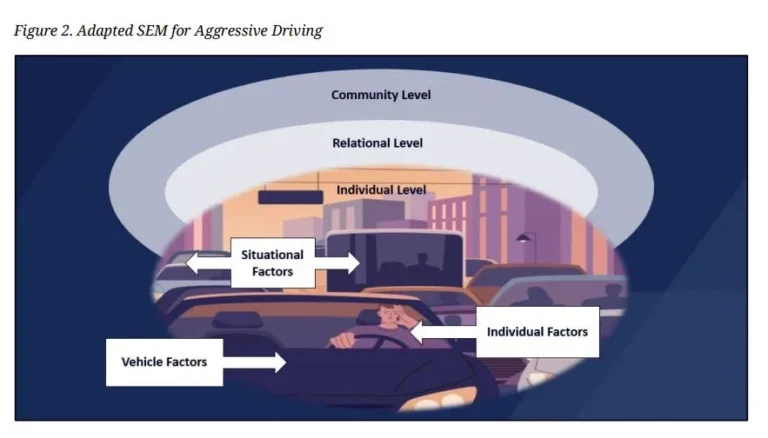
The study identified several levels of influence that help explain why drivers engage in aggressive behavior:
- Individual level: knowledge, skills, personal attitudes.
- Relational level: influence from family, friends, and social networks.
- Community level: the built and social environment.
In addition, the report emphasizes that aggressive driving isn’t always driven solely by anger. Emotions such as fear and anxiety also play a significant role. One act of aggression can trigger fear in another driver, who then responds with similarly aggressive behavior. In short, road rage behaves like a contagious phenomenon, quickly spreading across roadways and reinforcing a dangerous, reactive driving culture.

92% of drivers engage in road rage
Among the key findings of the study, 92% of drivers surveyed admitted to engaging in aggressive behaviors that endanger traffic safety. These actions include speeding, cutting off other vehicles, failing to use turn signals, tailgating, frequent horn use, and more.
But the numbers don’t stop there. AAA also reported that 11% of respondents admitted to violent behaviors behind the wheel, such as intentionally ramming another vehicle or physically confronting another driver, escalating road rage to a level rarely documented before.
The study also found that the type of vehicle driven influences driver behavior. In other words, the car one drives can be an indicator of both how they behave on the road and how they are perceived by others. Notably, drivers of sports cars, large trucks, and motorcycles are often seen as more aggressive. This perception was confirmed by testimonies from drivers who said they feel more powerful and dominant when driving these types of vehicles.
AAA’s top three tips for managing road rage
Road rage is spreading at an alarming rate, making it urgent to implement effective measures to mitigate its impact. In the meantime, each driver has a personal responsibility to manage their emotions and minimize any displays of aggression behind the wheel. To help with this, AAA offers the following recommendations:
- Breathe before you react: a deep breath can reset your mood behind the wheel.
- Don’t take the bait: ignore and avoid aggressive drivers.
- Choose time over tension: leave early, keep your distance, and arrive safely.

Why Soccer is Conquering Hearts and Businesses in the U.S.
Messi’s presence in stadiums and the hosting of the next World Cup, along with other global tournaments, have transformed it into a new entertainment giant. The gradual growth of the National Team motivates the public. Million-dollar businesses, brands, and a lot of passion.

The Asphalt Code of Honor: The Invisible Social Network That Saves Lives
On U.S. highways, truck drivers often communicate through a silent language of signals, headlights, and hand gestures. This informal system of road communication helps warn others about hazards, coordinate safe passing, and reinforce a culture of safety and solidarity among professional drivers

What if the Oscars were about trucking? Hollywood characters reimagined as truckers
This week marks the 98th Academy Awards, what if the categories were inspired by the transportation industry?

TCA Professional Drivers of the Year 2026: 5 drivers who paved the road
TCA Professional Drivers of the Year selects drivers with the greatest impact, outstanding safety records, and individuals with inspiring stories that made a difference.

Unusual Stories from the Road: When Reality Outruns Logistics
From a giant magnet moving down the highway like a spacecraft to millions of bees taking over a highway, the world of freight transportation is full of events that are as strange as they are real. Some of these stories went viral, others became legends among drivers, but all of them reveal the unexpected side of logistics.

The safest, most reliable and crash-resistant cars for protecting you on the road
Based on ratings from the NHTSA and the IIHS evaluation system, this list shows some of the safest and most crash-resistant cars.
All content and original artwork, unless otherwise noted, is protected by copyright. Saint George uses certain images under license from various licensing vendors for this purpose. Any unauthorized commercial reproduction or distribution of copyrighted materials is prohibited.