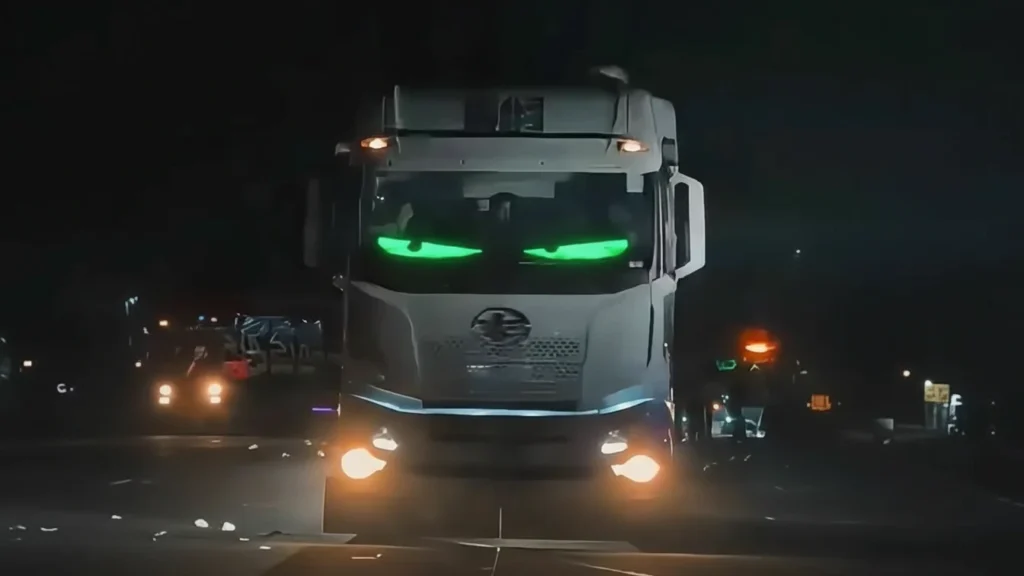
The recent wave of traffic stops in Wisconsin and California for trucks using green LED “angry eyes” lights has reignited a national debate: what modifications are allowed, and which ones are strictly prohibited, under U.S. trucking regulations? This angry eyes crackdown highlights a growing issue in the industry—confusion about what is actually legal on the road.
The latest incident occurred in Sauk County, Wisconsin, where state police stopped a truck equipped with green LEDs mounted above the headlights.
Authorities were clear: only white or amber lights may be visible from the front of a commercial vehicle. Other colors, including green, blue, or red, can be mistaken for emergency vehicles or distract other drivers. California’s Highway Patrol issued a similar notice, reminding commercial drivers that colored front-facing lights are not approved for road use under state and federal rules.
This trend of stops reflects a broader problem: widespread misinformation about aftermarket accessories. The following guide outlines the most common illegal modifications and how to avoid DOT violations, citations, and Out-of-Service (OOS) orders.
1. Unauthorized front-facing lights
Illegal: green, blue, red, purple LEDs; RGB color-changing systems; strobe lights visible from the front.
Allowed: white or amber lights that comply with FMVSS 108.
The goal is to prevent confusion with emergency vehicles and reduce glare hazards.
2. LED bars and overly bright auxiliary lighting
Many states prohibit the use of LED light bars on public roads, high-intensity auxiliary lamps without proper regulation, and any device that flashes or produces lighting patterns. These systems often lead to stops for visibility and distraction risks.
3. Prohibited tinting and windshield obstructions
Common violations include excessively dark windshield tint, stickers or decals blocking critical viewing areas, interior LED strips on the windshield, and closed front curtains while driving. Any obstruction can result in immediate OOS orders.
4. Extreme suspension or height alterations
Banned modifications include oversized lift kits, ride heights that fall outside state-approved ranges, and bumpers positioned outside required impact zones. These alterations can increase crash severity and affect vehicle stability.
5. Covered or unreadable license plates
It is illegal to obscure a plate with tinted covers, frames that hide characters, or LED strips that alter readability. Several states are increasing enforcement of these violations.
6. Illegal exhaust systems
FMCSA rules prohibit open straight pipes without a muffler, exhaust systems that exceed state noise limits, and modified “train horn” devices producing extreme sound levels. These systems can affect emissions, disturb communities, and compromise safety.
How to avoid fines and violations
Verify state rules and federal requirements.
Ensure all electrical accessories comply with FMVSS.
Avoid any front-facing colored lighting.
Keep the windshield completely unobstructed.
Consult certified mechanics before modifying suspension, brakes, or wiring.
Remember: “looks good” does not mean “legal.”
The angry eyes crackdowns serve as an important reminder: safety and compliance must come before aesthetics. Customization is part of trucking culture, but in a heavily regulated industry, every modification carries consequences.
Understanding the limitations not only prevents fines and DOT inspections—it protects drivers, equipment, and everyone on the road.

A guide to “angry eyes” rules every driver should know
The recent wave of traffic stops in Wisconsin and California for trucks using green LED “angry eyes” lights has reignited a national debate: what modifications are allowed, and which ones are strictly prohibited, under U.S. trucking regulations? This angry eyes crackdown highlights a growing issue in the industry—confusion about what is actually legal on the road.

Truck drivers are at high risk of developing diabetes
About 11% of the adult population meets the criteria for prediabetes, and there is a particular group at high risk: truck drivers. Diabetes rates in

Starting in trucking: required permits, registrations, and compliance
Are you a new carrier? This is what you need to know about permits, registration, and compliance. The trucking industry can be quite challenging for

Alberta Clipper Brings an Early Polar Blast: A Critical Alert for Drivers
The Alberta Clipper is sweeping across the country with fast-moving Arctic air, sharp temperature drops, and dangerous road conditions that demand heightened attention from all professional drivers.

American manufacturers trigger truck “dumping” investigation
Foreign trailer manufacturers under investigation for alleged “dumping” in the U.S. The U.S. truck market is at the center of a trade dispute. After domestic

ATRI Warns: Litigation Is Rising Across the U.S. Trucking Industry
A new report from the American Transportation Research Institute (ATRI) reveals how escalating litigation, higher legal costs, and mounting insurance pressures are reshaping the U.S. trucking industry. The findings mark a critical moment for motor carriers, insurers, and logistics stakeholders who must understand the changing legal environment — and the increasingly strategic role of strong insurance partnerships.