The 2026 BUILD Grants program will invest $1.5 billion in truck road infrastructure across highways, ports, and truck parking facilities, with direct impact on logistics and freight transportation in the United States.
The U.S. Department of Transportation (USDOT) announced the launch of a new Notice of Funding Opportunity (NOFO) for the BUILD Grants for fiscal year 2026, a federal program that will make $1.5 billion available to finance transportation infrastructure projects nationwide. Introduced by Transportation Secretary Sean P. Duffy, the initiative focuses on local and regional projects aimed at improving safety, roadway capacity, and the efficiency of mobility systems, with a strong emphasis on highways, ports, and truck-related infrastructure.
The announcement signals a clear shift in federal infrastructure priorities. According to Duffy, the updated evaluation criteria move away from regulatory and social frameworks used in previous years and instead concentrate on projects that are “safe, innovative, and operationally efficient.” The goal is to reduce costs, improve the travel experience, and modernize transportation networks that have become outdated across large parts of the country.
Highways, Freight, and Logistics at the Core of the Program
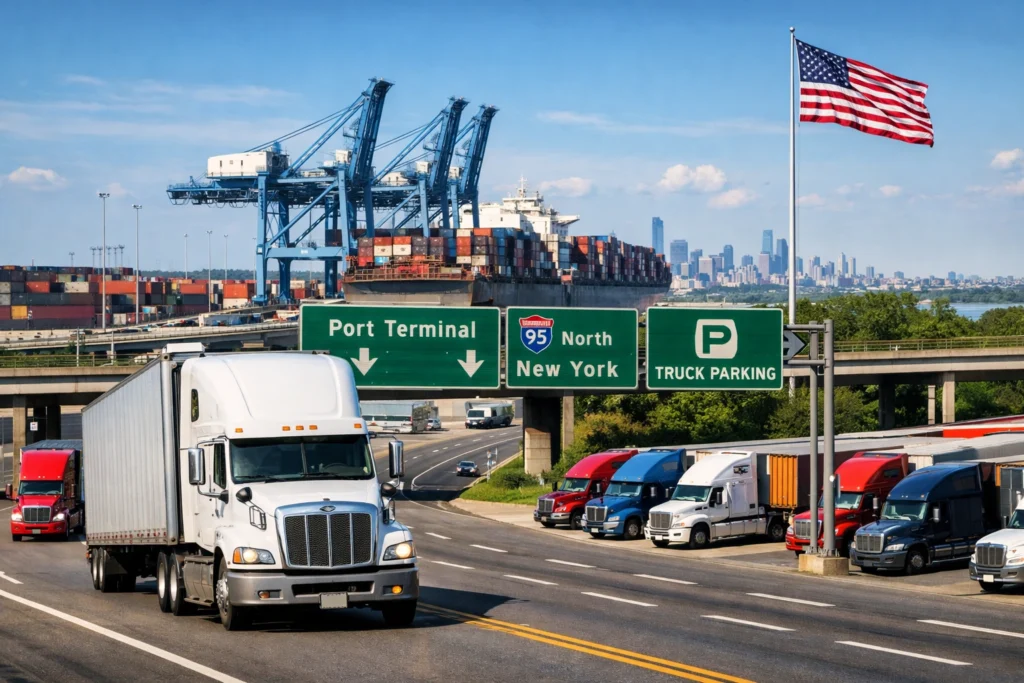
BUILD Grants are designed to fund surface transportation projects, including highways, railways, ports, freight access routes, and—explicitly—truck parking infrastructure. This last category is particularly significant for the trucking industry, which has long faced a structural shortage of safe, compliant parking areas needed to meet federal hours-of-service regulations.
According to official guidance, eligible projects must demonstrate the ability to generate meaningful economic and operational benefits, improve roadway safety, and strengthen connectivity between communities, production centers, and logistics hubs. In practical terms, this includes highway expansions, redesign of critical intersections, improved access to ports and intermodal terminals, and the construction or expansion of rest areas and parking facilities for heavy trucks.
New Merit Criteria
Under the current administration, the BUILD Grants program applies merit criteria that prioritize:
Enhanced roadway safety, particularly along high-traffic corridors.
Increased highway capacity to reduce congestion and travel times.
Operational efficiency, clear signage, and predictable designs that facilitate traffic flow.
Family-oriented and accessible infrastructure without compromising system functionality.
Support for tourism through smoother corridors and access routes.
Support for U.S. energy dominance, favoring projects on strategic routes and ports used for energy transport and industrial equipment.
This final criterion is especially relevant for corridors used to move fuel, petrochemical products, and freight tied to domestic energy production.

Direct Impact on Truck Transportation
For the trucking sector, the implications are concrete. Upgraded highways and access routes help reduce operating costs associated with delays, detours, and vehicle wear and tear. At the same time, recognizing truck parking as an eligible investment category addresses a long-standing demand from drivers and carriers, who face fines, safety risks, and financial losses due to the lack of adequate places to stop.
Investments in port areas and road-to-port connections are also expected to ease bottlenecks that disrupt supply chains, particularly in containerized and bulk cargo movements. As domestic trade and energy production continue to grow, these projects aim to strengthen the competitiveness of the U.S. transportation system.
A Program with a Track Record
The BUILD program was originally created in 2009 under the American Recovery and Reinvestment Act to spur job creation and economic activity through infrastructure investment. Since then, it has become one of the federal government’s primary tools for funding transportation projects at the state and local levels.
According to official data, as of July 2025 the program had awarded more than $18 billion across 18 funding rounds, benefiting local governments, states, port authorities, transportation agencies, and tribal communities. The new funding cycle seeks to continue that legacy with a stronger focus on operational and economic outcomes.
Deadlines and Outlook
Applications for the 2026 BUILD Grants must be submitted by February 24, 2026, at 5:00 p.m. Eastern Time. While the funded projects will not break ground immediately, the selection and award process suggests that many will begin construction between 2026 and 2028, delivering long-term improvements to the nation’s road and logistics networks.
For trucking companies and drivers, the announcement sends a clear signal: truck road infrastructure is back at the center of the federal agenda, with a focus on highways, freight movement, and operational efficiency—key pillars for sustaining the flow of goods and the real economy of the United States.

Frozen Roads After Bomb Cyclone: Black Ice, Record Snow and High Risk for Trucks
Frozen roads continue to disrupt freight transportation following the impact of a powerful bomb cyclone, leaving behind black ice, highway shutdowns, power outages, and dangerous winter driving conditions stretching from the Gulf Coast to New England.

Lunar New Year 2026: Ancient Traditions, Renewed Energy, and Massive Celebrations
Lunar New Year 2026 begins on February 17 under the sign of the Fire Horse and is marked by spiritual rituals, family reunions, and large-scale celebrations in both China and the United States, especially in California.

Freedom 250 Grand Prix: How Logistics and Transportation Will Power the Race in Washington
The first-ever IndyCar street race in Washington, D.C., scheduled for August 21–23, will headline the United States’ 250th anniversary celebrations — and it will trigger a massive transportation, freight, and urban logistics operation behind the scenes.

Groundhog Day: What It Means for Trucking When “Phil Sees His Shadow”
The forecast from America’s most famous groundhog is calling for more winter — and that’s an important signal for the trucking industry and cold-season route planning

Love on the open road: the best dating apps for truckers
If you’re looking for someone to go the long haul with, here are the best dating apps for truck drivers. They say love is everywhere…

The most congested cities in the U.S. and the world in 2025
The annual TomTom Traffic Index produces a ranking of the most congested cities in the world. The annual TomTom Traffic Index presents an analysis of