Llame al (888) 572-7520 para hablar con un agente

The U.S. Department of Transportation has launched a $33 million federal investment plan focused on innovation, road safety, and artificial intelligence, delivered through the University Transportation Centers to strengthen infrastructure, freight mobility, and the future of logistics across the United States.

Transportation is one of the structural pillars of the U.S. economy. Trucks, interstate highways, ports, logistics hubs, and distribution centers sustain the daily movement of goods that fuels consumption, industrial activity, and international trade—and this scale and complexity demand a long-term modernization plan.

Against this backdrop, the recent announcement by the U.S. Department of Transportation (USDOT) allocating USD 33 million in federal funding for transportation research and innovation is far from minor news. It marks the launch of a targeted federal plan and sends a clear signal about the direction of public policy on infrastructure, road safety, and technology applied to the transportation system.

The initiative was presented by Transportation Secretary Sean P. Duffy and is being implemented through the University Transportation Centers (UTC) Program, a nationwide network of university-based research centers dedicated to applied transportation research.

The stated goal is to redirect federal funding toward projects that prioritize safety, technological innovation, operational efficiency, and economic competitiveness, moving away from funding lines considered unrelated to the core needs of the transportation system.

A Strategic Shift With Structural Impact

Although the announcement is not aimed exclusively at the trucking sector, its implications for freight transportation, highways, and cargo logistics are significant. The UTC Program supports research in key areas such as:

  • Automated driving systems

  • Artificial intelligence and machine learning applied to transportation

  • Digital infrastructure and connectivity

  • Human–machine interaction

  • Road safety and crash reduction

These focus areas are directly linked to the main challenges currently facing heavy-duty transportation in the United States: congestion, roadway deterioration, traffic accidents, high operating costs, and growing regulatory pressure.

Road Safety: A Priority for Freight Transportation

One of the most immediate impacts of this investment will be in road safety, a critical issue for freight transport. Trucks travel millions of miles each year on federal and state highways, many of which are subject to intense wear and tear. Research funded through the UTC Program aims to develop technologies that reduce collisions, improve early warning systems, and enhance driver decision-making in high-risk situations.

The integration of artificial intelligence into driver assistance systems, predictive crash analysis, and real-time monitoring of road conditions can make a meaningful difference along high-traffic freight corridors, where incidents not only result in loss of life but also disrupt supply chains.

Smart Highways and Resilient Infrastructure

Infrastructure is another central pillar of the program. Research centers are working on new materials, more durable pavement designs, and digital systems capable of monitoring the condition of roads and bridges. For freight transportation, this translates into reduced downtime, fewer unexpected detours, and greater operational predictability.

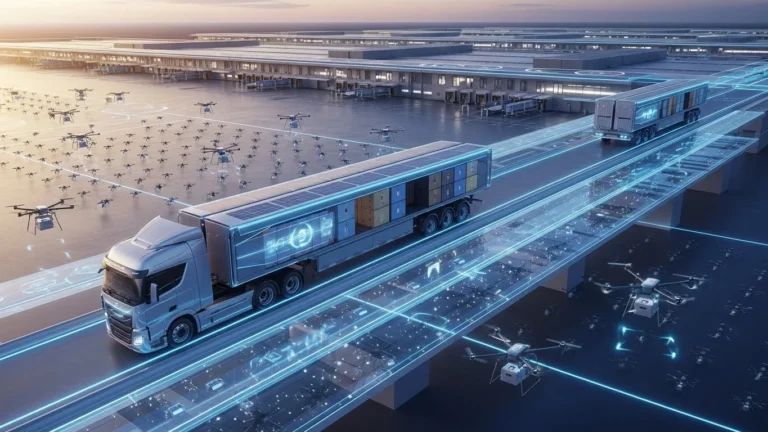
So-called “smart highways,” equipped with sensors and connectivity, allow transportation agencies to anticipate structural failures, better manage heavy traffic, and plan maintenance more efficiently. In a country where much of domestic commerce depends on road transport, these advances have a direct economic impact.

Automation and the Future of Logistics

Automation is another key component of the announcement. While the large-scale deployment of fully autonomous trucks still faces regulatory and technical hurdles, USDOT-funded research is accelerating the development of intermediate technologies, including advanced driver assistance systems, platooning solutions, and decision-support tools for long-haul fleets.

For logistics operations, this means greater efficiency, optimized routing, lower fuel consumption, and improved integration between vehicles, infrastructure, and distribution centers. Investment in university-led research is specifically designed to bridge the gap between technological development and real-world application across the transportation system.

Talent Development and the Workforce

The UTC Program funds not only research but also education and workforce development. Part of the investment is allocated to curriculum development, technical training, and professional upskilling programs. This has a meaningful indirect impact on the transportation ecosystem by preparing engineers, infrastructure planners, logistics specialists, and fleet managers under more advanced technological standards.

In a sector facing skilled labor shortages and generational workforce transitions, this educational component is strategically important.

A Clear Signal to the Transportation Industry

Taken together, the USD 33 million investment represents far more than a budget allocation. It is a political and economic signal about the future of transportation in the United States: more technology, stronger safety standards, and greater efficiency—effects that will be felt most strongly in freight transportation and logistics.

While results will not be immediate, today’s decisions on research and development will shape how trucks move, how highways are designed, and how supply chains operate over the next decade. For a sector that underpins the U.S. economy, the message is clear: innovation in transportation is no longer optional—it is a strategic priority.

Facebook
Twitter
LinkedIn

Working on Christmas: The Essential Jobs That Never Stop

At Christmas, while millions of families gather to celebrate, essential professions remain active around the clock so everyday life can keep moving. Truck drivers, doctors, firefighters, police officers and basic service workers keep the country running even on December 25

Read More »

Leave a Reply

Your email address will not be published. Required fields are marked *

Business hours: Monday to Friday from 8:00 AM to 5:00 PM. California time
Leave your number and a member of our company will contact you
Horario de atención: Lunes a viernes de 8.00 AM a 5.00 PM. Hora california

Deje su número y un miembro de nuestra empresa se pondrá en contacto con usted

Privacy summary

This website uses cookies so that we can offer you the best possible user experience. Cookie information is stored in your browser and performs functions such as recognizing you when you return to our website or helping our team understand which sections of the website you find most interesting and useful.

More information about the privacy policy: Privacy Policy

More information about the terms of use: Terms of use 

More information about the disclaimer: Disclaimer 

More information on acceptable use policies: Acceptable Use Policies