Llame al (888) 572-7520 para hablar con un agente

From recession fears to collapse scenarios, these nine apocalyptic predictions about the U.S. economy didn’t come true in 2025 — and the data shows why.

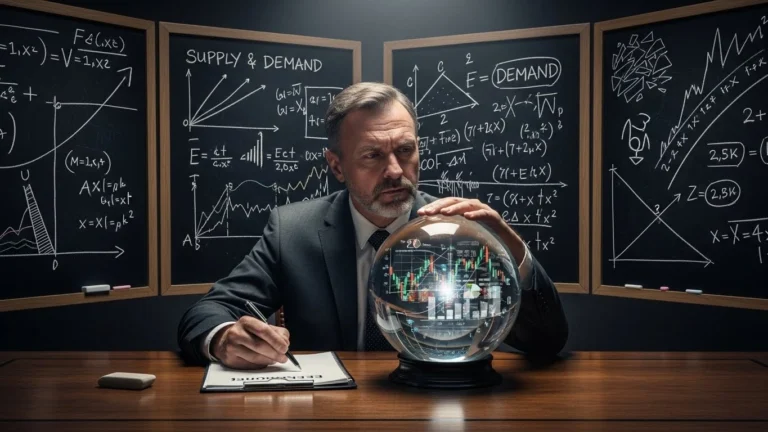
In late 2024 and early 2025, the U.S. economy looked doomed—at least according to headlines, TV pundits, viral threads, and a long list of self-styled “gurus.” An inevitable recession, a debt crisis, a tech collapse, and an exhausted consumer dominated the script.

Reality proved far less cinematic—and far more uncomfortable for the prophets of doom. Instead of sinking, the U.S. economy expanded, surprised markets, and sent many apocalyptic forecasts to the archive.

According to the Bureau of Economic Analysis, real GDP grew at an annualized 4.3% in the third quarter of 2025—the fastest pace in two years. There was no recession, no collapse, no apocalypse. Just the real economy doing what it does

  1. The “Inevitable” Recession

The most repeated—and most wrong—prediction. High rates, tighter financial conditions, and fiscal drag were supposed to push the U.S. into a technical recession in 2025. Instead, growth was positive and robust. Not only did contraction fail to arrive—the economy accelerated.

  1. The Consumer on the Brink

Households were described as tapped out, overleveraged, and ready to slam the brakes. Yet consumption remained the main growth engine, advancing at an annualized pace near 3.5%, led by services such as healthcare and travel. Once again, the U.S. consumer did what it does best: disproved terminal diagnoses.

  1. The Collapse of Big Tech

The so-called “Magnificent Seven”—Apple, Amazon, Nvidia, and peers—were portrayed as a bubble about to burst. In 2025, there was no apocalyptic crash. Tech saw adjustments and cooler sentiment, but it remained a core pillar of investment and equity markets.

  1. A Total Freeze in Business Investment

With interest rates elevated, companies were expected to shelve projects. The opposite happened. Investment grew about 2.8%, driven by IT equipment and data centers tied to artificial intelligence. AI didn’t save the world—but it dismantled plenty of fatalistic forecasts.

  1. An Unmanageable Debt Crisis

Public debt was framed as a ticking time bomb set to explode in 2025. While it remains a structural challenge, there was no sudden crisis or loss of control. Markets continued to finance the Treasury without episodes of systemic panic.

  1. Trade as an Inevitable Drag

Tariffs, global tensions, and fragmentation were said to guarantee stagnation. Yet net exports added roughly 1.6 percentage points to GDP growth in Q3. Less narrative, more pragmatic trade made the difference.

  1. Government Shutdown as Chaos Trigger

The federal government shutdown delayed data releases and fueled alarmist headlines. Beyond the political noise, the economy kept moving. Activity didn’t freeze, and growth didn’t derail due to missing statistical publications.

  1. Runaway Inflation and Brutal Tightening

Inflation stayed above the 2% target, with core PCE near 2.9%, but it never spiraled out of control. Growth continued without an inflationary meltdown. From the Federal Reserve, Chair Jerome Powell emphasized a gradual approach—far from the dramatics circulating online.

  1. The Labor Market as the Final Trigger

A jobs implosion was supposed to crush consumption. While the labor market cooled, there was no mass crisis or sudden unemployment spike. The adjustment was measured, not catastrophic.

The Uncomfortable Lesson: Gurus Don’t Exist

The mistake wasn’t assessing risks. It was selling absolute certainty. The economy isn’t a self-fulfilling prophecy or a Swiss watch. It runs on incomplete data, human decisions, unexpected shocks, and constant adaptation.

Economic “gurus” often fail for a simple reason: they confuse possible scenarios with inevitable outcomes. When they’re right, it’s “vision.” When they’re wrong, they pivot quickly to the next apocalypse.


2025 wasn’t perfect. Inflation, affordability, and income gaps persisted. But it wasn’t the foretold collapse either. It was a reminder that the economy is more resilient than viral forecasts—and that in economics, absolute certainty is the rarest commodity.

One thing is clear: the economic apocalypse always seems just around the corner… until the data arrive and say otherwise.

Facebook
Twitter
LinkedIn

$1 Billion U.S. Road Safety Plan Reshapes Key Freight Routes

A $1 billion U.S. road safety plan is reshaping key freight routes nationwide, directing federal investment into highways, intersections, and emergency-response systems to reduce accidents, improve freight efficiency, and deliver safer corridors for truck drivers and local traffic.

Read More »
Captura video AccuWeather

Severe Flooding and Travel Chaos in Southern California

A powerful atmospheric river is driving Severe Flooding and Travel Chaos in Southern California, with torrential rain triggering mudslides, emergency evacuations, and widespread road closures. Major highways such as Interstate 15 were shut down as floodwaters and debris inundated roads and bridges, stranding holiday travelers and disrupting regional transportation.

Read More »

Leave a Reply

Your email address will not be published. Required fields are marked *

Business hours: Monday to Friday from 8:00 AM to 5:00 PM. California time
Leave your number and a member of our company will contact you
Horario de atención: Lunes a viernes de 8.00 AM a 5.00 PM. Hora california

Deje su número y un miembro de nuestra empresa se pondrá en contacto con usted

Privacy summary

This website uses cookies so that we can offer you the best possible user experience. Cookie information is stored in your browser and performs functions such as recognizing you when you return to our website or helping our team understand which sections of the website you find most interesting and useful.

More information about the privacy policy: Privacy Policy

More information about the terms of use: Terms of use 

More information about the disclaimer: Disclaimer 

More information on acceptable use policies: Acceptable Use Policies