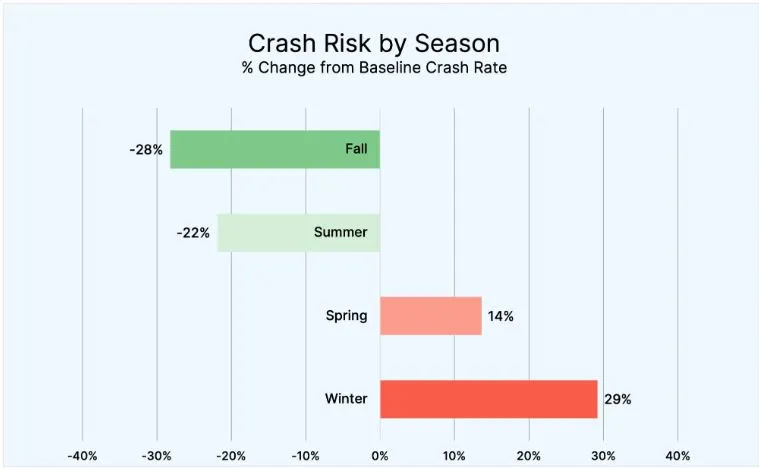
While winter conditions are hazardous across the country, some states experience significantly higher accident rates during this season.
A study by Samsara, a safety and risk company for commercial drivers, evaluated the increase in traffic accidents during winter caused by extreme weather conditions and reduced visibility, demonstrating how dangerous roads can be during this season. According to the Federal Motor Carrier Safety Administration (FMCSA), winter weather conditions contribute to nearly 20% of all weather-related crashes nationwide.
In accidents involving large trucks, about 70% of fatalities and approximately 72% of injuries are occupants of other civilian vehicles, according to Samsara data.
Although truck drivers log fewer miles in winter than in spring, there are about 7% more accidents per million miles driven during the winter months. In addition, the risk of accidents in winter is higher during peak hours, when congestion, changes in pavement temperature, and the transition from daylight to darkness combine to reduce drivers’ reaction time.
As a result, winter becomes the most dangerous season for driving.
The most dangerous states during winter
While winter conditions are hazardous across the country, some states experience significantly higher accident rates during this season. According to the Samsara study, from fall to winter, accident rates increased by 168% in North Dakota, 65% in Mississippi, and 50% in Kentucky, with notable spikes also observed in Minnesota, Michigan, and Iowa. These states share a common pattern: rural or high-speed interstate highways combined with early freezes and variable pavement conditions, creating sudden exposure changes for commercial drivers.
According to data shared by Samsara, these are the most dangerous states in the United States during the winter season:
- North Dakota: +168% (Rural freight corridors, extreme cold, limited lighting)
- Mississippi: +65% (Freeze–thaw precipitation, rural roads with low traction)
- Kentucky: +50% (Appalachian terrain, black ice on secondary highways)
- Minnesota: +44% (Long winter season, early-morning commuter exposure)
- North Carolina: +41% (Mixed precipitation, western mountains versus coastal rain)
- Michigan: +38% (Snowbelt exposure, multi-vehicle chain-reaction crashes)
- Iowa: +37% (Agricultural transport, icy crosswinds on open plains)
- West Virginia: +35% (Narrow rural roads, rapid elevation changes)
- Nevada: +35% (Nighttime black ice formation on desert highways)
- Alaska: +29% (Extreme cold, limited daylight hours, low total mileage)
Road risk patterns show strong geographic contrasts, explains Samsara. Some northern states and rural areas record accident rates two to three times higher than the national average, despite having relatively few total crashes. Densely populated states (such as Texas and California) account for the highest number of accidents in absolute terms, while states with lower mileage but higher risk (such as North Dakota or Minnesota) stand out for accidents per mile traveled.
At a regional level, the Upper Midwest (North Dakota, Minnesota, Iowa, and Michigan) shows the largest increases due to snow, ice, and long-haul traffic. In the Appalachians and the South (Kentucky and Mississippi), freeze–thaw cycles and limited road salting infrastructure play a major role. Western and mountainous states (Nevada and Colorado) are affected by nighttime black ice and high-altitude corridors. The Northeast (New York and Massachusetts) experiences smaller but consistent winter increases, offset by effective snow removal and driver familiarity with winter conditions.
To stay safe during this season, it is important to remain alert to changing weather conditions and road closures. For your safety and that of other drivers, drive calmly and continuously assess road conditions. Learn more about how to stay safe while driving in winter here.

Why Summer is the Most Dangerous Season for Your Truck
During summer, extreme heat, increased traffic, road construction, and mechanical stress create a combination of risks for your truck and your load.

GHOSTRUCK Act to Curb Foreign Manipulation of Truckers’ ELDs
The new bill aims to close a regulatory loophole involving foreign manipulation of ELDs.

Florida Will Mark Certain Drivers With Code 775.261
Starting in October, Florida will identify certain drivers with the code 775.261 on their licenses. What it means for CDL holders, how it could influence insurance evaluations, and the new requirements affected drivers must follow.

Amazing goals from the World Cup! Soccer moves trucks and brings billions to the US economy
The biggest sporting championship in history is injecting billions of dollars into the economy, driving up demand for heavy freight. More tourists spending, more need for services, and more jobs.

What Are the Most Expensive Trucks in the World?
With the Thor 24 leading the list at more than $13 million, these are the most expensive and exclusive trucks on the planet.

Invisible Heroes: The Silent Sacrifice of Fathers Who Move America
Despite the fact that the engine of the economy depends on their tireless work on the roads, thousands of truckers celebrate their day far from home, facing the harsh reality of distance.