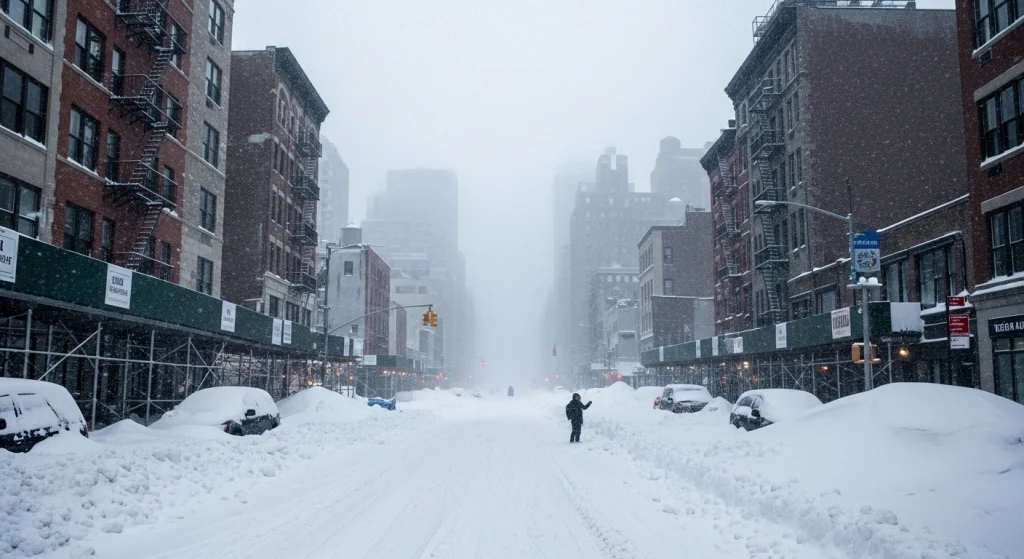
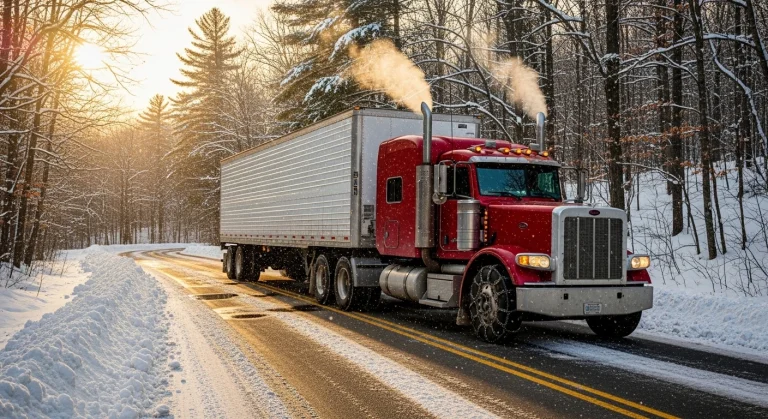
The historic winter storm impacting the Northeastern United States is dumping up to 24 inches of snow, bringing wind gusts exceeding 60 mph and triggering key freight transportation restrictions across New York and New Jersey, disrupting one of the nation’s most critical logistics hubs.

The historic winter storm that rapidly intensified off the Atlantic coast is generating one of the most disruptive weather events of the 2026 winter season for the transportation industry. New York, New Jersey, and the broader tri-state corridor are facing extreme snowfall, near-zero visibility, and operational restrictions directly affecting major interstate highways, ports, and distribution centers.
For the trucking sector, the impact is immediate and significant.
Logistics Corridors Under Severe Pressure
Projected snowfall totals of 16 to 24 inches across the New York metropolitan area are directly affecting essential freight arteries, including:
I-95
I-80
I-87
I-78
New Jersey Turnpike
Garden State Parkway
At the peak of the historic winter storm, snowfall rates have reached up to three inches per hour, combined with sustained northeast winds of 45 to 60 mph, with even stronger gusts in coastal areas. These conditions are creating whiteout scenarios where visibility drops to near zero.
Operationally, this results in:
• Severe speed reductions
• Temporary commercial vehicle restrictions
• Increased risk of jackknifing and rollovers due to crosswinds
• Heavy congestion near port entrances and major logistics hubs
The Port of New York and New Jersey, one of the busiest freight gateways in the country, is also facing coastal flooding risks of one to two feet due to storm surge. This raises the potential for additional delays in intermodal operations and container handling.
State of Emergency and Commercial Vehicle Restrictions
Both New York and New Jersey have declared states of emergency as the historic winter storm moves through the region. Authorities are urging residents to avoid non-essential travel, and in certain corridors, specific restrictions have been implemented for commercial vehicles—particularly on bridges, elevated roadways, and wind-exposed sections.
The most severe impact window extends through the early morning hours of February 23, with rapid snow accumulation, compacted ice formation, and heightened crash risk.
For logistics operators, this means immediate adjustments to delivery schedules, extended transit times, and potential service disruptions if routes are not proactively managed.

Broader Supply Chain Impact
Beyond highway conditions, the historic winter storm is triggering ripple effects across the broader supply chain:
Delays at Northeast distribution centers
Cargo flight cancellations and rescheduling
Port and rail terminal slowdowns
Potential power outages affecting warehouse operations
With post-storm temperatures hovering near 30°F, the next risk phase includes black ice formation and hazardous pavement conditions caused by freeze-thaw cycles.
From an insurance and risk management standpoint, events of this magnitude significantly increase exposure to multi-vehicle collisions, rollover claims, cargo damage, and yard-related incidents.
Key Safety Recommendations for Truck Drivers
In conditions like these, safety must remain the top priority. Essential measures for commercial drivers include:
1. Avoid operating during peak storm intensity
If feasible, delay departures and remain parked in secure, designated areas until conditions improve.
2. Monitor active state-level restrictions
States may impose temporary commercial vehicle limitations during severe winter events.
3. Reduce speed significantly below posted limits
Stopping distances can double or triple on snow-covered or icy pavement.
4. Exercise extreme caution in crosswind corridors
Wind gusts above 50 mph pose serious stability risks, especially for empty or lightly loaded trailers.
5. Avoid sudden steering, acceleration, or braking
Abrupt maneuvers dramatically increase jackknife risk.
6. Inspect tires, brakes, and air systems
Extreme cold can impact equipment performance.
7. Keep a fully stocked emergency kit in the cab
Include thermal blankets, flashlights, backup batteries, water, and non-perishable food.
8. Communicate delays proactively
Early coordination with dispatchers and clients helps reduce operational and contractual risk.

California vs. Washington: regulatory dispute over trucks in the U.S.
California, the most populous state in the country, wants to remove diesel trucks from its roads. Washington wants exactly the opposite. In between, thousands of fleets are left unsure about which engine to buy.

Volvo Pushes Beyond Diesel with New Hydrogen Combustion Truck Trials
Volvo Trucks is once again taking the lead, beginning road tests with heavy trucks equipped with hydrogen combustion engines.

Trucker Fashion: A Revolution Born on the Road That Still Sets the Trend
Trucker fashion remains relevant due to its authenticity, its seamless integration into streetwear, and its reinterpretation by luxury brands, consolidating itself as a revolution born on the road that evolved from a work uniform into a global cultural symbol

North Dakota among states regaining non-domiciled CDL authority
North Dakota will reissue approximately 150 of the 526 CDLs and CLPs for non-resident drivers that were active during the FMCSA audit.

The Growing Threat of Chameleon Fleets
A CBS ‘60 Minutes’ investigation exposes the rise of ‘Chameleon Fleets’ in the U.S. trucking industry.

US transportation begins to show signs of recovery
With tonnage at record levels and rates on the rise, carriers are leading the expansion of the logistics market. If the forecasts hold true, years of uncertainty could be over.