The implementation of these new tariffs has generated global uncertainty among exporters, increasing confusion around U.S. trade policy.
The United States has implemented a new temporary 10% tariff on global imports. Last Friday, February 20, President Donald Trump signed an order imposing a 10% tariff for 150 days under an emergency law, replacing previously established tariffs. However, the Supreme Court overturned the motion. In response, the president announced he would raise the rate to 15%.
Although President Trump’s position on applying the 15% rate has not changed, according to Reuters, U.S. Customs and Border Protection notified carriers late Monday that the rate would remain at 10%.
Since no official order has been signed to increase the tariff to 15%, the previously signed measure establishing the 10% tariff remains in effect as of Tuesday, February 24. This means that all shipments and imports into the U.S. are subject to an additional cost of at least 10%, except for specific exemptions.
The 10% tariff takes effect
The implementation of these new tariffs has generated global uncertainty among exporters, increasing confusion around U.S. trade policy. Traders cited uncertainty over trade prospects as one reason global markets opened lower on Tuesday.
The original announcement of a potential increase to 15% caused confusion in global markets, and stock indexes experienced volatility linked to trade uncertainty: the Dow Jones Industrial Average (.DJI) rose 0.65%, the S&P 500 gained 0.5%, and the Nasdaq (.IXIC) increased 0.8%, according to Reuters data.
The 150-day period is established under Section 122 of U.S. trade law, which allows the president to impose tariffs to address large and serious balance-of-payments deficits and fundamental international payments problems. Trump’s tariff order argued that there was a severe balance-of-payments deficit, citing a $1.2 trillion annual trade deficit in goods, a current account deficit equal to 4% of GDP, and a reversal of the U.S. primary income surplus.
Some market experts, economists, and trade lawyers argue that the United States is not on the brink of a balance-of-payments crisis as Trump claims, putting the new tariffs at risk of legal challenges.
Companies react to tariff uncertainty
According to federal data, as of December, the Treasury Department had collected more than $133 billion from import taxes imposed under the president’s emergency powers law. The estimated impact over the next decade is projected to reach approximately $3 trillion.
FedEx has sued the U.S. government to recover tariffs paid, alleging financial damages of up to $1 billion in 2026 due to those duties. Other major companies, including Costco, Toyota, and Goodyear, are also filing lawsuits seeking tariff refunds.
This highlights that for companies handling or importing shipments, tariffs represent a significant burden and are now being contested in court. It remains unclear whether businesses will be reimbursed for tariffs paid under the program struck down by the Supreme Court, or how such reimbursements would be handled.
Although updated quantitative data has not yet been published, available evidence suggests that due to steep tariffs, 2025 saw a notable reduction in certain shipments from countries such as China to the United States (as previously observed when high tariffs were imposed). Economists and analysts have emphasized that tariffs tend to increase consumer prices, as importers often pass on the additional costs.
Trump warns of punitive measures
On Monday, Donald Trump warned that countries failing to honor previously negotiated trade agreements with the United States could face significantly higher tariffs under other laws.
Japan requested assurances that it would receive favorable treatment under the new tariff regime, while the European Union, the United Kingdom, and Taiwan expressed their preference to maintain existing agreements. Meanwhile, China urged Washington to remove its “unilateral tariffs” and stated its willingness to engage in another round of trade negotiations with the United States.

Texas Considers New Laws to Regulate Truck Weights and Protect Infrastructure
Texas is considering new bills to tighten penalties for overweight trucks, modify transportation routes, and ease load limits.

The Unsung Heroes of Trucking: Technicians to Be Honored in June
National Technician Appreciation Week will be held in June to recognize the professionals who keep trucks safe, prevent mechanical failures, and ensure trucking operations

EPA Submits Final Review of NOx Emissions Rule for Heavy-Duty Trucks
The EPA has submitted its final revisions to the nitrogen oxide (NOx) emissions regulations for heavy-duty vehicles.

Thanksgiving: America’s Busiest Week for Travel, Trucking, and Giving Thanks
Millions of Americans gather to celebrate Thanksgiving, a tradition that brings families together and keeps food and freight moving across the country. Behind every holiday dinner is a massive logistics operation, with thousands of truck drivers working to ensure everything arrives on time.

Highway 50: The Loneliest Road in America
287 miles constitute Highway 50 and they’re all part of what’s known as the “Loneliest Road in America.”
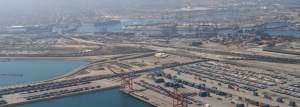
Strike at the Ports of Los Angeles and Long Beach Threatens U.S. Maritime Trade
The Ports of Los Angeles and Long Beach are facing a possible strike by security workers on November 21, with potential risks to the United States supply chain.

