 Hable con un agente al (888) 572-7520
  Enviar mensaje a un agente


A towing bill has sparked debate across trucking pages and forums. According to data from FreightWaves, a 2017 Freightliner Cascadia with Florida plates was impounded on Statesville Road in Charlotte, North Carolina, at 5:03 a.m. on March 19, 2026. The total bill came to $6,535 for parking in a restricted zone.
This is where the controversy begins: while some call it a scam, others argue that the responsibility lies solely with the truck driver, who should have known the consequences of parking in an unauthorized area. However, the case reflects a broader issue beyond simply “punishing” the driver. On one hand, it highlights the lack of adequate truck parking in the road transport sector, and on the other, it brings attention to the discussion around potentially abusive towing practices in the country.
The cost of the parking shortage and abusive towing practices
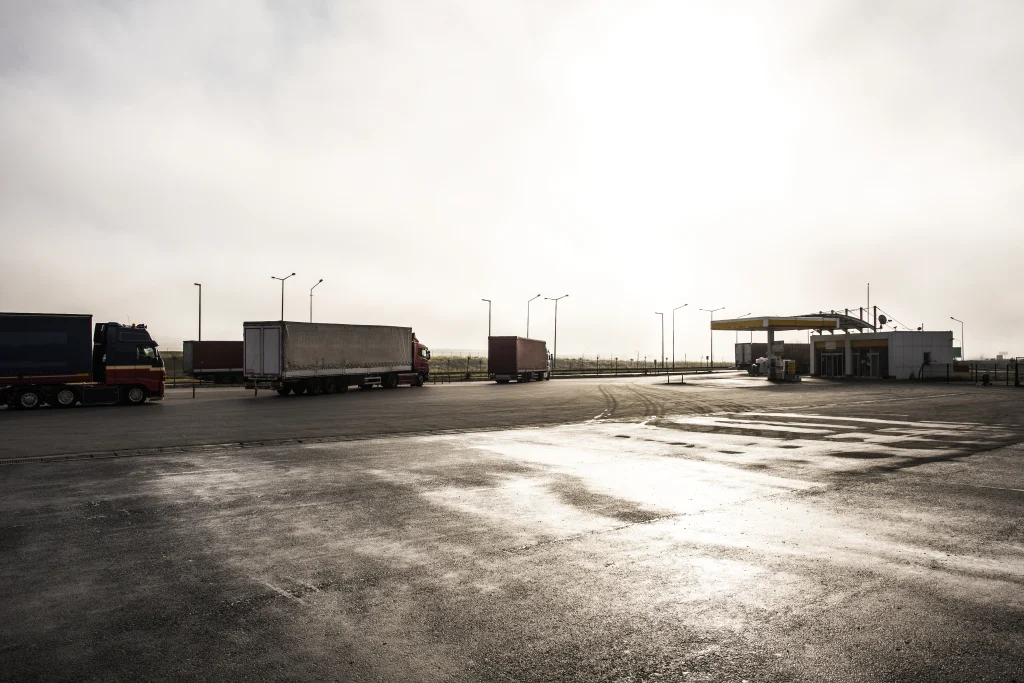
The truck parking situation in the United States is marked by a significant shortage of public truck parking spaces. The American Transportation Research Institute has published multiple reports on the issue, showing that 79% of public truck parking is still located at rest areas, while only 8,086 spaces exist in other locations—indicating major regional disparities in availability.
Nationwide, there are approximately 30,440 truck parking spaces available at rest areas, with an average of 662 spaces per state. In addition, drivers spend an average of 56 minutes per day searching for legal parking. With strict hours-of-service regulations, many are forced to make the difficult decision to park in unofficial areas in order to comply with mandatory rest requirements.
A 2025 ATRI report found that funding limitations, community opposition, and difficulty in securing suitable land are the main reasons more truck parking facilities are not being developed. And when truckers cannot find parking at rest areas, it leads directly to the next issue.
According to the National Insurance Crime Bureau, reports of abusive towing practices in the United States increased by 89% between 2022 and 2024, affecting multiple cities and regions.
States such as Mississippi, Indiana, and California have recently enacted laws to combat these practices, addressing issues like excessive towing fees and unjustified service charges. Advocacy groups are actively working to protect consumers from abusive towing conduct, and several states are pushing reforms to ensure transparency and legal recourse for motorists. However, there is still a long way to go.
Charlotte is one of the cities that has been affected by both problems for years. With a shortage of legal truck parking in the metropolitan area and surrounding regions, the city is unable to accommodate the volume of trucks that pass through daily. Truck drivers are often forced to park on ramps, residential streets, and even fast-food parking lots, simply to comply with their hours-of-service requirements.
The result is cases like this one, where a truck driver is forced to pay more than $6,000 in impound fees, plus taxes, simply for not finding available parking.
Laws must be followed, and any driver who violates them should be held accountable. The problem lies in the lack of balance: it is unreasonable to demand proper parking if adequate spaces do not exist.

How can you avoid becoming a victim of abusive towing practices?
To help ensure you don’t fall victim to abusive towing, the NICB recommends keeping the following tips in mind:
- If you didn’t request the tow, refuse it: don’t fall for illegal tow operators. Wait for law enforcement and request an authorized towing service.
- Get informed before being towed: gather all information about the towing company you use after a car or truck accident.
- Avoid paying cash upfront: legitimate towing companies accept traceable payment methods. Also, verify whether your insurance covers towing expenses.
 Business hours: Monday to Friday from 8:00 AM to 5:00 PM. California time