 Hable con un agente al (888) 572-7520
  Enviar mensaje a un agente

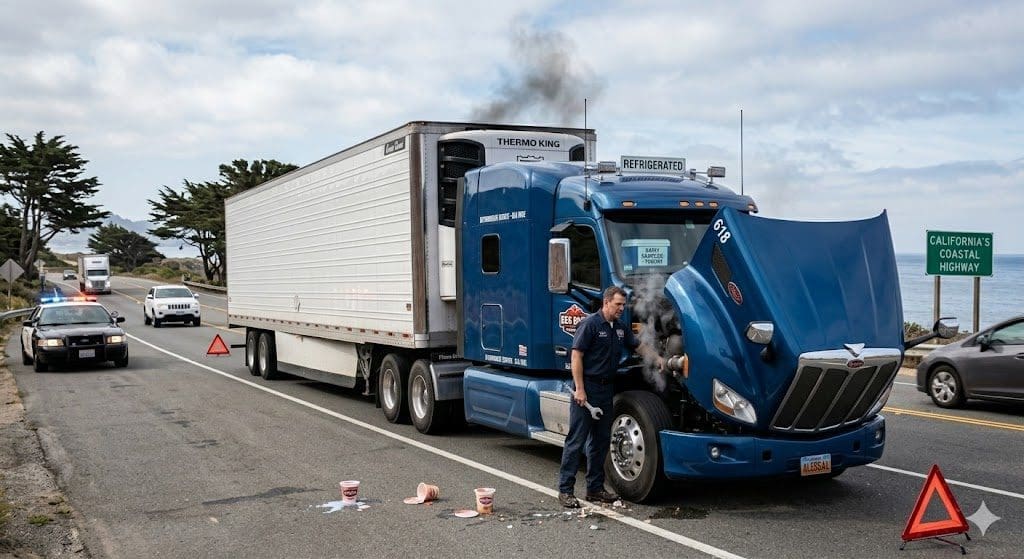

Most people never think about it when they buy yogurt at a grocery store, pick up fresh meat from a supermarket, or receive medication that requires refrigeration. Yet behind each of those products is a complex transportation and monitoring network known as the cold chain.
When the cold chain works properly, nobody notices it. But when it fails during transportation or storage, the consequences can be enormous. Every refrigerated product depends on precise temperature control from the moment it leaves a production facility until it reaches the consumer.
A malfunctioning refrigeration unit, a trailer door left open, an unexpected delay at a distribution center, or even a faulty sensor can trigger a chain of events that may result in product losses, costly recalls, and serious public health risks.
So what exactly happens when the cold chain breaks?
The Moment the Emergency Begins
Imagine a refrigerated truck hauling several tons of perishable goods across an interstate highway. During transit, the temperature monitoring system detects that the trailer temperature is rising above the acceptable range.
What initially appears to be a simple technical alert can quickly become a logistics emergency.
Modern refrigerated fleets rely on telematics systems and connected sensors that continuously monitor trailer temperatures in real time. If temperatures move outside predefined thresholds, automatic alerts are sent to both the driver and the operations center.
At that moment, the clock starts ticking.
Why a Few Degrees Matter
The primary reason is microbiological.
Bacteria such as Salmonella, Escherichia coli (E. coli), and Listeria monocytogenes can multiply rapidly when food remains outside safe temperature ranges.
One of the most concerning aspects is that these microorganisms often do not change the appearance, smell, or taste of a product. Contaminated food can look completely normal.
Listeria presents a particularly difficult challenge because it can survive and continue growing even at relatively low temperatures. When refrigeration fails, its growth can accelerate significantly within a matter of hours.
That is why food safety experts treat every cold-chain interruption as a potentially serious event.
The Most Common Causes of Cold-Chain Failures
Although today’s refrigeration systems are highly reliable, several factors can still cause temperature-control failures.
Common causes include:
- Electrical issues
- Battery or alternator failures
- Refrigerant leaks
- Faulty temperature sensors
- Monitoring system errors
- Trailer doors left open or improperly sealed
- Lack of preventive maintenance
- Mechanical damage during transit
In many situations, failures are not caused by a single catastrophic breakdown but by a combination of small technical problems and human error.
The First Few Hours Are Critical
When a temperature excursion occurs, the first few hours are often decisive.
Drivers must assess the situation and immediately communicate with dispatch or fleet operations. Depending on the type of cargo, location of the vehicle, and temperature readings, companies may choose several different response strategies.
Possible actions include:
- Repairing the refrigeration system on the road
- Transferring the cargo to another refrigerated trailer
- Redirecting the shipment to a nearby cold-storage facility
- Continuing to the destination if the remaining transit time is short and temperatures remain within acceptable limits
Throughout the process, every temperature reading is recorded and documented. These records later become essential for quality-control reviews, insurance claims, regulatory compliance, and liability assessments.
Not Every Product Reacts the Same Way
Different products have different temperature tolerances.
Some of the most sensitive cargo categories include:
- Fresh meat and processed meat products
- Seafood and fish
- Fresh dairy products
- Soft cheeses
- Ready-to-eat foods
- Pharmaceutical products
- Vaccines and biologics
Other agricultural products may tolerate temporary temperature fluctuations with less immediate risk.
However, every product category is governed by strict handling requirements and temperature-control standards.
When the Cargo Can No Longer Be Saved
In some cases, once certain temperature and time thresholds are exceeded, the cargo must be discarded.
This decision is rarely made by the driver or carrier alone. Food safety specialists, laboratory analysts, quality-control teams, and cargo owners typically become involved.
International food safety standards, including Hazard Analysis and Critical Control Point (HACCP) systems, establish clear criteria for determining when a product is no longer safe for consumption.
When those limits are exceeded, disposal becomes mandatory.
The Financial Impact of a Single Failure
The costs associated with a cold-chain failure can be staggering.
A single refrigerated trailer may carry cargo worth tens or even hundreds of thousands of dollars.
Additional costs may include:
- Emergency transportation services
- Product testing and inspections
- Disposal and destruction expenses
- Supply chain disruptions
- Contract penalties
- Legal claims
- Brand reputation damage
For many companies, losing one shipment can erase weeks or months of profit.
When the Problem Reaches Consumers
The situation becomes even more serious when a failure goes undetected.
If compromised products reach grocery stores, restaurants, hospitals, pharmacies, or consumers, companies may be forced to initiate large-scale recalls.
These recalls require businesses to trace affected lots, notify regulatory agencies, contact customers, and remove products from the market.
In severe cases, consumers may have already used or consumed the products before the issue is discovered.
That is one reason why traceability has become such a critical component of modern logistics operations.
Technology, Monitoring, and Artificial Intelligence
The good news is that technology has dramatically improved prevention capabilities.
Modern cold-chain systems can monitor temperature, humidity, equipment performance, and vehicle location in real time.
Some advanced platforms now use artificial intelligence to identify abnormal operating patterns and predict equipment failures before they occur.
However, technology alone cannot eliminate risk.
A trailer door left open too long, a missed maintenance inspection, or an operational mistake can still result in substantial losses.
A Lesson Every Carrier Understands
A cold-chain failure is far more than a mechanical problem.
It is where logistics, food safety, public health, regulatory compliance, and risk management intersect.
That is why experienced carriers often follow a simple rule: when there is reasonable doubt about the safety of a shipment, protecting consumers must come first.
After all, the cost of losing a load can be measured in dollars. The cost of a foodborne illness outbreak, damaged brand reputation, or public health crisis can affect a company for years.
A refrigeration failure may begin with a simple alarm somewhere on the highway. The decisions made during the next few hours can determine whether it remains a manageable incident—or becomes a multimillion-dollar crisis.
Protect Your Refrigerated Cargo
Even the best cold-chain systems can fail. When they do, the financial losses can be substantial.
Saint George Insurance Brokerage offers coverage solutions designed to help carriers manage risks associated with refrigerated cargo and temperature-sensitive shipments.
 Business hours: Monday to Friday from 8:00 AM to 5:00 PM. California time