 Hable con un agente al (888) 572-7520
  Enviar mensaje a un agente



This 4th of July, while families gather to fire up their barbecues and fireworks light up the sky, thousands of professional truck drivers will keep right on moving the United States economy. It is a tradition as old as the nation itself.
Today, driving a Class 8 truck with an automated transmission, a luxury sleeper berth, and satellite navigation is the industry standard. But have you ever wondered how haulers back in 1776 managed to move the country without interstates, without diesel, and under the crossfire of a revolution?
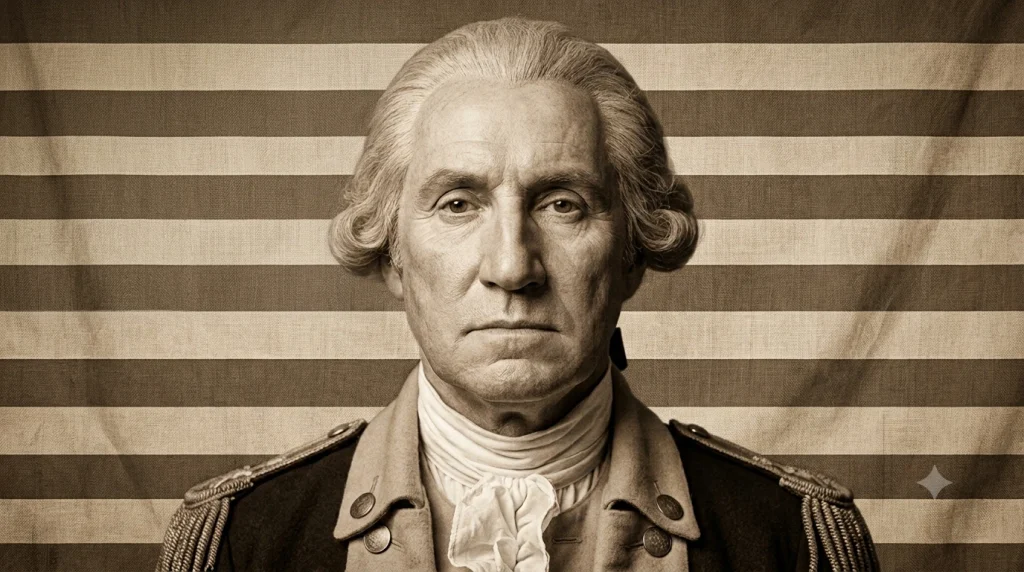
When George Washington and the Founding Fathers signed the Declaration of Independence in Philadelphia, freight transportation was already the engine driving the Thirteen Colonies. Colonial logistics was a rugged, dangerous business and, surprisingly, one with many parallels to today’s industry.
Let’s take a trip back in time to meet the true “grandfathers of trucking” and discover what the distribution business was like before the birth of the Interstate.
1. The Conestoga Wagon: The First “Class 8”
If today’s kings of the asphalt are Peterbilt, Kenworth, or Freightliner, back in 1776, the undisputed king of heavy freight was the Conestoga wagon. Born in Pennsylvania’s Conestoga Valley, this wooden vehicle was the country’s first true innovation in long-haul freight transportation.
Its design was pure logistics engineering. The floor of the wagon curved upward at both ends. This “canoe” shape wasn’t for aesthetics; it prevented tons of cargo from shifting and damaging the structural frame when climbing or descending the steep hills of the Appalachians.
Covered with a white canvas tarp stretched over wooden hoops, these wagons could haul up to six tons of freight. They were the shipping containers of their era, protecting tobacco, wheat, and iron from the elements.
The Business Model of the Colonial Hauler
Just like today’s industry relies heavily on owner-operators, most wagon drivers in 1776 (teamsters) were independent contractors. These men owned their own wagons and a team of four to six draft horses, bred specifically for heavy hauling.
The fuel of the era was grain and hay, and operating costs were brutal. On top of feeding the animals, “vehicle” maintenance required constantly lubricating the wooden axles with a pasty mixture of pine tar and lard.
Freight rates were completely unregulated. Haulers charged by the hundredweight (about 100 pounds), and rates fluctuated drastically depending on the season. In the spring, as the ice thawed, roads turned into literal mud traps; the risk of losing cargo skyrocketed, and haulers demanded higher rates to justify the run.
Here is a curious fact we inherited from them: a Conestoga driver didn’t sit inside the wagon. Instead, they walked alongside or rode the rear-left horse to guide the team with their right hand. To get a clear view of the road ahead, they positioned themselves on the left. This is exactly why we drive on the right side of the road in the United States today.
2. “Express” service from the Independence era
If the Conestoga wagon was the flatbed or dry van of its time, the stagecoach was the 18th-century equivalent of a FedEx or UPS expedited parcel service, combined with passenger transit.
In 1776, moving information, official documents, and military officers quickly was critical to the war effort. This demand gave birth to the nation’s first major transportation fleets and corporations.
Unlike the independent teamster, stagecoach lines operated under large syndicates. These entrepreneurs signed lucrative contracts with the Continental government to haul official mail, guaranteeing them a steady stream of revenue that they supplemented by selling tickets to passengers.
The Logistics of Colonial Truck Stops
The term stagecoach comes from the “stages” into which a journey was broken down. A team of horses couldn’t run at top speed indefinitely, so the route was structured around stops spaced every 15 to 20 miles.
These stops were the grandmothers of our modern truck stops. At these post stations, drivers would swap out their exhausted horses for a fresh team in under five minutes, keeping the freight in constant motion.
The real money for fleet owners, however, lay in vertical integration. The proprietors of the stagecoach lines usually owned the taverns and inns at each stage. There, they charged travelers premium prices for a hot meal, rum, and a shared bed while the horses rested.
To give you an idea of transit times: the most famous express service of the era was called the “Flying Machine.” It took two full days to connect New York City to Philadelphia. Today, a local driver makes that run in just a few hours.
3. Absolute Reliance on the Water
No matter how hard the teamsters pushed on land, the real commercial volume of the Thirteen Colonies moved by water. Long-distance overland transport was ridiculously expensive due to a severe lack of infrastructure.

Moving a ton of goods just 30 miles inland cost as much as shipping it across the entire Atlantic Ocean on a cargo vessel. Because of this, the most prosperous cities were all seaports, like Boston, New York, and Charleston.
The distribution business relied on a primitive intermodal system. Large ships brought manufactured goods from Europe or sugar from the Caribbean, and flatboats distributed the freight along navigable rivers into the heart of the country.
When the Revolutionary War broke out, the British Royal Navy blockaded major American ports. This crippled the traditional business model and forced an overnight logistics pivot. The “grandfathers of trucking” had to step up, risking their lives, wagons, and horses to haul gunpowder, ammo, and medical supplies over improvised overland routes through dense forests and swamps.
The Legacy of 1776 on the Modern Highway
The roads you travel down today in your heavy rig have deep history. Modern freight corridors like Interstate 95 (I-95) follow almost exactly the path of the old King’s Highway, the colonial road that connected the North and the South.
Those transportation pioneers didn’t have air conditioning, air brakes, or air-ride suspensions. They faced highwaymen, broken axles in the middle of nowhere, and merciless weather—all to keep commerce alive.
This 4th of July, when you see the flag waving at the truck stops or on the bumpers of the rigs beside you, remember that America’s freedom and progress weren’t just signed with pen and ink. They were built mile by mile, thanks to the sweat and grit of the country’s very first truck drivers. professionals out there! Thank you for keeping America moving.
 Business hours: Monday to Friday from 8:00 AM to 5:00 PM. California time