 Hable con un agente al (888) 572-7520
  Enviar mensaje a un agente

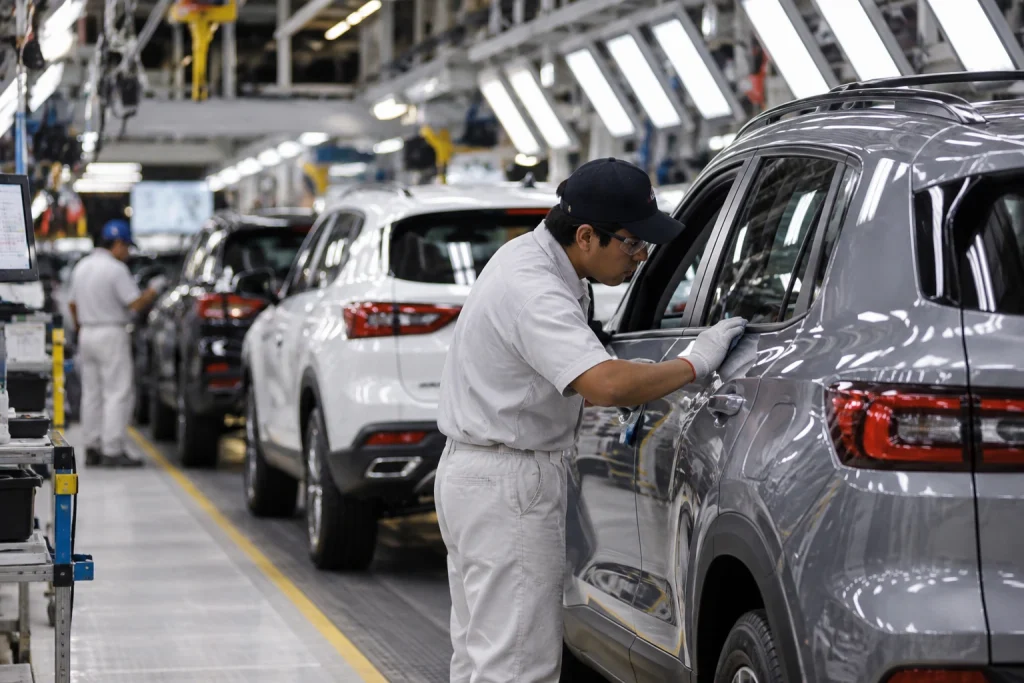

More than 208,000 Volkswagen and Audi SUVs will need to visit dealerships across the United States because of a defect that could affect one of the most critical systems in any vehicle: the steering.
Volkswagen Group of America is recalling 208,724 vehicles because one of the bolts securing the steering rack to the subframe may deteriorate. Moisture can reach the component, cause corrosion and eventually lead the bolt to break.
If the bolt breaks, the steering rack may be left secured at only one mounting point. This can put additional stress on the system and eventually damage the steering rack housing, directly affecting the driver’s ability to control the vehicle.
The National Highway Traffic Safety Administration (NHTSA) warned that a fractured steering rack housing could result in a loss of steering control and increase the risk of a crash.
Which vehicles are included in the recall?
The recall does not affect every Volkswagen and Audi currently on U.S. roads. It applies to specific models and model years.
The campaign includes 85,713 model-year 2018 Volkswagen Tiguan SUVs, manufactured between March 2017 and June 2018. It also covers 82,601 Volkswagen Atlas SUVs from model years 2018 and 2019, produced between November 2016 and September 2018.
Another 40,410 Audi Q3 SUVs from model years 2019 through 2021, manufactured between May 2019 and July 2021, are also included.
Altogether, the recall covers 208,724 SUVs.
That does not mean every vehicle included in the recall actually has the defect. NHTSA estimated that the potential problem is present in approximately 1% of the recalled vehicles. Volkswagen and Audi were also not aware of any crashes, fires, injuries or deaths associated with the issue.
When could the problem become noticeable?
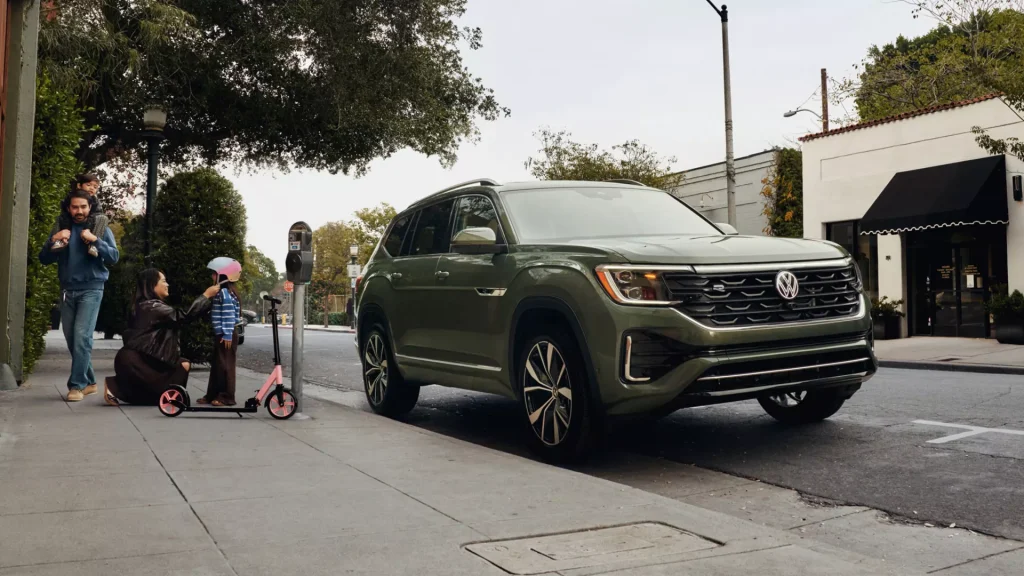
The defect may become particularly noticeable during low-speed maneuvers, such as parking or making tight turns.
Drivers should also pay attention to unusual noises, including clicking or knocking sounds during these maneuvers. If steering problems appear while parking or turning at low speeds, owners should contact a dealership to have the vehicle inspected.
The planned repair focuses on the component responsible for the problem. Dealers will replace the right-side bolt with a new part featuring a corrosion-resistant polymer coating. The companies do not plan to automatically replace the entire steering rack in every SUV covered by the recall.
Repairs will be performed at no cost to owners of affected vehicles, and notification letters are expected to begin going out on November 10.
How the investigation began
The issue was not initially discovered in the United States. Volkswagen began investigating after receiving its first field report outside North America in October 2024.
The company conducted inspections and engineering evaluations to determine the source of the potential failure. A second case was reported in August 2025, followed later by a third report, also outside North America.
Based on those reports and subsequent testing, Volkswagen and Audi decided to move forward with a voluntary recall of potentially affected vehicles in the United States.
A small component can become a major safety issue
The case shows why recalls are an important part of vehicle maintenance and safety, even when no crashes have yet been linked to a defect.
For people who drive every day—whether in a car, SUV or commercial vehicle—checking manufacturer recalls is another way to stay ahead of mechanical problems that could eventually surface on the road.
It is also a reminder that serious mechanical failures do not always begin with an obvious warning sign. In this case, the issue involves a bolt exposed to moisture and corrosion—a small component whose eventual failure could compromise the entire steering system.
That is why, in addition to regular maintenance, paying attention to unusual noises, changes in steering behavior and manufacturer notices can help drivers identify a problem before it becomes a safety risk.
Owners can check whether their vehicle is affected by a recall by entering the vehicle identification number (VIN) into the NHTSA recall system.
For those who spend long hours on U.S. roads, prevention starts before the vehicle ever moves: stay current on maintenance, pay attention to warning signs and take care of open recalls promptly.
 Business hours: Monday to Friday from 8:00 AM to 5:00 PM. California time