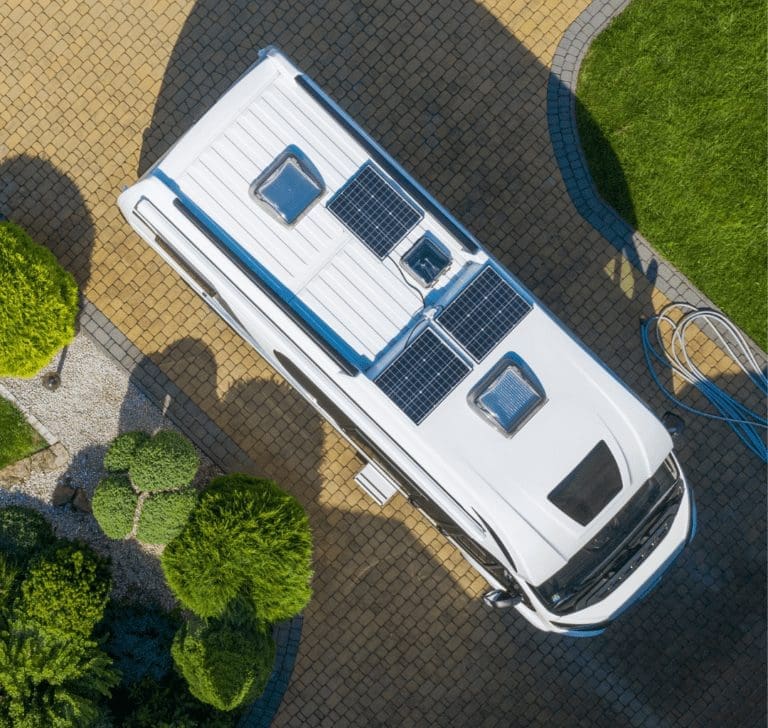
The use of solar energy to power truck cabins can help reduce fuel expenses by decreasing engine idle time
Cargo carriers have found a solution to rising costs in various areas to safeguard their profits: the use of solar energy to power truck cabins. Flexible solar panels harvest energy from the sun and store it in the batteries of the cabin’s Electric Power Unit (EPU). Weighing less than 20 pounds and with an adhesive for attachment to the truck’s roof, these panels help reduce fuel expenses by decreasing engine idle time. Additionally, they have the capacity to provide power for the cabin interior during the night or keep drivers cool during long waits at loading docks.
According to information shared by FreightWaves, the energy used by a truck’s battery system generally comes from internal operations, including appliances, heating systems, televisions, among others. Part of this consumption is also attributed to the truck’s telematics, which includes smart sensors and cameras, resulting in higher energy consumption. As a result, trucks without solar panels typically automatically start twice during the night, each time for two hours, to recharge the EPU battery system and keep it cool.

Brett Wilkie, vice president of maintenance and safety at GP Transco, asserts that installing solar panels could generate an estimated savings of around $1,700 per truck per year for companies. This calculation does not take into account the additional benefit of an extended battery life. Furthermore, costly starts from depleted batteries are avoided, especially problematic in remote areas.
How feasible would the application of solar panels be for energy cost savings?
Despite their advantages, solar panels in transportation face unique challenges such as exposure to tree branches, constant vibrations, and extreme temperatures. Although they have been tested in various climates, from heat to cold, an earlier version of these panels had issues if their surface was damaged. However, the latest iterations incorporate redundant technology that allows only the affected part of the panel to stop functioning, reducing the impact to a fraction of its total capacity.
Solar panels are easing worries regarding the independence of electric commercial trucks by alleviating the burden on propulsion batteries, which no longer have to solely power functions like air conditioning and telematics. Nonetheless, the likelihood of solar panels becoming the exclusive energy source for large trucks remains slim.

How Truck Drivers Can Protect Their Skin from UV Rays on the Road
Chronic exposure to UVA rays isn’t just about getting a tan—learn how to protect your skin from the sun’s rays while on the road.

Top Concerns of Fleet Managers in 2026
The J. J. Keller Center for Market Insights has completed its sixth annual study analyzing the key concerns facing fleet management.

How to survive inflation, the biggest challenge for a trucker’s finances
The latest statistics from the U.S. Department of Transportation reveal a challenging scenario, but one that’s not insurmountable. Everything is getting more expensive, including the intelligence of a good transporter.

Where Are Truck Drivers Most in Demand in the United States?
Texas, California, Florida, Illinois, and Georgia lead truck driver demand across the United States as the transportation industry faces a renewed shortage of professional drivers.

Oliver Tree & Gaspi: Tragedy That Highlights Air Traffic Logistics
The deaths of American musician Oliver Tree and Argentine content creator Gaspi in a helicopter collision over Rio de Janeiro have once again raised a critical question for the transportation industry: how to safely manage increasingly congested transportation networks, both in the air and on the ground.

How to Perform a Pre-Trip Inspection: A Guide for Truck Drivers
A pre-trip inspection is one of the most important procedures for any truck driver.