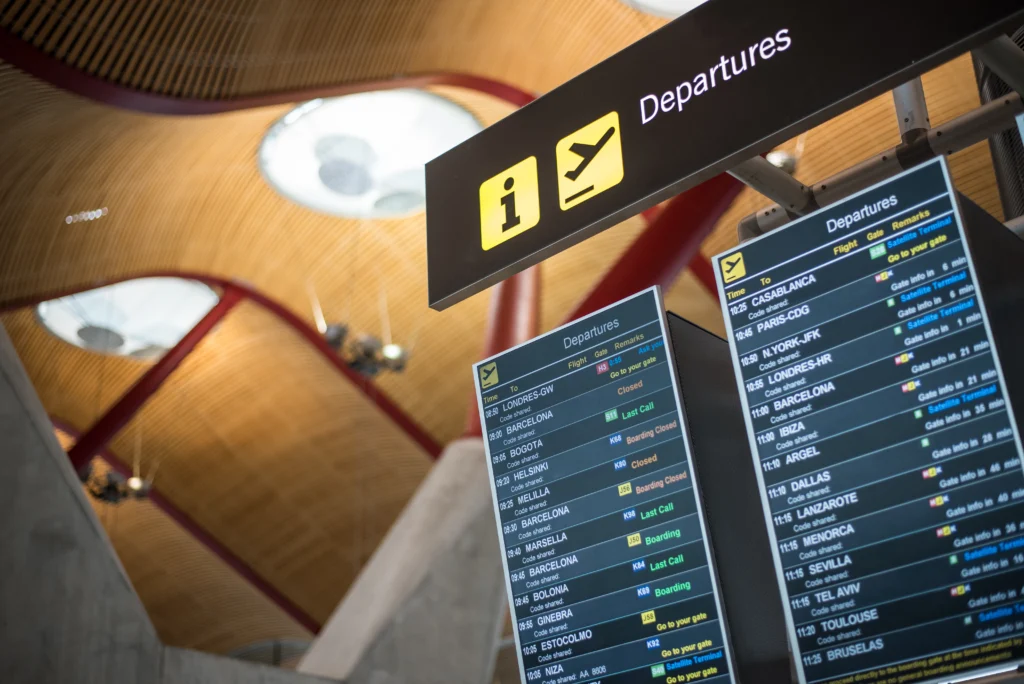
40 U.S. airports, including those in New York, Los Angeles, and Chicago, will see flight reductions starting November 7 due to the government shutdown.
40 U.S. airports, including those in New York, Los Angeles, and Chicago, will see flight reductions starting November 7 due to the government shutdown, according to the Federal Aviation Administration (FAA). On Wednesday, November 5, the agency announced that air traffic will be reduced by 10% across 40 high-volume markets to maintain travel safety amid the shortage of air traffic controllers.
Currently, air traffic controllers are working without pay during the government shutdown, with many increasingly absent due to the lack of compensation. Controllers have already missed a full paycheck and are expected to go unpaid again next week as the shutdown continues to drag on.
Shortage of air traffic controllers results in flight reductions
Numerous flights have already been delayed by the FAA at airports and other facilities lacking controllers. The official announcement states that starting November 6, passengers will be notified of upcoming cancellations. Airlines have said they will try to minimize the impact on customers whose flights may be affected, with some recommending travelers purchase backup tickets with other carriers.
According to data shared by TransportTopics, aviation analysis company Cirium predicts the cancellation of thousands of flights, with cuts potentially reaching 1,800 flights and more than 268,000 seats.
Although the announcement has sparked some controversy, the FAA has made it clear that the move is intended to support air traffic controllers, who have been working without pay since the government shutdown began on October 1. Most have been required to work mandatory overtime six days a week, leaving them little time to take on additional jobs to cover their expenses.
Transportation Secretary Sean Duffy warned that chaos in the skies could ensue if the shutdown continues long enough for air traffic controllers to miss their second full paycheck next week. He announced on November 6 that he would meet with airline executives to determine how to implement the reductions safely.
Major airlines, aviation unions, and the travel industry at large have been urging Congress to end the shutdown, which on November 6 became the longest in history.
According to an Associated Press analysis of operational plans shared through the Air Traffic Control System Command Center, between October 31 and November 2, at least 39 air traffic control facilities reported possible staffing shortages, a figure well above the average for weekends prior to the shutdown.
AP has published the list of 40 airports and facilities that will experience flight reductions starting November 7.
List of airports reducing flights
- Ted Stevens Anchorage International Airport, Alaska
- Hartsfield-Jackson Atlanta International Airport, Georgia
- Logan International Airport, Massachusetts
- Baltimore/Washington International Airport, Maryland
- Charlotte Douglas International Airport, North Carolina
- Cincinnati/Northern Kentucky International Airport, Ohio
- Dallas Love Field Airport, Texas
- Ronald Reagan Washington National Airport, Virginia
- Denver International Airport, Colorado
- Dallas/Fort Worth International Airport, Texas
- Detroit Metropolitan Wayne County Airport, Michigan
- Newark Liberty International Airport, New Jersey
- Fort Lauderdale-Hollywood International Airport, Florida
- Daniel K. Inouye International Airport, Hawaii
- William P. Hobby Airport, Texas
- Washington Dulles International Airport, Virginia
- George Bush Intercontinental Airport, Texas
- Indianapolis International Airport, Indiana
- John F. Kennedy International Airport, New York
- Harry Reid International Airport, Las Vegas
- Los Angeles International Airport, California
- LaGuardia Airport, New York
- Orlando International Airport, Florida
- Chicago Midway International Airport, Illinois
- Memphis International Airport, Tennessee
- Miami International Airport, Florida
- Minneapolis–Saint Paul International Airport, Minnesota
- Oakland International Airport, California
- Ontario International Airport, California
- Chicago O’Hare International Airport, Illinois
- Portland International Airport, Oregon
- Philadelphia International Airport, Pennsylvania
- Phoenix Sky Harbor International Airport, Arizona
- San Diego International Airport, California
- Louisville International Airport, Kentucky
- Seattle–Tacoma International Airport, Washington
- San Francisco International Airport, California
- Salt Lake City International Airport, Utah
- Teterboro Airport, New Jersey
- Tampa International Airport, Florida
Truck driver: stop choosing the worst route

Autonomous Trucks: Who Places the Warning Triangles When There’s No Driver?
A federal exemption allows warning triangles to be replaced with cab-mounted beacons on certain autonomous trucks. The decision addresses how to warn approaching traffic when no one can step out of the cab.

Diesel in the USA: Which States Suspended the Tax—and Which Still Charge It?
Georgia, Ohio and North Carolina have introduced temporary fuel tax relief. Texas, Indiana, Illinois and Utah have different measures, with limits that truckers should understand before calculating potential savings.

Indiana and Ohio Pave the Way for Autonomous Trucking
Backed by an $8.8 million investment and federal transportation funding, Indiana and Ohio are developing a corridor to test automated trucks in real-world freight operations. The project aims to improve highway safety, logistics efficiency, and interstate autonomous vehicle operations.

Texas Lawsuit Raises Questions About Age Limits for Truck Drivers
A federal lawsuit against a Texas trucking company is drawing attention to the rights of older truck drivers. How long can they stay behind the wheel, what medical requirements must they meet, and what does federal law say?

California to Texas: Young Americans Move as Logistics Booms
Texas is strengthening its position as a major U.S. transportation and distribution hub while thousands of young Americans choose the state as a place to live and work.

Florida Reopens Highways After Isaias, but Logistics Disruptions Persist
Following Hurricane Isaias, Florida continues to face port closures and fuel supply challenges as trucking companies play a critical role in delivering essential goods and supporting recovery efforts across the Panhandle.