The FMCSA has the authority to suspend the operating license of transportation brokers whose minimum financial security falls below $75,000
After numerous debates, mixed opinions, and a long wait, the requirement for transportation brokers, originally imposed by Congress in 2012, has finally gone into effect. As of today, January 16, the Federal Motor Carrier Safety Administration (FMCSA) has the authority to suspend the operating license of transportation brokers whose minimum financial security falls below $75,000 and is not restored within seven days.
This change marks a significant turning point for the trucking industry. Organizations such as the Owner-Operator Independent Drivers Association (OOIDA) have pressed for years for the approval of regulations that promote more equitable conditions between brokers and truck drivers. With the new rule, OOIDA says a substantial improvement for the industry will be achieved.
“This is a step forward that helps ensure truckers are paid what they are owed in a timely manner in cases of theft, damage, and insolvency,” said Todd Spencer, president of the association.
Rule for transportation brokers takes effect
Known as the “Immediate Suspension of Operating Authority as a Broker or Carrier,” the FMCSA measure contains five main provisions. These are:
- Readily available assets – The rule establishes that only assets that can be easily converted into liquidity will be considered acceptable, such as cash, irrevocable letters of credit issued by federally insured depository institutions, and U.S. Treasury bonds.
- Immediate suspension of operating authority – The FMCSA will suspend the operating authority of a broker or carrier when available financial security falls below $75,000 and is not restored within a period of seven calendar days.
- Obligations of the surety and trustee in cases of bankruptcy or financial insolvency – The rule provides that when a surety or trustee becomes aware that a broker or carrier is in bankruptcy or financial insolvency, it must immediately notify the FMCSA and initiate the cancellation of the financial security. The FMCSA will then publish a bankruptcy notice in the Federal Register. However, a bankruptcy filing under Title 11 of the United States Code is not considered insolvency for the purposes of this regulation.
- Enforcement authority – Surety companies or financial institutions that fail to comply with 49 U.S.C. § 13906 or Section 387.307 will be subject to monetary penalties and a mandatory three-year period of ineligibility during which they may not provide financial security to brokers or carriers.
- Entities eligible to provide trust fund assets for BMC-85 filings – Loan and finance companies are no longer eligible to act as BMC-85 trustees.
FMCSA can still do more to protect truckers from brokers, says OOIDA
OOIDA has fought for these changes for nearly 15 years, and today marks progress in holding dishonest brokers accountable; however, the fight continues. Cases such as those involving regulation 371.3, which, despite having been in effect for a long time, truckers say is often circumvented or ignored altogether, demonstrate how much work remains.
According to OOIDA, the FMCSA can still do more to protect truckers from brokers. Spencer says the most important step is suspending brokers who fail to maintain the minimum bond, to help truckers determine whether a broker is in a legitimate financial position.

Inflation at 3%: rising prices and political pressure test the Federal Reserve
Alarm bells rang again on Wall Street following the release of the latest U.S. wholesale inflation data. In the latest episode of the podcast Mercado

U.S. traffic deaths drop 12% despite increase in miles traveled
The National Safety Council (NSC) recently released a report showing a nationwide decline in traffic fatalities, despite an increase in miles traveled. The National Safety
Double Brokering in 2026: How the Scam Works and How to Protect Your Freight
Double brokering fraud is one of the fastest-growing threats in the U.S. trucking industry in 2026. From ghost brokering to email hacking and identity theft,
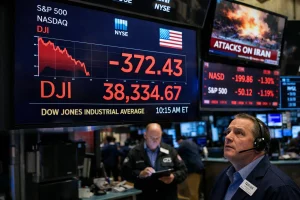
Middle East Conflict: Impact on Diesel Prices and What U.S. Truckers Should Expect
The escalation of conflict in the Middle East has pushed crude oil prices toward $80 per barrel, reigniting global energy volatility. For the U.S. trucking

The best roadside attractions for truckers in the U.S.
America’s highways hide unique places that break up the routine, don’t hesitate to check out these roadside attractions along the way. The road is much

The trucker style: comfort, function, and identity
Truckers’ style is much more than workwear; it’s an identity. These are the most commonly worn garments among truckers. Truckers’ style is much more than