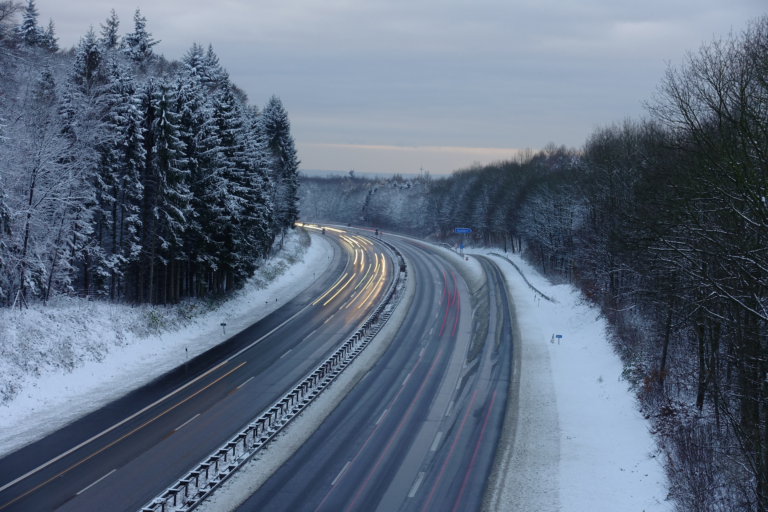
The month of December becomes one of the most congested of the year, making the risk of an accident more volatile.
Winter is the most challenging season on the roads. Weather conditions create dangerous scenarios for drivers that can lead to catastrophic outcomes. However, beyond the weather itself, there is another factor that makes this time of year especially hazardous for motorists: increased traffic. Whether due to vacations, commercial traffic, or deliveries, the month of December in particular becomes one of the most congested of the year, making the risk of an accident more volatile.
An analysis by Samsara, a transportation safety company, identified anonymous data collected through its platforms between December 1 and January 7 from 2023 to 2025. The results revealed a clearly seasonal curve, shaped by how people travel, how goods are transported, and how winter conditions interact with both, the company reported.
Traffic accident statistics during Christmas
Holiday travel significantly increases the likelihood of traffic accidents. Combined with heavier road congestion, this makes Christmas and New Year’s among the deadliest holiday periods in the United States.
According to Samsara data, accident rates during winter rise by nearly 30% compared to the annual average. It is estimated that more than 130 people lose their lives in traffic accidents on Christmas Day alone in a typical year. In addition, the entire travel period between Christmas and New Year’s often results in more than 700 roadway fatalities nationwide, according to an article by Accident Doctor.
Weekly accident rates increase from early December through Christmas week, when long-distance travel and winter conditions are common. Samsara analyzed daily accident data and found that the highest risk is concentrated on the days surrounding Christmas travel, rather than on Christmas Day itself.
Daily accident risk around Christmas (December 23–26)
- December 23: +36%
- December 24: –23%
- December 25 (Christmas Day): –17%
- December 26: +30%
Although Christmas Day shows a lower risk of accidents, rates rebound on December 26, when return trips begin and travel patterns shift again, highlighting that danger is greatest when roads are most crowded.
Road accidents occur year-round across the country. Just as they increase during the holiday season, some states experience higher accident-related death rates during this time. According to data from Accident Doctor, southern states with high travel volumes and warmer climates tend to see an increase in roadway fatalities during the holidays, including:
- Florida
- Alabama
- Louisiana
- Mississippi
Measures to reduce traffic accidents at Christmas
Samsara recommends adopting the following actions to reduce roadway accidents during the holiday season, with a particular focus on commercial drivers:
- Identify high-risk roads and corridors.
- Adjust routes or travel schedules.
- Proactively implement operational changes, such as road pretreatment, chain installation protocols, and shift adjustments, before weather conditions exceed critical thresholds.
These measures not only help reduce accidents, but also minimize delays, emergency responses, insurance claims, and vehicle downtime at times when fleets are needed most. Understanding these patterns and acting proactively is key to significantly reducing the risks associated with winter driving.

The Impressive Numbers Behind Florida’s Transportation System
Millions of vehicles, thousands of miles of roads, and nearly 900 million tons of truck freight keep Florida moving.

Florida Accelerates Truck Parking Expansion
Florida is moving forward with $180 million in federal funding to add 917 truck parking spaces along I-4, with additional expansion plans through 2030

Guide to Cab Card: What Is It, What It’s Used For, and Why You Should Carry It in Washington
The Cab Card is a registration card or document that identifies a commercial vehicle and provides information related to its authorization to operate.

Port of Tacoma: How to Pick Up Containers Faster in 2026
RFID mandatory also at domestic terminals, new shift dashboard, and updated eModal rules: the 2026 guide to picking up containers faster at the Port of Tacoma.

Bridges in Washington with Restrictions for Commercial Vehicles
The state of Washington has several bridge restrictions that every truck driver should know.

How the SR 167 is progressing and what will change for truckers
WSDOT began the final stage of SR 167 in July 2026, the highway that will directly connect the Port of Tacoma with I-5.