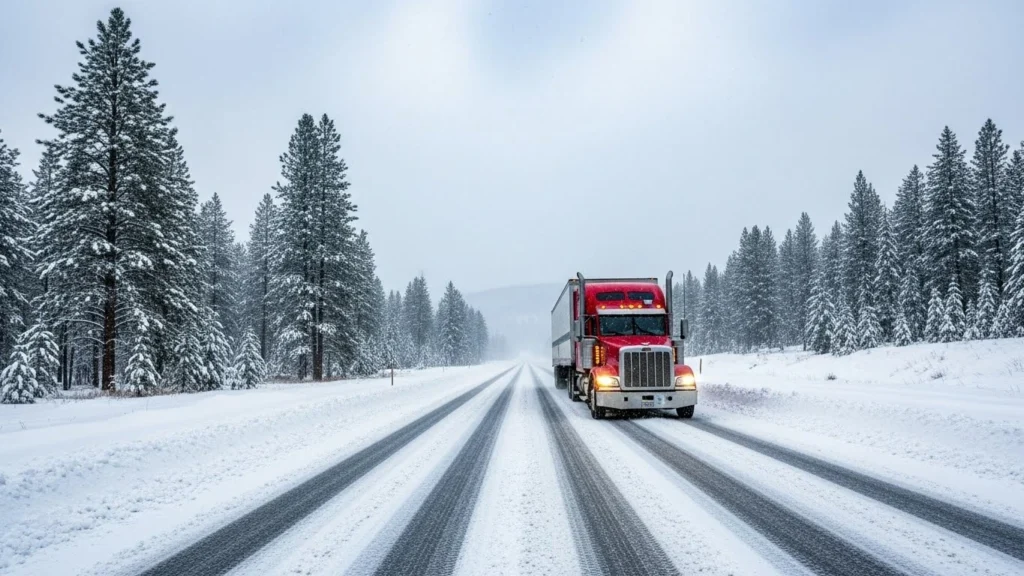
The Alberta Clipper is sweeping across the country with fast-moving Arctic air, sharp temperature drops, and dangerous road conditions that demand heightened attention from all professional drivers.
A fast-moving Alberta Clipper is delivering the first major winter challenge of the season, bringing sudden freezing temperatures, strong winds, and bands of light to moderate snow that are already complicating freight operations. This type of system, known for its speed and volatility, can turn a clear highway into an icy, low-visibility corridor in a matter of minutes—an especially serious concern for truckers as holiday freight volumes reach their peak.
As the storm sweeps from the Northern Plains into the Midwest and parts of the Northeast, state transportation agencies have issued widespread winter weather advisories. Maintenance crews are already deployed along high-traffic freight routes, including I-90, I-94, I-80, and I-35, where drifting snow and rapid surface freezing have triggered early-season delays.
The combination of wind, snow blowing across previously chilled pavement, and rapidly falling temperatures is significantly reducing visibility for long-haul operators. Even light accumulations can create “black ice patches” and sudden slides, a major hazard for heavy-duty trucks carrying full or empty trailers.
Supply chain impact: Delays, rerouting, and operational stress
Freight carriers are reporting schedule adjustments, extended delivery windows, and increased communication with shippers. Many fleets have activated winter operation protocols, prioritizing safety over tight delivery timelines and allowing drivers more flexibility as conditions worsen.
Bridges, elevated lanes, and mountain passes are seeing the fastest ice formation, forcing state DOTs to consider temporary closures or detours. Dispatch teams are monitoring real-time weather and traffic systems to redirect trucks away from low-visibility areas and icy stretches. While Alberta Clippers typically bring lighter snowfall compared to major nor’easters or lake-effect events, what makes them dangerous is their speed—and the speed at which road conditions deteriorate.
Meteorologists warn that this may be only the first in a series of Clippers expected before January. For the trucking industry, this means strengthening winter preparedness, reinforcing safety protocols, and improving communication between drivers, dispatchers, and clients to maintain operational continuity.
Radar Loop 539 AM: Light snow continues to spread eastward across the area, especially along & south of I-66. To the north, the air has been drier which has limited snow potential. Winter Weather Advisories were canceled from NW Loudoun to S. Baltimore Co. #MDwx #DCwx #VAwx #WVwx pic.twitter.com/V6rFNNXzPn
— NWS Baltimore-Washington (@NWS_BaltWash) December 5, 2025
Early heads up for what looks to be shaping up as an active pattern for the Great Lakes region. Multiple "Alberta Clipper" type systems will likely produce swaths of snow Saturday night onward, though it's too early to offer more specifics. Stay tuned for updates! #ILwx #INwx pic.twitter.com/4o9KqJTYhm
— NWS Chicago (@NWSChicago) December 4, 2025
Essential safety guidance for truck drivers facing an Alberta Clipper
Although experienced drivers are accustomed to winter weather, an Alberta Clipper presents unique risks that require specific preparation. Its fast-moving nature, sharp pressure changes, and intense cold demand a proactive approach.
1. Inspect tires, brakes, and engine systems before every run
Extreme cold reduces tire pressure, affects brake responsiveness, and changes the viscosity of essential fluids. Drivers should verify tire pressure and tread depth, check brake systems, ensure adequate antifreeze levels, and confirm that the engine heater is functioning properly.
2. Use winter-blend fuel and antigel additives
Even in regions where winter diesel is standard, extreme Arctic intrusions may require additional antigel treatments. Fuel gelling remains one of the most common causes of breakdowns during early-season storms, particularly in long-haul operations.
3. Carry chains or traction devices
Requirements vary by state, but having chains onboard is essential when traveling through mountain passes or high-wind corridors. Sudden closures or chain-up mandates are common during Alberta Clipper events.
4. Build a complete winter emergency kit
A properly stocked kit should include thermal blankets, winter gloves, non-perishable food, water, a shovel or snow brush, traction salt or sand, portable chargers, LED flashlights, and a basic first-aid kit. In a rapid-moving system like this, multi-hour standstills are possible.
5. Drive with wider reaction margins
Reduced speeds, increased following distance, and smooth steering inputs are key. Strong crosswinds can destabilize high-profile vehicles, especially empty trailers, so drivers should maintain firm control of the wheel and avoid unnecessary passing in exposed areas.
6. Monitor weather and road conditions continuously
Alberta Clippers evolve rapidly. Drivers should rely on DOT 511 services, real-time traffic apps, and NOAA alerts to anticipate detours, closures, or sudden icing. Dispatcher coordination is essential to safely adjust routes at the moment conditions change.
A winter that arrived early—and demands attention
This Alberta Clipper marks an early test for fleets and drivers across the country. With freezing temperatures, blowing snow, and rapidly shifting conditions, winter preparedness becomes a decisive factor in keeping drivers safe and freight moving efficiently.
For professional drivers, the priorities are clear: maintain equipment meticulously, plan routes with flexibility, and remain vigilant behind the wheel. The coming weeks are expected to bring additional systems, but a strong safety culture—and careful preparation—will help the industry navigate the challenges ahead.

World Laughter Day: Can laughter really make you healthier?
World Laughter Day is celebrated to promote joy, mental well-being, and connection among people through something as simple as laughing. Are the effects real?

Operation Safe Driver Week 2026 targets risky driving behaviors
Operation Safe Driver Week, organized by the CVSA, is a safe driving awareness and outreach initiative focused on drivers in the United States, Canada, and Mexico.

How Weather Is Reshaping Risk on U.S. Trucking Routes
Extreme events, emerging risk zones, and a growing impact on operations, costs, and insurance across the freight industry.

U.S. 250th anniversary celebrations take to the rails
Commemorative locomotives take the rails for United States’ 250th anniversary

In brief: rail crossing safety, California autonomous trucks, and CDL laws
From rail crossing safety to autonomous trucks and CDL laws, these are the key U.S. updates in transportation.

USDOT drives logistics hubs through the Regional Infrastructure Accelerators (RIA) program
USDOT strengthens its logistics hubs strategy through the Regional Infrastructure Accelerators (RIA) program, designed to unlock projects, enhance intermodal connectivity, and accelerate critical infrastructure for freight transportation across the United States.