Aurora and McLeod Software partner to facilitate the adoption of autonomous trucks in freight transportation
While the operation of autonomous trucks remains a complex challenge within the transportation industry, leading companies in this technology continue to push forward innovations to support its adoption across the sector. One such company is Aurora, which recently announced a strategic partnership with industrial technology provider McLeod Software. The goal of this collaboration is to integrate their solutions and offer a joint transportation management system (TMS) specifically designed for autonomous operations.
As both companies announced on August 28, the partnership involves integrating Aurora’s virtual driving system, Aurora Driver, with McLeod’s TMS platform. This connection will enable freight carriers to manage driverless trucks in much the same way they currently operate fleets with human drivers.
The integrated solution is set to launch in 2026, as it is still in beta testing. The primary goal is to ease the transition for customers of both companies toward using autonomous vehicles, thereby paving the way for broader adoption of this emerging technology.

Aurora at the forefront of the autonomous trucking industry
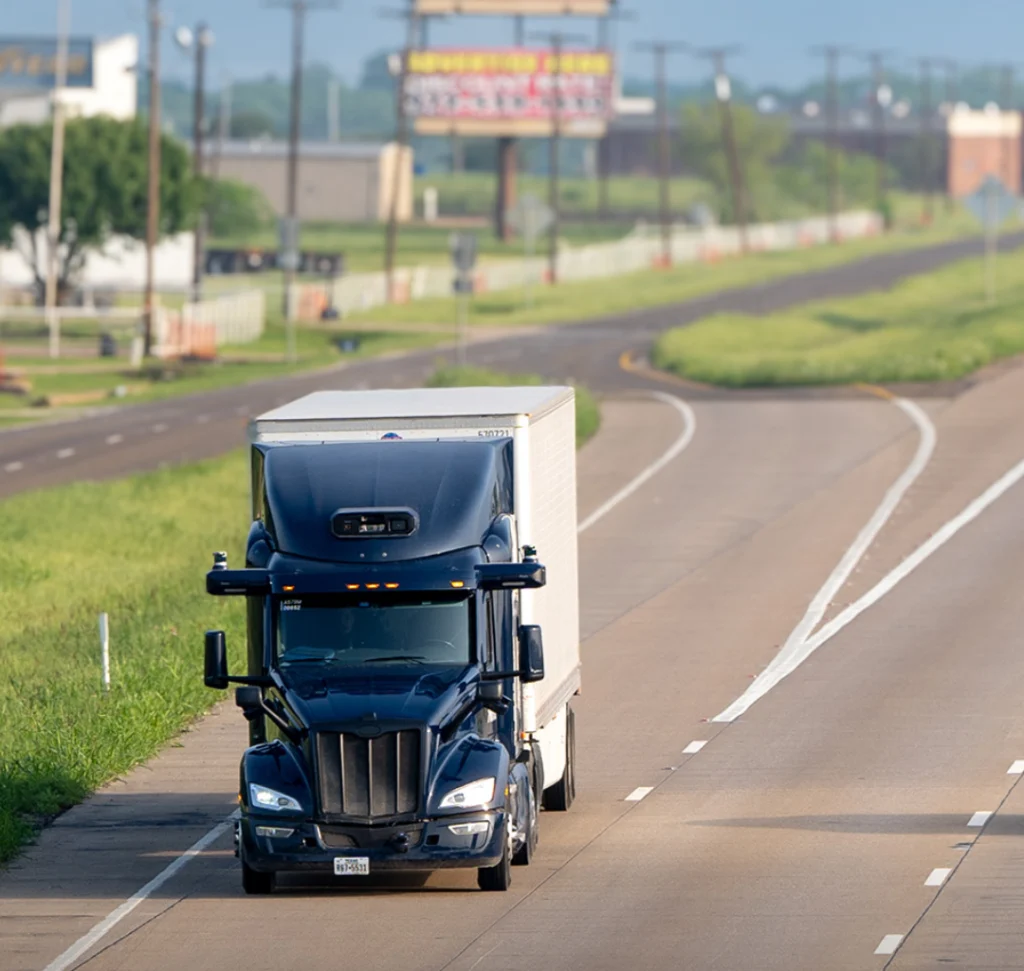
Aurora has established itself as a leader in the autonomous trucking sector, with milestones such as launching the first commercial driverless truck service on public roads in Texas. The company is increasingly focused on enabling customer adoption rather than solely validating its technology.
Currently, Aurora performs regular autonomous deliveries between Dallas and Houston and has added a nighttime service along that route, demonstrating how driverless trucks can significantly boost asset utilization. The company also opened a terminal in Phoenix to operate a new route between Phoenix and Fort Worth, Texas.
Although vehicles still have human safety operators on board, at the request of its manufacturing partner, Paccar, Aurora has confirmed that the Aurora Driver system handles all driving tasks without human intervention.
Through these innovations, Aurora continues to pave the way for autonomous driving in the freight transportation industry, and is taking another step forward with its new partnership with McLeod.

Aurora and McLeod: a customer-centered service
The collaboration between Aurora and McLeod aims to enable carriers to manage autonomous capacity using the same software they currently rely on for scheduling, dispatch, and billing. Thanks to this integration, users of McLeod’s TMS will be able to perform tasks such as bidding for and accepting autonomous shipments, dispatching driverless trucks, and monitoring cargo, all from a single platform.
Ossa Fisher, President of Aurora, described the partnership as a key milestone in delivering a customer-centric product and service. “By meeting our customers where they are, within the TMS they already use, we’re making it easier for them to access the safety and efficiency benefits of autonomous trucks,” Fisher said.
Tom McLeod, Founder and CEO of McLeod Software, emphasized that integrating Aurora’s autonomous capabilities provides McLeod customers with a clear path to incorporating autonomous tractors into their operations. According to McLeod, this partnership reflects the company’s ongoing commitment to technological innovation.
Aurora has announced that it will share further details about the alliance at the 2025 McLeod Software User Conference, which will take place September 21–23 in Denver.

4,000 Brake Inspections Led to Commercial Vehicles Being Removed from Service
The CVSA conducted inspections of commercial vehicles across North America as part of Brake Safety Day.

U.S. Bill Seeks to Create Federal Standards for Autonomous Trucks
As part of the BUILD America 250 Act, a comprehensive federal regulatory framework for the deployment of autonomous trucks in the United States has been proposed.

Freight: America’s New Push to Modernize Roads, Ports and Supply Chains
The U.S. Department of Transportation unveiled the 2026 National Freight Strategic Plan, a roadmap to upgrade a nearly seven-million-mile freight network that moves more than 54 million tons of goods every day. The announcement comes amid growing industrial activity, reshoring and mounting pressure on America’s logistics infrastructure.

World Cup 2026: The truckers are well insured and ready to be champions
The championship will turn US highways into a logistical hive of activity. A massive challenge that will require securing every truck and its cargo before the starting whistle. The numbers behind this huge business.

Can You Drive a Truck in the U.S. With a Mexican License?
Searches about Mexican CDL equivalents, trucking jobs and work permits in the United States are surging across Google, ChatGPT and other AI platforms. One of the most common questions among drivers and migrants is whether a Mexican commercial license is valid in the U.S. The short answer is yes — but only under specific conditions.

What Insurance Does an Owner-Operator Need in the United States?
The most important insurance coverages every owner-operator should consider to operate with greater safety and peace of mind in the United States.