Results of Brake Safety Week, organized jointly by the Commercial Vehicle Safety Alliance (CVSA) and the Department of Transportation, have been published.
Results of Brake Safety Week, organized jointly by the Commercial Vehicle Safety Alliance (CVSA) and the Department of Transportation, have been published. This inspection was carried out from August 24 to 30, 2025, by law enforcement officers in the United States, Canada, and Mexico, as part of an initiative aimed at raising awareness about road safety and the importance of proper commercial vehicle maintenance.
Through inspections of drum and rotor components, as well as brakes, Brake Safety Week found that 84.9% of commercial vehicles had no violations that would place them out of service, with a total of 15,175 inspections conducted in all of North America.
Brake Safety Week 2025 results
Although the majority of vehicles passed inspection, the remaining 15.1% were cited for brake-related violations that resulted in the vehicles being placed out of service.
According to data shared by the CVSA regarding Brake Safety Week results, the breakdown by country is as follows:
- United States: 13,700 inspections, with 2,035 (14.9%) brake-related violations that resulted in vehicles being placed out of service.
- Canada: 1,459 inspections, with 260 (17.8%) brake-related violations that led to out-of-service designations.
- Mexico: 16 inspections, with 1 (6.3%) brake-related violation that led to an out-of-service designation.
The most commonly cited reason a vehicle was placed out of service, according to the CVSA, was that 20% or more of the vehicle’s (or vehicle combination’s) service brakes were inoperative. The other most frequently found violations were:
- 20% brake violations – 1,199
- Other brake-related violations – 375
- Brake hoses/tubing – 306
- Steering axle violations – 199
- Air loss rate – 100
Inspectors also reported data on drum and rotor-related violations, which were the focus of this year’s Brake Safety initiative.
Additionally, fifteen U.S. states equipped with Performance-Based Brake Testers (PBBT) conducted 528 inspections using their PBBTs. According to the U.S. Federal Motor Carrier Safety Regulations and the CVSA North American Standard Out-of-Service Criteria, a vehicle combination must have a minimum brake efficiency rating of 43.5% to pass a PBBT inspection.
- 4.7% of the inspected vehicles did not meet the minimum required brake efficiency rate.
- 503 vehicles passed the PBBT inspection.
Brake Safety Week: educating the trucking industry
The goal of Brake Safety Week, which is part of the Operation Airbrake Program, is to reduce the number of commercial vehicles operating unsafely through roadside inspections and industry-wide education on brake safety.
The next Brake Safety Week is scheduled for August 23–29, 2026, according to the CVSA.
Truck driver: stop choosing the worst route

The best roadside attractions for truckers in the U.S.
America’s highways hide unique places that break up the routine, don’t hesitate to check out these roadside attractions along the way. The road is much

The trucker style: comfort, function, and identity
Truckers’ style is much more than workwear; it’s an identity. These are the most commonly worn garments among truckers. Truckers’ style is much more than
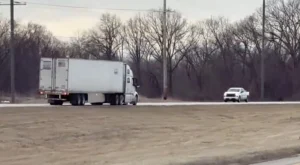
Chaos on Highway 61: Viral Wrong-Way Truck Video Reignites the CDL Debate
An 80-ton tractor-trailer traveling miles in the wrong direction on Missouri’s Highway 61 has reignited a nationwide debate over Commercial Driver’s License (CDL) standards, training

How technology affects driver retention
Friend or foe? 52% of drivers say technology directly influences their decision to stay with or leave a fleet. Fleet telematics company Platform Science published

Dalilah Law seeks to remove non-english speaking commercial drivers
President Donald Trump proposed the “Dalilah Law,” an initiative aimed at prohibiting undocumented immigrants from obtaining commercial driver’s licenses. On February 24, President Donald Trump
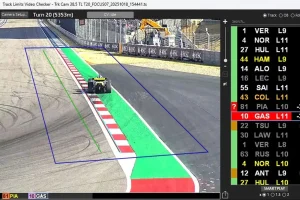
FORMULA 1 and the AI That Could Transform Transportation in the U.S.
The artificial intelligence system that Formula 1 implemented to monitor every car on every turn is opening the door to new applications in trucking, logistics,