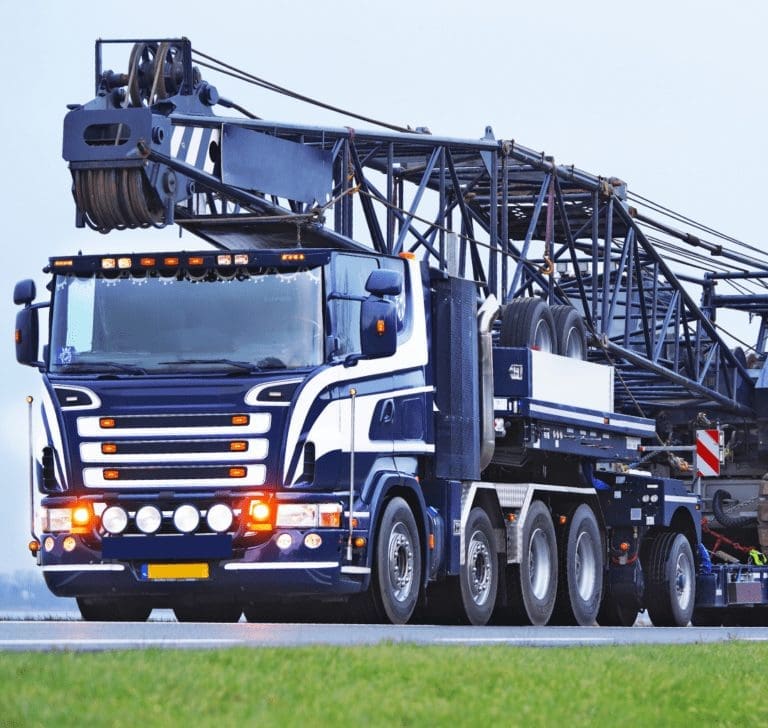
The California Senate may soon vote on a bill that would clarify the maximum gross weight limit
The California State Assembly is about to approve a bill that sets weight limits for trucks powered by natural gas and electric batteries. Previously, adjustments have been made to weight limits for these vehicles: in 2015, a federal law increased the allowed weight to 80,000 pounds, and in 2019, California authorized an additional 2,000 pounds in the power unit to account for the extra weight of batteries, fuel cells, and tanks. Federal law permits states to increase weight limits on interstate highways within their borders.

Assembly Bill 1953: additional weight limit in California
The California Senate may soon vote on a bill that would clarify the maximum gross weight limit for near-zero or zero-emission vehicles. Sponsored by Assemblymember Carlos Villapudua, AB1953 would set the maximum gross weight limit for these vehicles at 82,000 pounds, including the additional weight in the power unit and in the tractor-trailer combination.
However, the bill’s analysis warns that fleets operating up to 82,000 pounds on non-federally funded roads might face liability due to the current wording of California’s vehicle code.
Villapudua noted in the bill’s analysis that AB1953 aims to clarify the existing legislation concerning zero-emission (ZEV) and near-zero emission (NZEV) vehicles. Advocates of the bill have pointed out a discrepancy between the federal and state weight exemptions, fearing that the difference might limit the exemption to the vehicle alone rather than the tractor-trailer combination.
The bill seeks to resolve this ambiguity by ensuring that the power units of ZEVs and NZEVs can exceed the weight limit by up to 2,000 pounds, up to a total of 82,000 pounds. A report from the Institute of Transportation Studies at the University of California estimates that battery-electric trucks weigh 1,500 pounds more than diesel trucks, hydrogen fuel cell trucks weigh 2,267 pounds more, and natural gas trucks weigh between 500 and 2,000 pounds more, complicating the uniformity of weight across all types.
If the Senate approves AB1953, the bill will return to the Assembly for final approval before being sent to the governor.

Miles of love: stories of truckers and their four-legged co-pilots
The love between truckers and their pets is a strong bond, and these stories will surely warm your soul. Love manifests itself in many ways,

Cargo theft report 2025: $725 million in losses
Verisk CargoNet reports that cargo theft crime volumes remained stable, with a sharp increase in total losses. Verisk CargoNet’s 2025 report stated that the total

Ground and Air Transportation Brace for a Weekend of Cancellations and Delays
A historic cold wave is set to disrupt ground and air transportation across the United States, bringing cancellations, delays, and operational restrictions to highways, airports, and essential services throughout the weekend. Federal authorities have activated emergency plans in response to a major winter storm expected to deliver snow, ice, and extreme temperatures to large portions of the country.

Geopolitical tensions and the dispute between Trump and the Federal Reserve
The United States is going through a complex geopolitical environment along with internal tensions between President Donald Trump and the Federal Reserve. In the latest

Polar Vortex Puts U.S. Roads on Alert
A powerful polar vortex outbreak is triggering a widespread winter storm across the United States, bringing snow, ice, and extreme cold to major freight corridors. The event poses a serious risk to trucking operations, road safety, delivery schedules, and commercial vehicle insurance exposure.

DOT unveils possible AI strategy to enforce CDL regulations
The DOT is looking to adopt AI and advanced data analytics to improve the accuracy and effectiveness of enforcement measures. On January 14, the 105th