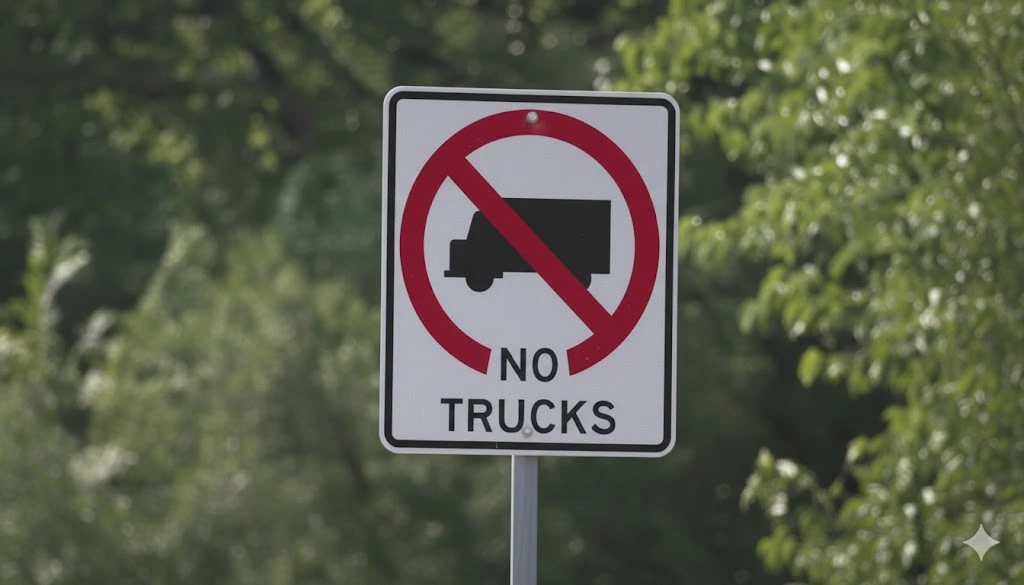
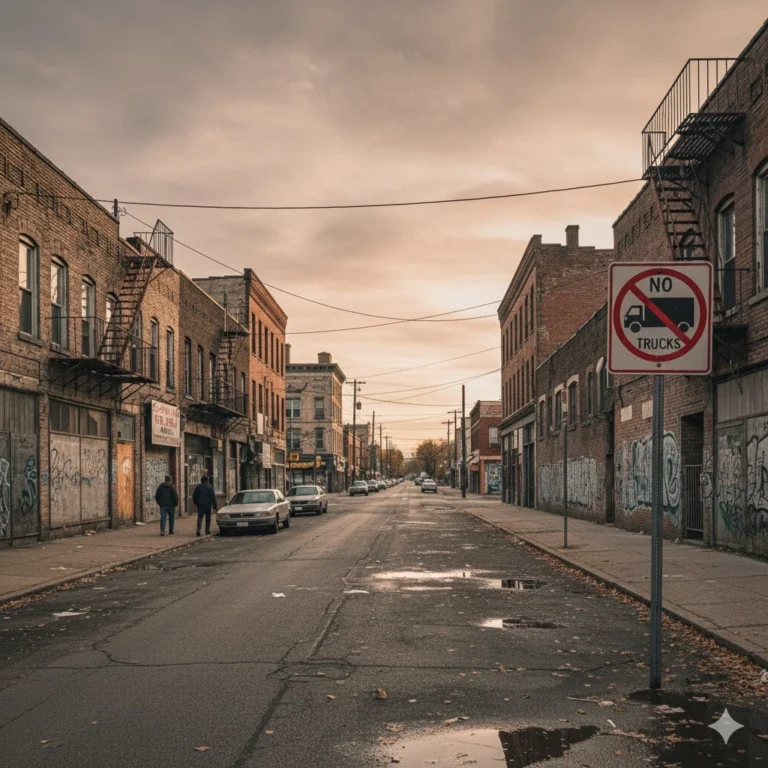
Starting October 6, 2025, Detroit officially banned heavy trucks from several residential streets in the city’s southwest. The move—driven by years of neighborhood complaints over noise, pollution, and safety—signals a growing trend among U.S. cities seeking cleaner, quieter, and safer communities without disrupting supply chains.
Detroit’s Department of Public Works has rolled out a sweeping truck-traffic restriction that took effect on October 6, 2025, banning heavy vehicles from key residential corridors such as Livernois, Dragoon, Clark, Scotten, and West Grand Boulevard.
The city says the ordinance is designed to balance logistical needs with residents’ quality of life, after years of complaints about rumbling engines, structural damage to homes, and poor air quality in the southwest neighborhoods.
Under the new rule, trucks are now confined to designated commercial corridors like West Vernor Avenue and Springwells Avenue, where limited local deliveries are still permitted.
Strict Enforcement and “Zero Tolerance”
Detroit officials confirmed that violations will result in fines exceeding $500 and that enforcement will be coordinated between the Department of Transportation and the Detroit Police Department.
New “No Truck Traffic” signs have been installed at major intersections, and police have begun patrolling residential areas during late-night hours to prevent parking of semi-trailers and heavy haulers.
According to city authorities, the initiative relies on existing ordinances and therefore required no additional legislative approval. A six-month review period will assess the policy’s impact on air quality, traffic safety, and community well-being.
Community Response: Relief After Years of Pressure
Local organizations, including Southwest Detroit Environmental Vision, praised the city’s action as the result of persistent grassroots advocacy.
“For years, trucks passed day and night through our blocks, shaking homes and keeping families awake. We’re not against business, but we deserve peace and clean air,” said one community representative.
The administration acknowledged that citizen activism played a decisive role and hinted that this ordinance is just the first step in a broader environmental-control plan across Detroit.
Other U.S. Cities Follow Suit
Detroit’s move reflects a larger pattern: across the country, more cities are restricting truck access in response to health and safety concerns, reshaping how freight interacts with urban life.
San Antonio, Texas — Parking Restrictions and Nighttime Controls
The San Antonio City Council expanded its 2025 ban on semi-truck parking, adding 19 streets to the list of restricted areas.
According to the San Antonio Express-News, the rule aims to improve safety and free up congested public space.
Earlier this year, the Public Safety Committee proposed an additional measure: prohibiting truck parking within 1,000 feet (≈ 300 meters) of residential zones during nighttime hours to curb noise and pollution, KSAT News reported.
Laredo, Texas — Residents Demand Safer School Routes
In Laredo, citizens have urged the removal of Jefferson Street from the city’s truck-route map.
According to the Laredo Morning Times, the corridor runs alongside multiple schools, and residents argue that constant semi-truck traffic endangers children.
The City Council is considering diverting freight movement to industrial corridors and limiting heavy-vehicle access during school hours.
Oakland, California — The Country’s Strictest Truck Ban
In Oakland, the California Highway Patrol (CHP) reminded drivers in July 2025 that heavy trucks remain prohibited on Interstate 580 between Grand Avenue and San Leandro.
The CHP issued public notices after a spike in violations, according to CDL Life News.
The I-580 restriction, in effect for decades, is one of the nation’s few truck bans on an interstate segment within a densely populated area, serving as a legal precedent for similar actions elsewhere.

Environmental and Logistical Impacts
This wave of local truck bans signals a re-evaluation of freight mobility in American cities. Municipal leaders argue that these measures reduce emissions, enhance safety, and lower road-maintenance costs—since heavy trucks cause up to 70 percent of pavement wear, according to the Federal Highway Administration (FHWA).
However, the trucking industry warns that a patchwork of local restrictions could drive up operating costs and complicate route planning. Each new rule potentially adds mileage, delays deliveries, and increases fuel consumption.
“If every city makes its own map of where we can and can’t go, the network becomes unpredictable and expensive,” noted one Texas-based freight association.
Toward a New Urban Balance
Detroit, San Antonio, Laredo, and Oakland illustrate a nationwide shift: protecting neighborhoods without crippling freight logistics.
In the near future, cities are expected to invest in peripheral logistics corridors, urban transfer hubs, and state-level coordination to streamline truck regulations.
For now, Detroit’s initiative stands as a case study in managing urban freight: a test of whether a city can curb pollution and noise while keeping goods moving efficiently.
The challenge ahead for the U.S. is clear—to preserve the efficiency of its freight network while ensuring that residents no longer live under the weight, noise, and fumes of heavy trucks rumbling past their doors.

Why Summer is the Most Dangerous Season for Your Truck
During summer, extreme heat, increased traffic, road construction, and mechanical stress create a combination of risks for your truck and your load.

GHOSTRUCK Act to Curb Foreign Manipulation of Truckers’ ELDs
The new bill aims to close a regulatory loophole involving foreign manipulation of ELDs.

Florida Will Mark Certain Drivers With Code 775.261
Starting in October, Florida will identify certain drivers with the code 775.261 on their licenses. What it means for CDL holders, how it could influence insurance evaluations, and the new requirements affected drivers must follow.

Amazing goals from the World Cup! Soccer moves trucks and brings billions to the US economy
The biggest sporting championship in history is injecting billions of dollars into the economy, driving up demand for heavy freight. More tourists spending, more need for services, and more jobs.

What Are the Most Expensive Trucks in the World?
With the Thor 24 leading the list at more than $13 million, these are the most expensive and exclusive trucks on the planet.

Invisible Heroes: The Silent Sacrifice of Fathers Who Move America
Despite the fact that the engine of the economy depends on their tireless work on the roads, thousands of truckers celebrate their day far from home, facing the harsh reality of distance.