Llame al (888) 572-7520 para hablar con un agente

The use of AI as a safety tool for drivers and transportation fleets is gaining increasing popularity across the industry.

Distracted driving has become one of the leading causes of road collisions and accidents, with serious consequences for both drivers and transport operators. In recent years, this issue has intensified, reflected in a concerning rise in fatal crashes. A joint study conducted by the NHTSA and the Virginia Tech Transportation Institute reveals that 80% of collisions are related to some form of driver distraction.

The severity of the problem has led many drivers to support the adoption of artificial intelligence (AI)-based technologies as a key tool to improve road safety. In this context, Samsara conducted a survey showing that 79% of commercial drivers have experienced incidents related to distraction, underscoring the seriousness of the issue.

According to Samsara’s report “Distracted Driving in Physical Operations,” 93% of surveyed truck drivers have suffered negative consequences such as vehicle damage, injuries, fines, or license suspension due to distracted driving accidents. Additionally, 49% of companies report a direct financial impact from this issue. Moreover, 76% of drivers point to personal phone use for messaging and social media as the main source of distraction. Another 74% admit to using mobile technology while driving for work-related reasons. Finally, 54% of drivers view AI and its alerts as a key tool for reducing distraction behind the wheel.

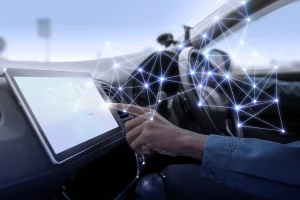
En la imagen se muestra la representación de un vehículo autónomo
Image by Canva

Artificial intelligence as a safety tool for drivers

The use of artificial intelligence (AI) as a safety tool for drivers and transportation fleets is gaining increasing popularity across the industry. According to the AI and Driver Safety Survey by Teletrac Navman, 26% of companies are already piloting AI-based safety solutions, while 18% are exploring different options. Furthermore, 32% have begun using this technology to monitor driver behavior, prevent accidents, improve vehicle maintenance, and enhance training through data analysis, according to Commercial Carrier Journal.

Experts in AI applied to fleet management highlight the clear safety benefits this technology can offer. For instance, the company behind the survey, Teletrac Navman, uses its TN360 platform to detect critical events such as speeding, distraction, drowsiness, and traffic violations. The system also employs cameras with biometric features to identify the driver, allowing for more accurate and personalized monitoring.

Data collected by these systems feeds machine learning models that suggest customized training programs aimed at improving safety. According to Samsara’s report, 93% of drivers become more aware of their habits after reviewing footage of their driving, and 64% prefer AI-based digital training.

En la imagen se muestran vehículos con IA
Image by Canva

Balancing technology and human insight

Despite technological advancements, human intervention remains essential. According to the Teletrac Navman survey, 47% of respondents believe human interaction is crucial for effective decision-making, while 37% emphasize the role of humans in ensuring accountability and ethical oversight. In other words, artificial intelligence is seen as a supportive tool, not a replacement.

Surveys by Teletrac Navman and Samsara reflect a balance between technology and the human element in road safety. From the drivers’ perspective, Samsara’s report reveals that 90% prefer to work for companies that proactively address distracted driving. Furthermore, 82% believe positive reinforcement—such as incentives and recognition—is more effective than punishment in reducing risky behavior.

There is also strong support for technology, with 49% favoring policies that require safety features like in-cab alerts. However, challenges remain. For instance, 23% of Teletrac Navman respondents expressed concerns about data privacy, even though 66% acknowledge the safety benefits that AI can provide.

Facebook
Twitter
LinkedIn
WhatsApp
Severe Weather Warnings & Watches

Road Alert: 25 States Under Extreme Driving Conditions

Road Alert: 25 States Under Extreme Driving Conditions
Snow, ice, strong winds, and low visibility are keeping major highways under active travel advisories. The alert now affects 25 states and calls for extra caution, especially among truck drivers and freight carriers operating along key corridors.

Read More »

TAA Compliance: When Safety Complaints Turn Into Six-Figure Losses

STAA compliance is no longer a technical detail for fleet owners—it is a financial, legal, and insurance exposure. A recent enforcement action in Texas shows how mishandling safety complaints can lead to termination claims, retaliation findings, and six-figure penalties, and what carriers must do to avoid becoming the next case

Read More »
CDL

DOT finds half of North Carolina CDLs were issued illegally

The DOT warns that half of North Carolina’s CDL licenses are irregular after a federal audit uncovered serious compliance failures. The findings directly affect truckers, fleets, and transportation companies, raising urgent questions about road safety, legal operations, and the future of the trucking industry.

Read More »

Leave a Reply

Your email address will not be published. Required fields are marked *

Business hours: Monday to Friday from 8:00 AM to 5:00 PM. California time
Leave your number and a member of our company will contact you
Horario de atención: Lunes a viernes de 8.00 AM a 5.00 PM. Hora california

Deje su número y un miembro de nuestra empresa se pondrá en contacto con usted

Privacy summary

This website uses cookies so that we can offer you the best possible user experience. Cookie information is stored in your browser and performs functions such as recognizing you when you return to our website or helping our team understand which sections of the website you find most interesting and useful.

More information about the privacy policy: Privacy Policy

More information about the terms of use: Terms of use 

More information about the disclaimer: Disclaimer 

More information on acceptable use policies: Acceptable Use Policies