 Hable con un agente al (888) 572-7520
 Enviar mensaje a un agente




The U.S. Department of Transportation (USDOT) announced the removal of 133 electronic logging devices (ELDs) from the Federal Motor Carrier Safety Administration (FMCSA) registry, marking its largest action of this kind to date. The decision affects systems used by trucking companies to track drivers’ hours behind the wheel and mandatory rest periods, a critical component of federal highway safety regulations.
Transportation Secretary Sean P. Duffy announced the crackdown following federal investigations that uncovered irregularities involving electronic systems designed to document commercial drivers’ working hours.
Of the 133 devices removed, 121 were revoked directly by the FMCSA, while another 12 were voluntarily withdrawn by their providers. Federal authorities identified technical violations and instances of data manipulation that allowed driving records to be altered.
The decision has immediate implications for motor carriers using these systems, requiring them to verify whether their devices remain authorized and arrange replacements where necessary.
How Investigators Uncovered ELD Fraud
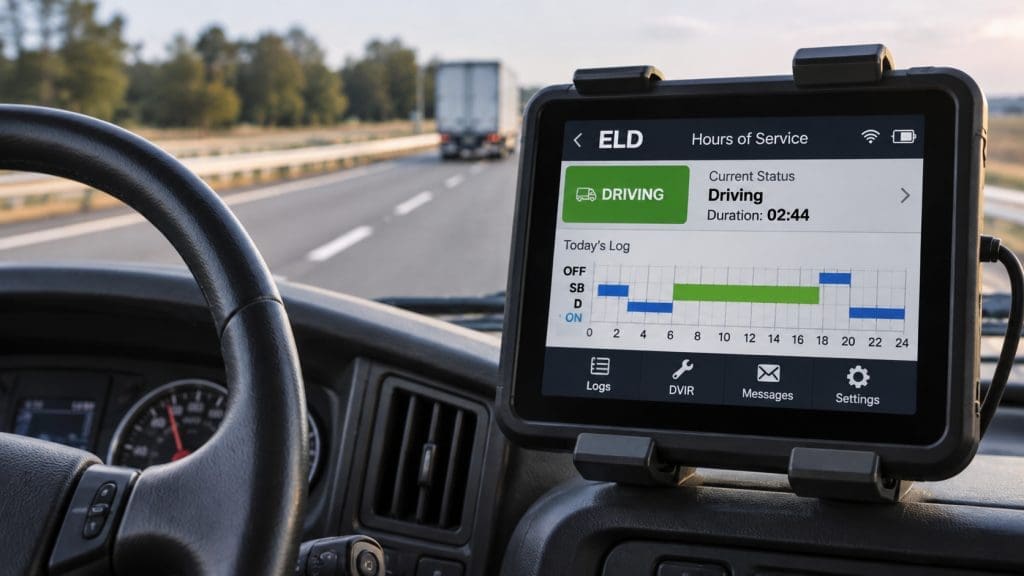
Electronic logging devices are mandatory for most commercial drivers subject to federal Hours of Service (HOS) regulations.
These systems automatically record vehicle operation and driving time, helping carriers monitor working hours and ensure compliance with mandatory rest requirements.
However, federal investigators uncovered practices that allowed this information to be modified or falsified.
According to the USDOT, three particularly serious examples emerged during the investigations.
In one case, an ELD provider allowed trucking companies to call customer support and manually delete driving hours, creating fictitious rest periods while trucks were still operating.
Another investigation revealed falsified driving records being uploaded during roadside inspections to conceal violations of federal driving limits.
Authorities also discovered records showing mathematically impossible speeds of up to 130 miles per hour, apparently used to artificially reduce documented driving time.
Federal officials have not publicly identified the companies involved in these examples because investigations remain ongoing.
Such practices can allow fatigued drivers to remain behind the wheel longer than legally permitted while giving noncompliant carriers an unfair competitive advantage.
What Trucking Companies Must Do Now
The FMCSA instructed affected motor carriers to replace revoked electronic logging devices with compliant systems.
The official announcement establishes a general replacement period of up to 60 days. However, enforcement instructions also identify November 24, 2026, as a critical date for roadside inspections involving the revoked devices.
Beginning on that date, inspectors may issue violations and place affected drivers out of service under applicable Commercial Vehicle Safety Alliance (CVSA) criteria.
Carriers should therefore avoid assuming that the general 60-day replacement period guarantees continued use of every affected device until January.
Companies should take the following steps:
- Inspect their fleets: Identify all installed ELD models and determine whether any appear on the revoked list.
- Verify federal authorization: Check the official FMCSA registry before purchasing or installing replacement devices.
- Coordinate replacements: Work with ELD providers to install systems that meet federal requirements.
- Preserve driving records: Maintain historical Hours of Service documentation for inspections and compliance audits.
- Train drivers: Ensure operators understand how to use replacement systems and present electronic records during roadside inspections.
Carriers can verify their devices through the FMCSA Electronic Logging Device Registry.
What Happens if a Truck Continues Using a Revoked ELD?
The FMCSA warned that operating with a revoked ELD after the applicable transition period may be treated as operating without an authorized electronic logging device.
This creates significant compliance risks for interstate trucking companies subject to federal Hours of Service requirements.
According to the USDOT announcement, beginning November 24, inspectors encountering affected revoked devices must cite the applicable violation under 49 CFR 395.8(a)(1).
Drivers may also be placed out of service under CVSA enforcement criteria.
An out-of-service order can prevent a driver from continuing a trip until the conditions required to resume operations have been satisfied.
For trucking businesses, the consequences can include delayed deliveries, interrupted routes, unexpected operating expenses, and disruptions to customer commitments.
The impact may be particularly significant for fleets relying on a single ELD provider across dozens or hundreds of trucks.
Can Revoked ELD Providers Return to the Federal Registry?
The FMCSA indicated that removed devices may eventually regain authorization if manufacturers or providers correct the identified deficiencies.
Federal regulators would review those corrections and notify the trucking industry if the affected systems were restored to the official registry.
Until that happens, carriers must treat the devices as revoked and comply with the applicable replacement requirements.
Because ELD registration relies on providers certifying that their products meet federal technical standards, trucking companies should regularly monitor official updates rather than relying exclusively on assurances from equipment vendors.
Why the Crackdown Matters for Trucking Safety
Electronic logging devices were introduced to improve Hours of Service compliance and reduce opportunities to falsify driver logs.
The information they collect helps document driving periods, identify potential violations, and support federal and state roadside inspections.
When those records can be manipulated, one of the trucking industry’s primary safeguards against driver fatigue becomes less reliable.
Excessive driving hours can increase crash risks, particularly during long-haul operations involving extended shifts and demanding delivery schedules.
Fraudulent records can also create unfair competition by allowing some carriers to operate their trucks longer than federal regulations permit.
The FMCSA maintains that removing noncompliant systems helps protect law-abiding motor carriers and strengthens highway safety.
What This Means for Commercial Trucking Insurance
For trucking companies, compliance with federal safety regulations is an essential component of risk management.
Accurate driving records can play an important role in accident investigations, regulatory audits, and liability assessments.
Using unauthorized electronic logging devices or maintaining manipulated records may complicate the reconstruction of a crash and create additional regulatory exposure.
From a commercial trucking insurance perspective, accident investigations may consider driver Hours of Service records, vehicle maintenance documentation, and compliance with federal operating requirements.
Any effect on insurance coverage depends on the specific policy terms and circumstances surrounding a claim.
Maintaining authorized ELD systems, preserving reliable driving records, and monitoring regulatory compliance are therefore important measures for protecting fleet operations.
November 24: A Critical Deadline for U.S. Trucking Fleets
The removal of 133 electronic logging devices represents a major federal enforcement action targeting the systems used to monitor commercial driving hours.
For affected carriers, the immediate priority is identifying installed equipment, checking its status against the FMCSA registry, and coordinating replacements for devices that have lost federal authorization.
With November 24 approaching, trucking companies should review their compliance procedures before roadside inspections potentially result in violations, out-of-service orders, and costly operational disruptions.
 Business hours: Monday to Friday from 8:00 AM to 5:00 PM. California time