A study by Overdrive questions the real impact of ELP Enforcement on U.S. freight rates.
An investigation conducted by Overdrive, based on data from its parent company MC Advantage and interviews with industry analysts, questions the real impact that enforcement of the English Language Proficiency (ELP) requirement has had on the U.S. freight transportation market.
According to data collected through December 18, since the beginning of the year commercial vehicle inspectors have placed 10,203 CDL-licensed drivers out of service for failing to comply with 49 CFR 391.11(b)(2), which requires truck operators to demonstrate proficiency in English. U.S. Department of Transportation (DOT) Secretary Sean Duffy himself stated on December 11 that nearly 10,000 unqualified drivers had been sidelined and that the agency did not plan to slow the pace of inspections.
However, Overdrive’s analysis raises a key question: if thousands of drivers have truly exited the market, why have freight rates not shown significant changes?
10,000 drivers out of service for ELP violations
The regulatory environment tightened in April, when President Donald Trump signed an executive order reinforcing the English proficiency requirement for all truck drivers in the country. In May, Overdrive cited Avery Vise, an analyst with FTR Transportation Intelligence, who estimated that strict enforcement of the ELP, similar to that seen in the early 2010s, could raise rates by as much as 15%.
Current data, however, show that enforcement levels are far below those years. In the early 2010s, between 80,000 and 100,000 ELP violations were recorded annually. By contrast, this year’s figures would reach only about half that level, according to Overdrive’s RigDig Business Intelligence panel, which tracks violations nationwide.
Although not all violations result in out-of-service orders, Overdrive notes that the removal of roughly 10,000 drivers, especially if concentrated in long-haul trucking, could affect certain market segments, such as independent owner-operators. Analysts like Dean Croke of DAT have pointed out that even small changes in total capacity can produce amplified effects in the spot market.
Even so, the most recent view from DAT is skeptical. In December, Ken Adamo, the firm’s head of analytics, said that ELP enforcement “has had absolutely no impact” on rates. According to Adamo, current fluctuations are driven mainly by seasonal factors and weak demand, marked by consumer caution and slowdowns in sectors such as manufacturing and construction.
Results from an Overdrive survey reinforce this perception. While 70% of surveyed drivers believe DOT measures will improve rates, 23% think there will be no change and that the market will continue to be governed by supply and demand. Among drivers who would lose their CDL under the new rules, 56% also believed that rates would not change significantly.
The lack of a practical, unified system
Overdrive’s investigation adds another critical element: drivers placed out of service do not always stop operating. The DOT acknowledged in August that some drivers sanctioned for ELP violations were later stopped in other states and allowed to continue driving due to a lack of visibility into prior out-of-service orders. The Commercial Vehicle Safety Alliance (CVSA) confirmed that inspectors do not have a practical, unified system to immediately identify these sanctions on the road.
Although the CVSA has launched a training campaign to improve these controls, Overdrive emphasizes that the lack of effective follow-up dilutes the real impact of the measures. Taken together, the investigation suggests that despite official announcements and tighter regulations, the effects of enforcing the English proficiency requirement are not yet clearly reflected in freight rates, and that its true impact may take longer to materialize.

The best roadside attractions for truckers in the U.S.
America’s highways hide unique places that break up the routine, don’t hesitate to check out these roadside attractions along the way. The road is much

The trucker style: comfort, function, and identity
Truckers’ style is much more than workwear; it’s an identity. These are the most commonly worn garments among truckers. Truckers’ style is much more than

Chaos on Highway 61: Viral Wrong-Way Truck Video Reignites the CDL Debate
An 80-ton tractor-trailer traveling miles in the wrong direction on Missouri’s Highway 61 has reignited a nationwide debate over Commercial Driver’s License (CDL) standards, training

How technology affects driver retention
Friend or foe? 52% of drivers say technology directly influences their decision to stay with or leave a fleet. Fleet telematics company Platform Science published

Dalilah Law seeks to remove non-english speaking commercial drivers
President Donald Trump proposed the “Dalilah Law,” an initiative aimed at prohibiting undocumented immigrants from obtaining commercial driver’s licenses. On February 24, President Donald Trump
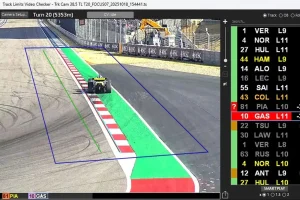
FORMULA 1 and the AI That Could Transform Transportation in the U.S.
The artificial intelligence system that Formula 1 implemented to monitor every car on every turn is opening the door to new applications in trucking, logistics,