 Hable con un agente al (888) 572-7520
  Enviar mensaje a un agente

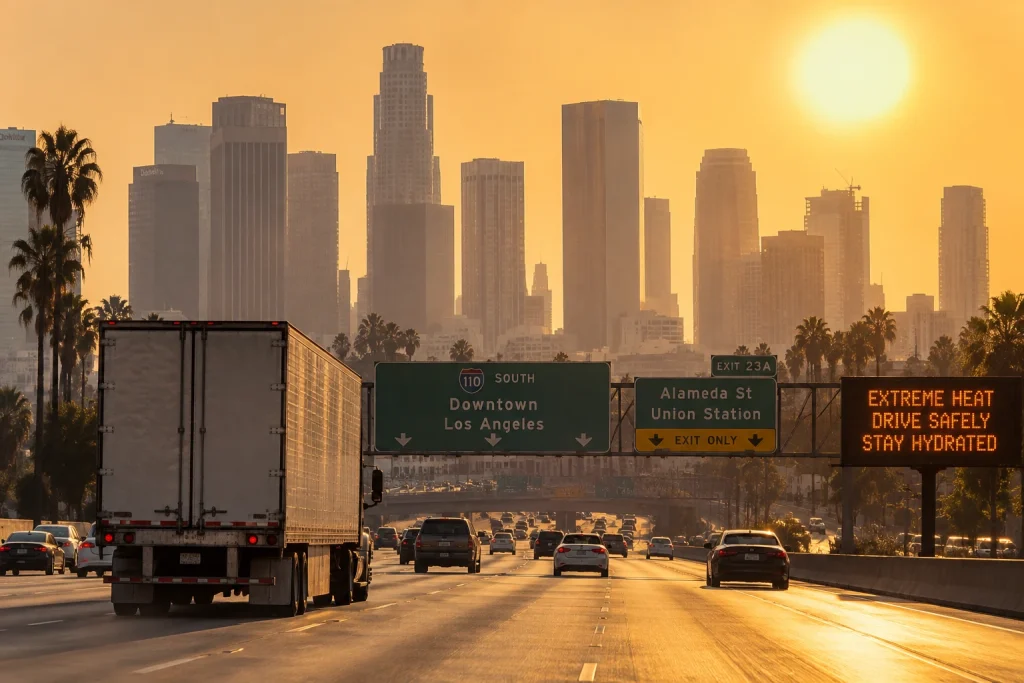

Southern California is heading into one of its hottest stretches in recent days this Wednesday, September 9. The National Weather Service (NWS) has an Extreme Heat Warning in effect from 8 a.m. Wednesday through 8 p.m. Thursday, with temperatures ranging from 92°F to 108°F across numerous parts of Los Angeles County.
The warning includes Downtown Los Angeles, Long Beach, Torrance, Hollywood, LAX, Pasadena, Burbank, Glendale, Beverly Hills, Compton, Woodland Hills, Van Nuys, Santa Monica and Malibu, as well as parts of the San Fernando and San Gabriel valleys.
Those conditions are especially important for truck drivers traveling through the Los Angeles metro area’s major freight corridors and anyone who will be loading, unloading, inspecting equipment or performing other work outside the cab.
The NWS warns that heat-related illnesses increase significantly during extreme heat. Another factor will make conditions even more uncomfortable: humidity will remain elevated, adding to the heat stress. According to forecasters, temperatures are expected to peak Wednesday across much of the region.
Hydration and breaks during the day
The combination of high temperatures and humidity increases the risk of heat exhaustion, particularly for drivers who spend long hours on the road and perform work outside the cab.
Keeping water available throughout the trip and drinking regularly, even before feeling thirsty, is one of the key precautions during periods of intense heat. Drivers should also use stops to cool down in shaded or air-conditioned areas and, whenever possible, limit direct sun exposure during the hottest hours of the day.
Heat exhaustion symptoms can include heavy sweating, weakness, dizziness, headache, nausea and muscle cramps. An extremely high body temperature, confusion or loss of consciousness can signal a medical emergency and requires immediate attention.
Extreme heat can also become a road-safety issue. Long hours in high temperatures can increase fatigue and affect concentration, particularly when overnight temperatures remain high and provide little relief.
Check the A/C before hitting the road
A working cab climate-control system becomes especially important during an extreme heat event. Before starting a run through Southern California, drivers should make sure the air conditioning is working properly and can keep the cab at a safe, comfortable temperature for extended periods.
An A/C failure when outside temperatures are above 100°F can quickly turn a normal trip into a difficult situation, particularly in inland areas, rest areas with limited shade or locations where services may be farther away.
Drivers should also check engine coolant levels, inspect hoses, belts and connections, and keep an eye on the temperature gauge while driving.
Extreme heat puts additional strain on cooling systems, especially in heavy trucks carrying loads, climbing grades or spending extended periods in congested traffic.
Keep an eye on your tires
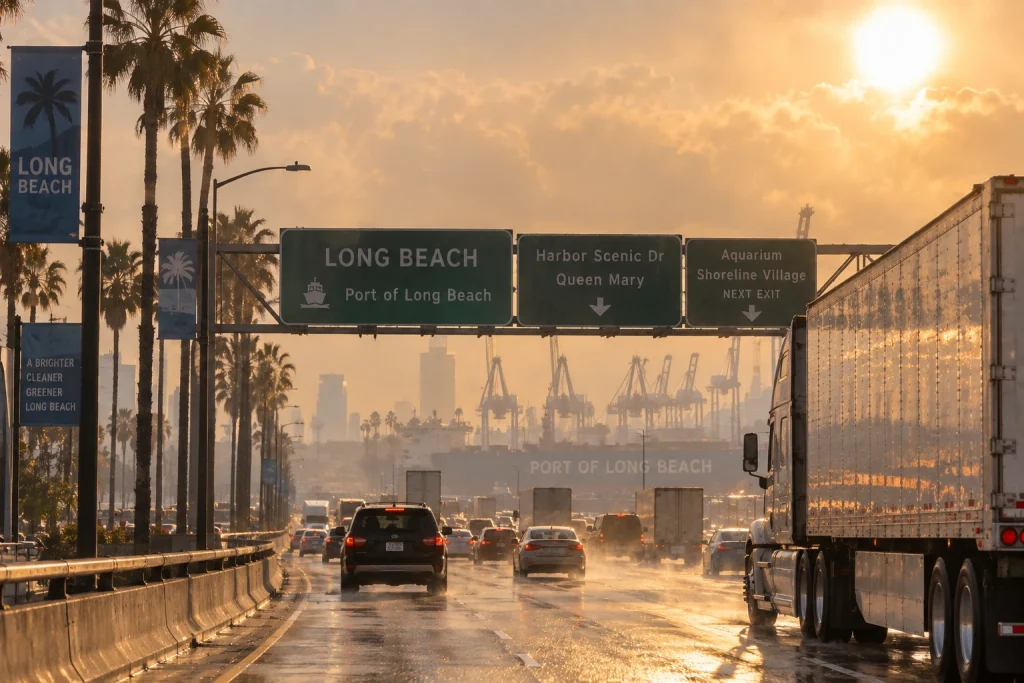
High temperatures can also put additional stress on tires. Pavement temperatures can climb well above the surrounding air temperature, creating tougher conditions during long highway runs.
Before heading out, drivers should check tire pressure while the tires are cold and inspect for cuts, bulges, uneven wear or other signs of damage.
Tire pressure naturally rises as tires heat up. Drivers should not release air from a hot tire simply because its pressure reading is higher than it was before the trip.
Long hours on extremely hot pavement, combined with heavy loads and highway speeds, make pre-trip tire inspections particularly important during periods of extreme heat.
Los Angeles and Long Beach among the affected areas
The heat is reaching coastal communities that usually get some relief from the Pacific Ocean. Downtown Los Angeles and Long Beach could see temperatures near 100°F, while inland communities and valleys are expected to experience the highest readings.
Humidity is another unusual factor in this heat event. Remnants of Marie brought significant tropical moisture into Southern California, making the high temperatures feel even more oppressive.
Overnight temperatures will also remain elevated. Parts of the Los Angeles Basin could see lows staying in the 70s, reducing the nighttime cooling that normally provides some relief after sunset.
For drivers making overnight deliveries, resting in their trucks or starting early-morning runs, that means warm conditions could persist well beyond the hottest part of the afternoon.
Marie also brought flooding and dangerous surf
Effects of Tropical Storm Marie in California: Record surf and dangerous coastal conditions
The extreme heat comes immediately after a difficult weekend along the Southern California coast.
Remnants of Tropical Storm Marie brought rain, coastal flooding and dangerous surf. Long Beach and Malibu were among the hardest-hit areas, while waves at Zuma Beach reached approximately 12 feet.
In Long Beach, waves washed over sand barriers and pushed water toward homes and waterfront areas. Authorities also maintained warnings for high surf and dangerous rip currents as conditions gradually began to improve.
Although those hazards primarily affected coastal areas, heavy rain and flooding can leave temporary impacts on streets and access roads. Drivers making deliveries or traveling through those areas should continue to watch local conditions.
Extreme heat will remain the main concern
Over the next several days, extreme heat will be the primary weather concern for drivers traveling through Southern California.
For truckers, preparing for a run means looking beyond traffic conditions and planning for hours of exposure to unusually high temperatures. Carrying enough water, scheduling breaks, keeping the cab cool and checking tires and the cooling system before departure can help prevent problems on the road.
Drivers should also carry extra water in the truck in case congestion, a breakdown, a closure or another unexpected delay extends the trip.
With temperatures topping 105°F in inland areas and elevated humidity making conditions feel even hotter, Southern California is facing several demanding days. For the thousands of truck drivers traveling its highways every day, preparing for the heat will be just as important as checking traffic before hitting the road.
 Business hours: Monday to Friday from 8:00 AM to 5:00 PM. California time