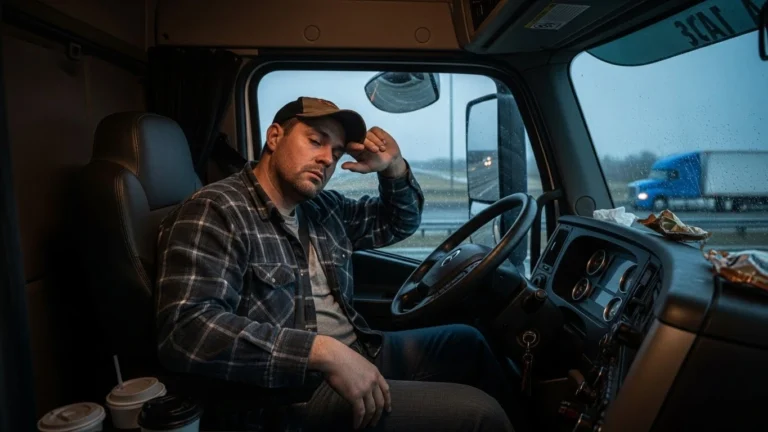
Federal agencies are reassessing fatigue monitoring rules, AI systems, and HOS standards, opening the door to major changes for the trucking industry.
Fatigue has returned to the forefront of U.S. transportation policy. After several years without major regulatory changes, the Department of Transportation has opened a new review of Hours of Service (HOS) requirements and related fatigue controls.
This renewed attention follows a series of high-profile crashes, growing public scrutiny, and a political agenda that places safety at the center of national transportation priorities.
In late 2025, DOT officials confirmed that the agency is studying several key components of HOS, including the 30-minute break rule, the split sleeper berth provision, and potential adjustments to the driving window under certain conditions.
Although no Notice of Proposed Rulemaking has been issued, the reopening of these discussions is significant: it suggests that the federal government is preparing to modernize fatigue regulations in response to technological advances and persistent safety concerns.
For carriers, this introduces a new layer of uncertainty. Stricter HOS rules could increase the need for additional drivers, alter delivery schedules, and require route redesigns. Conversely, more flexible provisions could provide operational benefits but would require careful interpretation and compliance training.
AI Cameras Under Consideration as Potential Federal Standard
One of the most consequential developments of 2025 is the Federal Motor Carrier Safety Administration’s review of in-cab artificial intelligence cameras as part of potential fatigue monitoring requirements.
These systems were once used primarily by large fleets with extensive safety budgets. Today, FMCSA is actively evaluating whether certain AI-based fatigue detection tools should become standardized or mandatory for interstate carriers.
The technologies being reviewed are far more sophisticated than earlier dashcams. Current AI cameras analyze facial expressions, blink patterns, micro-sleep indicators, gaze direction, and distraction cues. Some models combine this visual data with ELD information and vehicle-movement patterns to generate predictive fatigue alerts before dangerous behavior occurs.
Several states with high-volume freight corridors, including Texas, Tennessee, and Florida, have publicly supported the federal evaluation, arguing that standardized AI monitoring could reduce crashes and improve safety metrics. However, driver groups and owner-operators have strongly opposed the idea, calling it an invasion of privacy and a costly burden for small carriers. Critics also note that
AI cameras can generate false fatigue alerts, raising concerns about disciplinary actions and driver safety scores.
The debate has become one of the most polarizing regulatory issues in the trucking sector.

Biometric and Predictive Technologies Enter Pilot Programs
In addition to AI cameras, three emerging fatigue-monitoring technologies gained federal attention in 2025 through new pilot programs.
The first uses advanced computer vision to detect subtle head movements associated with early-stage fatigue—patterns invisible to human observation and traditional sensors. The second incorporates biometric steering-wheel sensors that measure grip pressure, conductivity, and physiological indicators of exhaustion. The third model cross-references ELD driving data with erratic lane-positioning inputs to build predictive models capable of issuing alerts before the driver becomes aware of fatigue.
These technologies represent a shift toward multi-layered fatigue monitoring systems that integrate visual, biometric, and operational data. While offering safety benefits, they also raise complex questions about data ownership, accuracy, and the implications of continuous monitoring.
Increased Enforcement Across Interstate Freight Corridors
Another factor driving federal interest in fatigue monitoring is the rise in enforcement activity observed during fall 2025.
Multi-state operations involving FMCSA and local patrols targeted fatigue-related violations along major corridors such as I-70, I-80, I-35, and I-95. Reports show an increase in citations for unsafe driving behaviors linked to fatigue, inadequate rest periods, and inconsistent log entries.
Some enforcement agencies have begun testing new tools such as thermal imaging and roadside sensors designed to detect erratic lane positioning before a stop is initiated. This reflects a broader move from reactive investigation to proactive fatigue detection.
For fleets, this escalation means that compliance failures—whether related to HOS, monitoring systems, or driver behavior—carry higher operational risks.
A Turning Point for Trucking Safety Policy
Together, these developments indicate that the United States is entering a new era of fatigue regulation. The reconsideration of HOS rules, the potential standardization of AI cameras, the emergence of biometric fatigue-monitoring systems, and the intensification of enforcement efforts suggest that significant regulatory changes could arrive as early as 2026.
For carriers, preparation will likely involve new investments, training initiatives, and operational adjustments. Policymakers must balance technological innovation with the privacy concerns of drivers and the economic realities of small carriers. For drivers, the transformation represents a shift in how professional autonomy intersects with increasingly data-driven safety expectations.
If federal reviews evolve into formal rulemaking, fatigue monitoring will become not just a compliance requirement but a comprehensive digital ecosystem shaping the daily realities of trucking across the country.

The 2026 World Cup contributed $17.2 billion to US economy
The FIFA World Cup has come to a close in North America, cementing its status as the biggest economic and transportation catalyst of the last decade for the trucking industry in the United States.

Canada Wildfire Smoke Reaches New York Ahead of World Cup Final
Smoke from hundreds of active wildfires across Canada has significantly reduced air quality in New York and New Jersey just days before the 2026 FIFA World Cup Final between Argentina and Spain. The conditions are also creating new challenges for truck drivers and freight carriers operating throughout the Northeast.

What Regulations Have Changed for Truck Drivers in the U.S. in 2026?
Learn about the new trucking regulations in the United States for 2026, upcoming FMCSA changes, and how they will affect drivers and trucking companies.

Apocalyptic-Looking Sky in Ontario Goes Viral Amid Wildfires
Wildfires swept across Ontario, Canada and smoke spread as far as the U.S. border.

The Biggest Match of the World Cup Was Played Off the Field
More than 453 metric tons of equipment, around 5,000 trucks and support vehicles, and simultaneous operations across 16 host cities kept the largest FIFA World Cup in history running.

DEF Act: 10 Years of Legal Protection for EPA Diesel Emissions Guidance
The Diesel Engine Flexibility (DEF) Act would protect agricultural and transportation businesses by building on the diesel emissions guidance by the EPA.