 Hable con un agente al (888) 572-7520
  Enviar mensaje a un agente

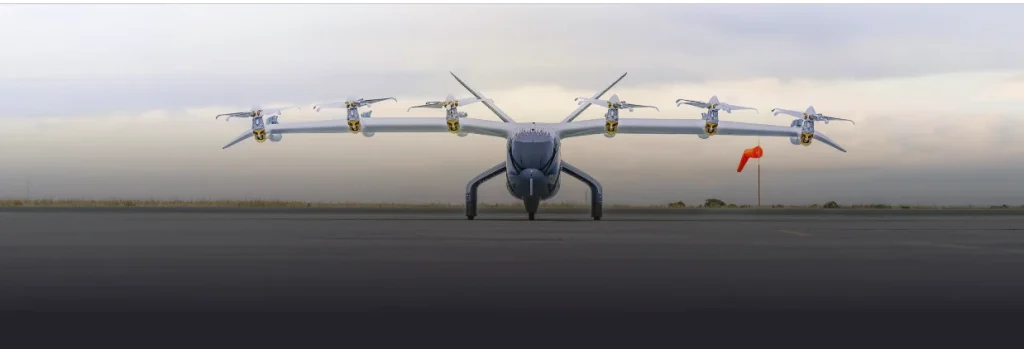

While much of the United States continues expanding electric vehicle charging infrastructure along highways, rest areas, and freight corridors, Florida is looking to the skies.
The Florida Department of Transportation (FDOT) is proposing to use USD 197 million from the federal National Electric Vehicle Infrastructure (NEVI) program to build a network of landing platforms for electric vertical takeoff and landing aircraft (eVTOLs), commonly known as flying taxis.
The proposal positions Florida as one of the nation’s strongest supporters of advanced air mobility, a technology that has yet to reach large-scale commercial deployment but is expected to reshape urban transportation over the next decade.
For the transportation and logistics industry, the project is more than just an eye-catching innovation—it offers a glimpse into where future infrastructure investments could be headed.
From EV Chargers to “Air Highways”
The funding comes from the NEVI program, which was created to expand the nation’s network of fast chargers for electric vehicles.
Most states have used those federal dollars to install charging stations along interstate highways, shopping centers, and highway rest stops. Florida, however, left much of its allocation untouched.
Now, state officials want to redirect those funds to construct approximately 32 vertiports—specialized facilities where electric aircraft can land, recharge, and take off.
Each site is expected to cost about USD 5.6 million and would essentially function as a charging hub for future air taxi operations.
The facilities are part of the proposed Air Mobility Highway Network, a statewide system designed to connect key destinations using electric aircraft capable of vertical takeoff and landing.
What Does This Mean for Transportation?
Although the project may seem far removed from the trucking industry, it has broader implications for transportation planning.
Major infrastructure investments often shape transportation policy for decades. While trucks will remain indispensable for moving freight, governments are beginning to invest in new mobility solutions designed to complement—not replace—the existing road network.
eVTOL aircraft were developed primarily to transport passengers on short trips between airports, downtown districts, and other high-demand destinations.
However, industry experts believe the technology could eventually support light logistics, emergency parts delivery, medical supplies, and other time-sensitive cargo.
Florida Is Preparing for the Industry
The initiative didn’t happen overnight.
Since 2021, FDOT has been developing an advanced air mobility strategy while conducting technical studies and public engagement efforts.
Florida is also home to SunTrax, a large transportation testing facility in Polk County that was originally built to evaluate autonomous vehicles but now serves as a testing ground for electric aircraft as well.
The nearly 475-acre site is considered one of the country’s leading centers for next-generation transportation technologies.
The Companies Behind the Flying Taxi Industry
Florida is not making this push alone.
Several of the world’s leading eVTOL manufacturers are participating in pilot programs, including:
- Joby Aviation, backed by Toyota, Delta Air Lines, and Uber.
- Archer Aviation, supported by United Airlines.
- BETA Technologies, backed by Amazon.
- Electra, supported by Honeywell.
All are working toward Federal Aviation Administration (FAA) certification with the goal of launching commercial operations within the next few years.
Does Florida Really Have Enough EV Chargers?
State officials argue that Florida’s electric vehicle charging network has reached a sufficient level thanks to private-sector investment.
According to FDOT, Florida currently has:
- 452 DC fast chargers
- 1,708 public Level 2 charging stations
Officials also point to Tesla’s decision to open its Supercharger network to other automakers as a major factor in expanding charging access.
Critics, however, argue that Florida still has fewer chargers per electric vehicle than the national average and that many residents—especially those living in apartments or condominiums—continue to have limited access to charging infrastructure.
Federal Approval Is Still Required
Although the Federal Highway Administration has confirmed that Florida has completed its designated interstate EV charging corridor under the NEVI program, redirecting those funds to flying taxi infrastructure still requires federal approval.
Current NEVI rules provide states with greater flexibility once core charging corridors are complete, but using those dollars for vertiports would represent an unprecedented application of the program.
For now, the proposal remains under federal review.
 Business hours: Monday to Friday from 8:00 AM to 5:00 PM. California time