 Hable con un agente al (888) 572-7520
  Enviar mensaje a un agente



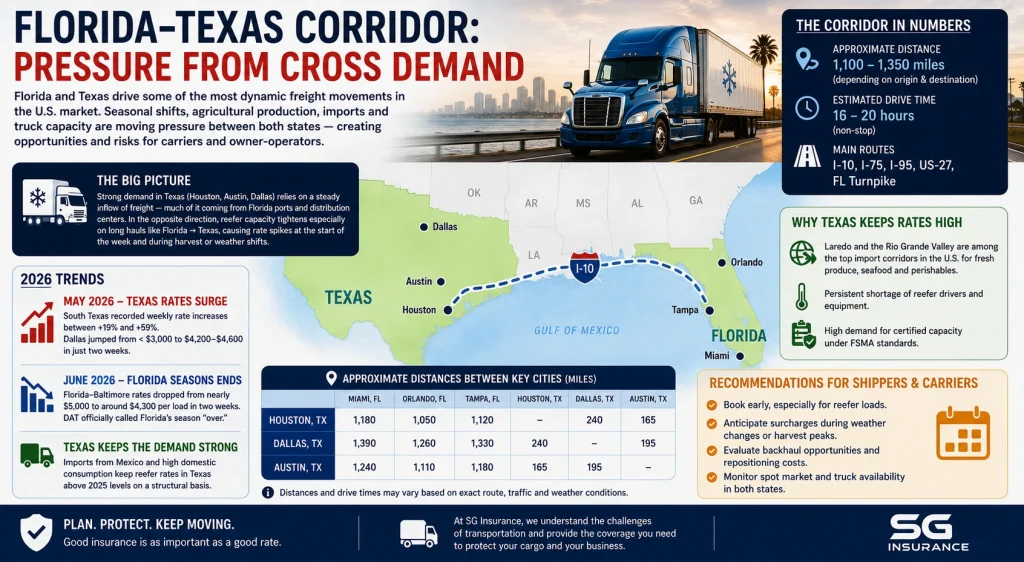
The freight corridor between Florida and Texas connects two very different but closely linked markets. Florida is a major gateway for agricultural products, flowers, food, and freight moving through its ports and distribution centers, while Texas combines a massive domestic market with the steady flow of imports entering the United States from Mexico.
Throughout 2026, that combination has produced significant swings in truck availability and rates, particularly in the reefer segment. More than simply a route connecting two states, the Florida-Texas corridor shows how freight demand can shift rapidly from one region to another, changing market conditions for carriers, brokers, and shippers.
Florida and Texas: Two Markets Competing for Capacity
One factor behind this dynamic is the sheer size of Texas demand. Major metropolitan areas such as Houston, Dallas-Fort Worth, and Austin require a constant flow of food, consumer goods, and freight to supply their extensive distribution networks.
Florida, meanwhile, generates substantial seasonal freight volumes. One of the clearest examples came during the spring. In early May, DAT Freight & Analytics reported that Florida outbound reefer spot rates had increased by roughly 25% week over week, as produce season, watermelon shipments, and heavy volumes of imported flowers moving through Miami converged.
The pressure became even more pronounced in late April. Central and South Florida moved into truck-shortage conditions, while several lanes posted sharp weekly increases: Atlanta rose 42%, Chicago 25%, Philadelphia 23%, Baltimore 17%, and New York 14%, according to DAT’s market tracking based in part on USDA data.
For carriers, those swings demonstrate why the timing of a move into or out of Florida can completely change the profitability of a load.
When Florida Slows Down, the Pressure Shifts
The reefer market is particularly sensitive to seasonality. When production declines in one region, trucks begin moving toward markets offering stronger volumes and better rates.
That is exactly what happened between May and June 2026.
By May 20, DAT was already reporting a significant correction in Florida following the Mother’s Day peak. At the same time, other producing regions were beginning to gain momentum. The national reefer spot rate, excluding fuel, had reached an average of $2.68 per mile, while fruit and vegetable shipments from major growing regions averaged $3.91 per mile.
A week later, the volatility was clear. In Central and South Florida, the Baltimore lane dropped by approximately $1,100 in a single week, falling from a range of $4,500–$4,700 to $3,400–$3,600 per load. DAT described a Florida market where freight volumes were declining quickly as the season wound down.
That shift matters for carriers operating between Florida and Texas. Lower rates at one origin do not necessarily mean freight activity is weakening across the entire region. Instead, they may indicate that trucks are beginning to reposition toward another market.
Texas Gains Momentum
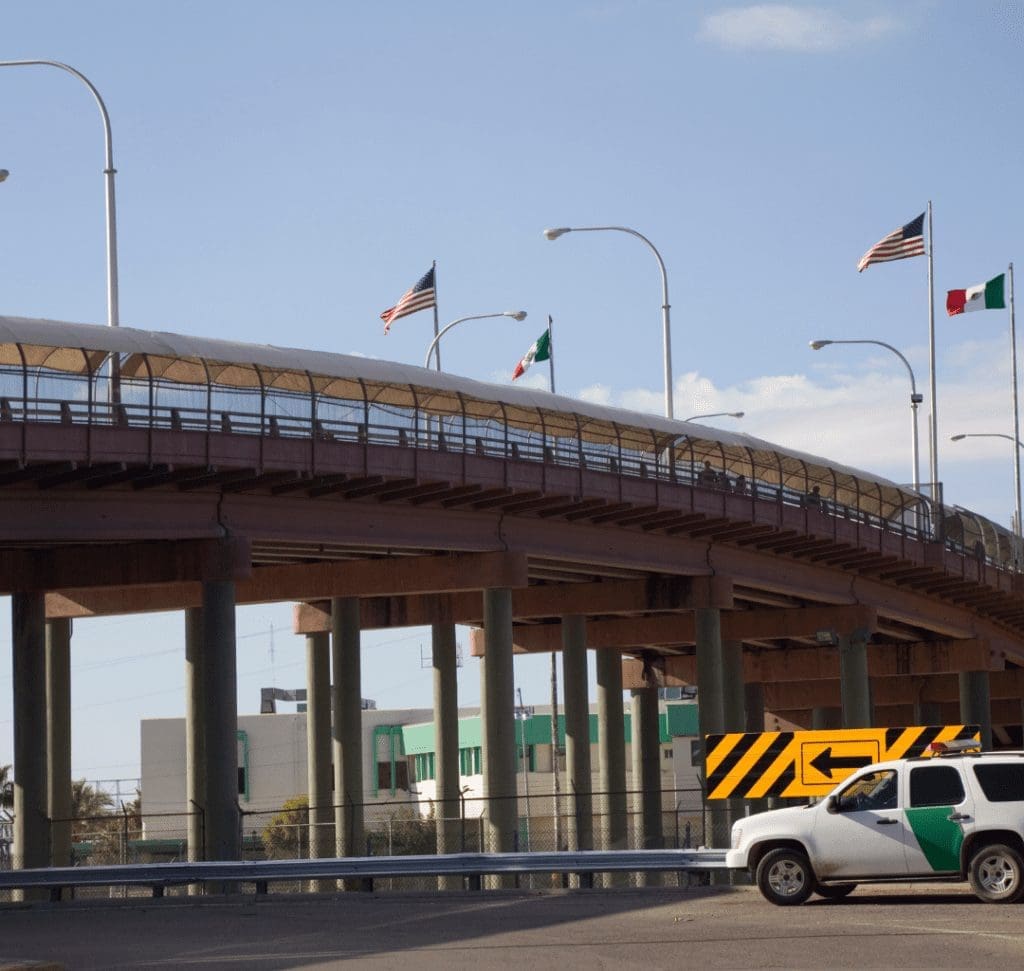
Texas has a structural advantage that Florida does not have on the same scale: its border with Mexico.
South Texas serves as a critical gateway for Mexican fruits, vegetables, and other perishables that must then move to markets throughout the United States. McAllen and the broader South Texas border corridor play a central role in that freight network.
DAT has identified McAllen as one of the leading gateways for Mexican produce, with roughly half of the produce volume imported from Mexico moving through the region.
This helps explain why Texas can continue generating significant reefer demand even as Florida’s agricultural season begins to slow.
The shift became especially clear in June. DAT reported that Central and South Florida were winding down their season just as South Texas began tightening again. The Laredo-to-Boston lane jumped 19% in one week, as declining Florida volumes changed the distribution of trucks and freight across the market.
For a carrier, this matters because the value of a Florida-to-Texas load does not end when the truck reaches its destination. Operators also need to consider what freight will be available next and how much it could cost to reposition the equipment.
Reefer Freight Amplifies the Pressure
Dry van carriers generally have greater flexibility when searching for different types of freight. Reefer operations are more specialized.
Carriers must consider temperature requirements, trailer cleanliness, product compatibility, loading and unloading times, and the availability of the right equipment. On long-haul routes, exposure to fuel costs, maintenance expenses, and delays also increases.
As a result, even a relatively small change in available reefer capacity can produce significant rate movements.
The 2026 data illustrate that volatility. In March, South Texas posted weekly increases ranging from 13% to 28% on several lanes, while Florida also recorded increases of approximately 7% to 12%.
But those conditions can reverse quickly. By late May, South Texas had shifted from a truck-shortage environment to adequate capacity, and some lanes dropped between 21% and 41% in just one week.
For owner-operators and small fleets, focusing only on the rate offered for an individual load can therefore be costly. The destination market matters just as much.
Every Load Is Part of a Larger Cycle
On a long corridor like Florida-Texas, the outbound rate tells only part of the story.
An attractive rate out of Florida can quickly lose value if the truck arrives in a market with excess capacity and limited freight. Likewise, accepting a moderate rate into South Texas may make financial sense if it positions the truck near a strong market for freight entering from Mexico.
That is why carriers should evaluate load volume, truck availability, agricultural seasons, spot-market trends, and backhaul opportunities at the same time.
Distance also matters. Miami to Dallas, for example, involves more than 1,300 road miles, while a run from Miami to Houston also exceeds 1,000 miles. In reefer operations, additional detention at either origin or destination can significantly affect the truck’s actual revenue per day.
Florida-Texas: A Freight Corridor Worth Watching
The behavior of the freight market in 2026 points to one clear conclusion: Florida and Texas do not operate as isolated markets.
When Florida enters peak produce season, it can absorb available capacity and push rates sharply higher. As that season winds down, trucks begin to redistribute, while Texas can gain momentum from cross-border imports, regional production, and the enormous consumption needs of its metropolitan areas.
For carriers and owner-operators, this cross-market demand creates opportunities, but it also requires careful planning. Before accepting a load between the two states, operators should look beyond the rate per mile and consider where the truck will end up, how much capacity is already available there, which commodities are in season, and how realistic the next load opportunity will be.
In a market where rates can move 20%, 30%, or even 40% within a matter of weeks—as they have this year across different reefer lanes in Florida and South Texas—anticipating those shifts can make a meaningful difference in profitability.
And on runs of more than 1,000 miles between Florida and Texas, that planning should also include maintenance, transportation compliance, hours-of-service requirements, and the right insurance coverage for both the truck and the freight being hauled. Taking advantage of a strong rate matters, but doing it with a safe and properly insured operation is what keeps the business moving.
 Business hours: Monday to Friday from 8:00 AM to 5:00 PM. California time