 Hable con un agente al (888) 572-7520
 Enviar mensaje a un agente


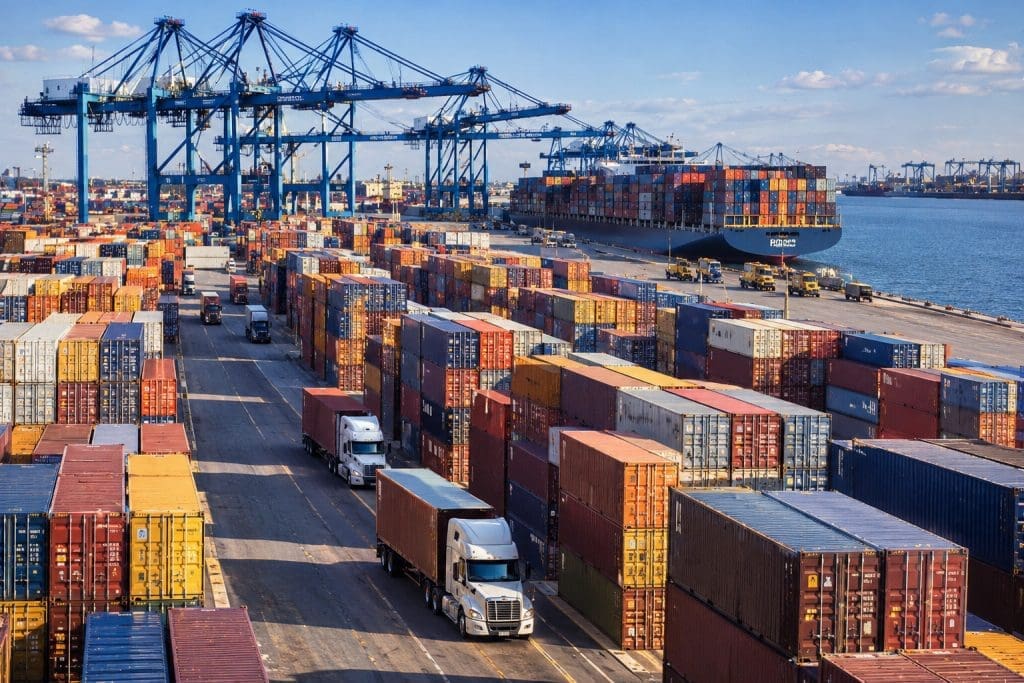

Ocean freight transportation in the United States continues to operate at elevated capacity levels in 2026. According to the November update from the Bureau of Transportation Statistics (BTS), the weekly capacity of container ships arriving at U.S. ports remains above levels recorded throughout much of 2022 and 2023.
The data shows weekly capacity approaching 2 million twenty-foot equivalent units (TEUs), following peaks exceeding 2.4 million TEUs during the period analyzed.
This growth reflects the continued strength of trade and logistics activity, as freight movement, consumer demand, and supply chain requirements remain essential components of the U.S. economy.

A Sustained Recovery Since 2022
The historical data published by BTS highlights changes in container shipping capacity since 2019.
In 2022, capacity fell to some of the lowest levels recorded during the period, briefly approaching 1.3 million TEUs per week. Recovery began in 2023, with capacity reaching levels in 2025 and 2026 that exceeded much of the earlier period.
Peak readings in 2026 approached 2.5 million TEUs, while the latest September measurements were closer to 2 million.
These figures represent the carrying capacity of container ships arriving at U.S. ports, rather than the actual volume of cargo transported. Nevertheless, they provide an important indicator of available ocean freight capacity and its evolution over time.

Trucking Plays a Critical Role in Port Operations
Freight moving through U.S. ports depends on efficient connections to highways and rail networks that serve distribution centers, warehouses, and major consumer markets.
For this reason, the November BTS update also includes indicators tracking average truck speeds at ten major freight congestion bottlenecks, along with travel times on access routes serving the Ports of Los Angeles and Long Beach in California and the Ports of New York and New Jersey.
One of the metrics monitored is the Planning Time Index, which helps transportation companies estimate how much additional travel time they should allow for potential delays.
These indicators help assess freight corridor performance and improve delivery planning, particularly for intermodal operations that combine ocean shipping and trucking.
Diesel Prices, Freight Rates, and Rail Activity
The report also updates several economic and operational indicators affecting freight transportation.
These include diesel fuel prices, the Producer Price Index for truck transportation, international ocean freight rates, and new motor carrier registrations in the federal Motor Carrier Management Information System (MCMIS).
For the railroad industry, BTS monitors average train speeds, the number of railcars in service, terminal dwell times, and intermodal unit movements.
Together, these indicators provide a broader picture of how different transportation modes interact and help identify potential disruptions or inefficiencies across freight networks.
Outlook for Trucking and Logistics Companies
The recovery in ocean freight capacity from the lows recorded in 2022 is a positive sign for container shipping availability in the United States.
For trucking companies, freight brokers, and logistics operators, monitoring port activity is essential for planning operations, coordinating deliveries, anticipating potential congestion, and evaluating transportation costs.
BTS publishes these indicators monthly as part of a federal freight monitoring initiative established in 2020, with contributions from multiple government agencies.
Infrastructure and Connectivity Remain Key to Freight Efficiency
As freight transportation evolves, the efficiency of the U.S. logistics network will increasingly depend on infrastructure investments, reliable highway connections, and coordination between ports, trucking companies, and distribution centers.
Modernizing freight corridors, improving access to major terminals, and reducing transportation bottlenecks can help businesses manage operating costs and maintain consistent delivery schedules.
For the trucking industry, these improvements are particularly important as companies face pressure to optimize routes, reduce downtime, and meet customer expectations.
The ability to move goods efficiently from ports to their final destinations remains a fundamental factor in supporting economic activity, commercial competitiveness, and the long-term performance of the freight transportation industry.
 Business hours: Monday to Friday from 8:00 AM to 5:00 PM. California time