Cargo theft has been one of the most persistent issues facing the freight transportation industry so far in 2025.
Cargo theft has been one of the most persistent issues facing the freight transportation industry so far in 2025. Companies have become one of the most common targets for criminals, making it increasingly difficult to prepare for future attacks. A recent report published by the American Transportation Research Institute (ATRI) revealed that the total cost of cargo theft in the industry has reached $18 million per day in direct and indirect losses.
According to the report, 74% of stolen goods are never recovered, and are thus considered total losses. ATRI analyzed data on cargo theft from carriers, logistics service providers, insurers, and other industry stakeholders to gain a broader perspective on what this crisis truly means for freight transportation.
Cargo theft costs industry over $18 million per day
Cargo theft has become a routine cost for trucking companies, said Ben Banks, president of TCW Inc. Consumers ultimately bear the cost, while the industry suffers significantly. Therefore, immediate action is essential to combat this growing crisis. The ATRI report aims to support the industry by providing accurate, quantifiable data that can help companies implement effective solutions to protect their goods and workers.
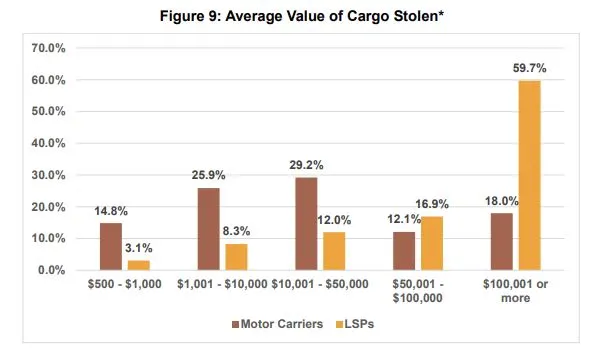
The findings of the report show that annual cargo theft costs the sector approximately $6.6 billion, which translates to more than $18 million per day. Additionally, it was reported that the average annual losses due to theft are around $520,000 per carrier, and about $1.84 million per logistics service provider.
Researchers conducted numerous interviews with industry participants, including carriers who had experienced cargo losses, in order to calculate the average figures that threaten the freight industry today.
Cargo theft trends
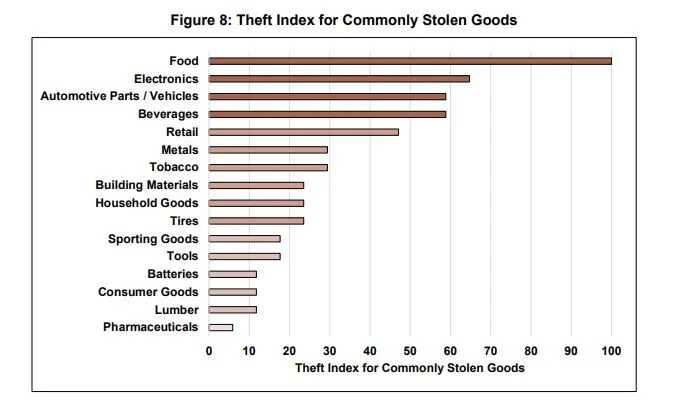
The report also examined how and where cargo theft occurs, along with prevention strategies, the importance of building strong partnerships with law enforcement, and the role of insurance in risk management. Among its findings, the most commonly stolen goods are:
- Food
- Electronics
- Auto parts and vehicles
- Beverages
- Clothing
On the other hand, these thefts are more likely to occur near major transportation and logistics hubs in large cities, where vast amounts of cargo move through interstate corridors and law enforcement resources are often stretched thin. The most affected states include:
- California
- Texas
- Illinois
- Tennessee
The cities that have recently seen a rise in cargo theft include: Chicago, Memphis, Houston, Miami, Savannah, and Newark.
ATRI recommendations
As security measures, ATRI advises carriers to safeguard their facilities and only grant access to trusted and properly identified individuals in order to prevent theft at terminals, as 24% of thefts occur at carrier terminals.
The report also highlights the need for state-level legislation to address this issue, while also proposing comprehensive tools to ensure the industry and all stakeholders have the necessary resources to enforce the law effectively.

4,000 Brake Inspections Led to Commercial Vehicles Being Removed from Service
The CVSA conducted inspections of commercial vehicles across North America as part of Brake Safety Day.

U.S. Bill Seeks to Create Federal Standards for Autonomous Trucks
As part of the BUILD America 250 Act, a comprehensive federal regulatory framework for the deployment of autonomous trucks in the United States has been proposed.

Freight: America’s New Push to Modernize Roads, Ports and Supply Chains
The U.S. Department of Transportation unveiled the 2026 National Freight Strategic Plan, a roadmap to upgrade a nearly seven-million-mile freight network that moves more than 54 million tons of goods every day. The announcement comes amid growing industrial activity, reshoring and mounting pressure on America’s logistics infrastructure.

World Cup 2026: The truckers are well insured and ready to be champions
The championship will turn US highways into a logistical hive of activity. A massive challenge that will require securing every truck and its cargo before the starting whistle. The numbers behind this huge business.

Can You Drive a Truck in the U.S. With a Mexican License?
Searches about Mexican CDL equivalents, trucking jobs and work permits in the United States are surging across Google, ChatGPT and other AI platforms. One of the most common questions among drivers and migrants is whether a Mexican commercial license is valid in the U.S. The short answer is yes — but only under specific conditions.

What Insurance Does an Owner-Operator Need in the United States?
The most important insurance coverages every owner-operator should consider to operate with greater safety and peace of mind in the United States.
All content and original artwork, unless otherwise noted, is protected by copyright. Saint George uses certain images under license from various licensing vendors for this purpose. Any unauthorized commercial reproduction or distribution of copyrighted materials is prohibited.