With nearly three million units of semi-trucks registered in the country as of February 2025, freight trucks are a dominant force on the roads.
If you’ve ever taken a road trip, it’s very likely that you’ve shared the road with a truck — or several — along the way. We often talk about the transportation industry, but sometimes it’s hard to grasp the true scale of this sector in the United States. The imposing presence of a truck, while it may seem intimidating at times, represents an entire supply chain in constant motion. To deliver everything Americans need on a daily basis, thousands of trucks must travel the roads each day. Have you ever wondered how many?
With nearly three million units of semi-trucks registered in the country as of February 2025, freight trucks are a dominant force on the roads. Although they represent just 1% of all registered vehicles, trucks and semi-trailers are among those that travel the most miles each year. Determining the exact number of trucks on U.S. highways can be complex, but here are some numbers that might surprise you.

How many trucks are there in the U.S.?
According to data from TruckInfo, there are 13.5 million trucks registered in the United States with a gross vehicle weight over 3,000 kg, designated for transporting heavy loads. On top of that, there are 48 million pickup trucks and 75,000 light-duty trucks registered in the country, making the transportation industry a truly massive force.
In addition to this figure, TruckInfo shares the following statistics about the U.S. freight transportation industry:
- 2.97 million semi-trailers are registered in the U.S.
- In 2022, 476,000 commercial trucks were sold, more than 29,000 of which were Class 8 vehicles.
- On average, trucks travel 45,000 miles per unit per year.
And who drives all these trucks? An industry of this scale requires a workforce to match. In the United States, there are over 3.5 million truck drivers registered, according to TruckInfo. This figure includes both salaried drivers and independent owner-operators of semi-trailers and other truck types. While the number is large, from a technical standpoint, there are still about 10 million trucks without an assigned driver.

Trucks on the road
Due to the sheer number of trucks in circulation and the millions of miles they travel each year, encountering one on the highway is virtually inevitable. Semi-trailers are a constant presence on U.S. roads, and while their size may command respect, their presence shouldn’t automatically be seen as a hazard. These vehicles are operated by trained professionals who follow strict safety regulations to ensure efficient and safe transportation.
Beyond their imposing appearance, trucks are essential to the functioning of the economy and daily supply chains. Understanding their role in the logistics chain not only helps us see the bigger picture, but also encourages more mindful and respectful coexistence on the roads.

The best roadside attractions for truckers in the U.S.
America’s highways hide unique places that break up the routine, don’t hesitate to check out these roadside attractions along the way. The road is much

The trucker style: comfort, function, and identity
Truckers’ style is much more than workwear; it’s an identity. These are the most commonly worn garments among truckers. Truckers’ style is much more than

Chaos on Highway 61: Viral Wrong-Way Truck Video Reignites the CDL Debate
An 80-ton tractor-trailer traveling miles in the wrong direction on Missouri’s Highway 61 has reignited a nationwide debate over Commercial Driver’s License (CDL) standards, training

How technology affects driver retention
Friend or foe? 52% of drivers say technology directly influences their decision to stay with or leave a fleet. Fleet telematics company Platform Science published

Dalilah Law seeks to remove non-english speaking commercial drivers
President Donald Trump proposed the “Dalilah Law,” an initiative aimed at prohibiting undocumented immigrants from obtaining commercial driver’s licenses. On February 24, President Donald Trump
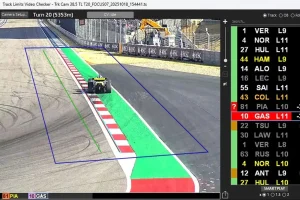
FORMULA 1 and the AI That Could Transform Transportation in the U.S.
The artificial intelligence system that Formula 1 implemented to monitor every car on every turn is opening the door to new applications in trucking, logistics,