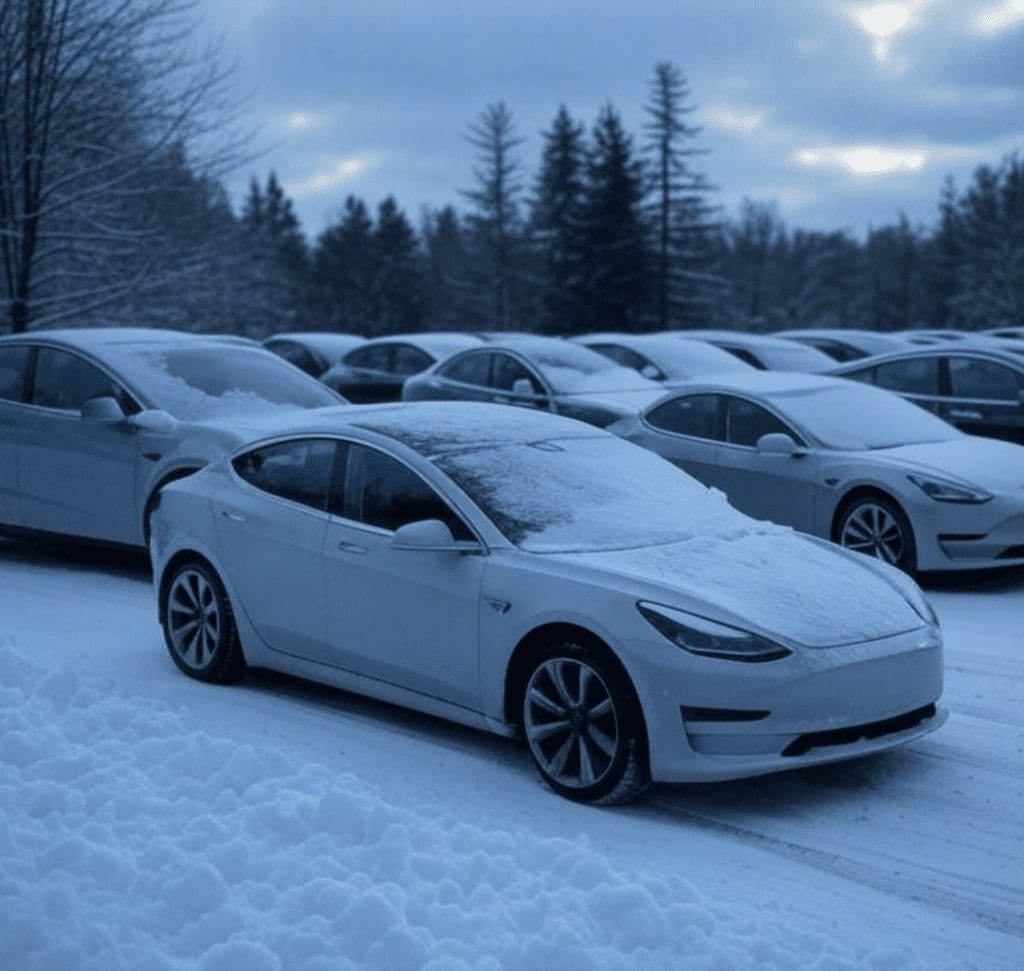
Despite winter challenges, Tesla and other EV makers are improving cold-weather performance, helping drivers adapt and enjoy their vehicles year-round.
The recent polar vortex has brought frigid temperatures across much of the United States, disrupting daily life and impacting numerous industries. Among the challenges posed by the extreme cold is its effect on the performance of electric vehicles (EVs), including Tesla models.

How cold weather affects EV performance
EVs rely on lithium-ion batteries, which are highly sensitive to temperature changes. In freezing conditions, the chemical reactions within the battery slow down, reducing energy efficiency and overall driving range. Studies indicate that EVs can lose up to 20-40% of their range in sub-zero temperatures.
Tesla vehicles, like most EVs, are equipped with thermal management systems designed to mitigate these effects by keeping the battery at an optimal operating temperature. However, these systems consume additional energy, further reducing range. Moreover, cold weather can also increase charging times, as batteries take longer to reach the ideal temperature for fast charging.

Additional strains on EVs during extreme cold
- Heater usage: unlike internal combustion engine (ICE) vehicles, which utilize waste heat for cabin warming, EVs rely on their batteries to power electric heaters. This added energy demand can significantly impact driving range.
- Tire performance: cold weather reduces tire flexibility and grip, which can affect the efficiency and handling of EVs. Tesla’s regenerative braking systems may also be less effective in icy conditions.
- Battery preconditioning: Tesla and other EVs often recommend preconditioning the battery before driving or charging in cold weather, which requires planning and additional energy.

Tips for EV owners to optimize performance during winter
- Precondition your vehicle: use Tesla’s app or in-car settings to preheat the cabin and battery while the vehicle is plugged in, reducing strain on the battery during the drive.
- Keep the battery charged: maintain a higher state of charge during winter to accommodate the reduced range and extra energy demands.
- Use scheduled charging: charge the car closer to your departure time to take advantage of a warmer battery.
- Limit heater use: opt for seat warmers instead of blasting the cabin heater to conserve energy.
- Monitor tire pressure: check and adjust tire pressure regularly, as cold air reduces pressure, affecting efficiency and safety.
- Plan charging stops: if embarking on a long trip, use Tesla’s navigation system to locate Superchargers along your route and factor in extra time for charging.
Despite the challenges posed by winter weather, Tesla and other EV manufacturers continue to improve cold-weather performance through software updates and engineering advancements. By following these tips and understanding how extreme temperatures impact EVs, drivers can better adapt and continue to enjoy the benefits of their vehicles year-round.

Love at first truck: trucker’s love stories
To celebrate love, we have gathered truckers’ love stories that show how feelings can cross highways —literally— and remain strong despite obstacles. Love is one

Can love survive the open road? The realities of dating as a trucker
Although one might think that love and trucking don’t always go hand in hand, for many truckers they can be compatible, despite the obstacles. A

The Most Profitable — and Most Dangerous — Routes for Truck Drivers in the United States
The most profitable routes and the most dangerous routes for truck drivers in the United States handle the nation’s highest freight volumes while also exposing drivers to elevated risks, heavy congestion, extreme weather, and constant pressure on delivery schedules.

Taking your love on the road: how to have a romantic road trip for Valentine’s Day
Whether you’re a truck driver looking to combine work and pleasure, or simply hoping to enjoy a new experience with your partner, here’s what you

Final rule on Non-Domiciled CDLs issued by the Department of Transportation
FMCSA concludes a comprehensive review of regulations applicable to Non-Domiciled CDL holders. After several months, the Federal Motor Carrier Safety Administration (FMCSA) has completed its

Truck drivers and brain fatigue: what happens to the mind after 10 hours behind the wheel
Fatigue in truck drivers, long haul mental health risks and the hidden neurological effects of extended attention, microsleeps and altered time perception.