Truck drivers’ health is affected by irregular sleep, stress, poor nutrition, and prolonged loneliness. Awareness about health is growing, along with the adoption of habits that prevent disease and improve safety.
The conversation around health within the transportation industry is no longer secondary. For years, the focus was placed almost exclusively on delivery times, operational efficiency, and equipment maintenance. Today, more and more stakeholders recognize that the health of those behind the wheel is a determining factor in the sustainability of the logistics system.
Life on the road presents unique challenges that impact both body and mind. Long shifts, rest at irregular hours, limited access to healthy food options, and extended periods away from family create a demanding environment. When these conditions persist over time, they can translate into concrete medical consequences.
Several industry surveys show that professional drivers experience higher rates of hypertension, excess weight, sleep disorders, and chronic fatigue compared to other workers. Added to this is the psychological pressure linked to deadlines, heavy traffic, adverse weather, and constant responsibility for high-value cargo.
When health affects safety
Talking about health is not only about individual well-being. There is a direct connection between a driver’s physical and mental condition and road safety.
Lack of sleep reduces reaction time. Ongoing stress interferes with decision-making. Poor nutrition affects energy levels. All of this has an impact on performance behind the wheel.
For this reason, health care is increasingly viewed as a strategic investment. Fleets, insurers, and industry organizations are incorporating prevention programs, regular checkups, and awareness campaigns.
The end of the permanent sacrifice culture
For a long time, the prevailing idea was that a good trucker was someone who could endure anything: minimal rest, continuous trips, and improvised meals. However, newer generations are promoting a different perspective.
Today, professionals who understand that staying in optimal condition is part of the job are highly valued. Physical endurance is no longer measured by how much you can withstand, but by how much you can prevent.

Small changes, big results
One of the most interesting developments is the growth of healthy habits adapted to the realities of the highway.
Social media and driver communities are full of recommendations on how to organize movement routines in small spaces, prepare balanced meals, or improve sleep quality inside the cab.
Far from requiring drastic transformations, many of these practices are simple adjustments that, when repeated over time, lead to significant improvements.
The mental dimension of health
Prolonged loneliness is another aspect receiving increasing attention. Spending days or weeks away from family can generate feelings of isolation, anxiety, or discouragement.
To counter this, remote psychological support initiatives, peer discussion groups, and the use of technology to maintain frequent contact with loved ones are becoming more common.
Recognizing the emotional impact of the profession is a key step toward building a more human industry.

The future of transportation is also about health
As logistics becomes more sophisticated and demands greater precision, the driver’s role becomes even more critical. No technological innovation can replace the capacity of a professional who is alert, well-rested, and balanced.
Promoting health, therefore, is not just a personal matter; it is part of the sector’s competitiveness.
Tips for body and mind
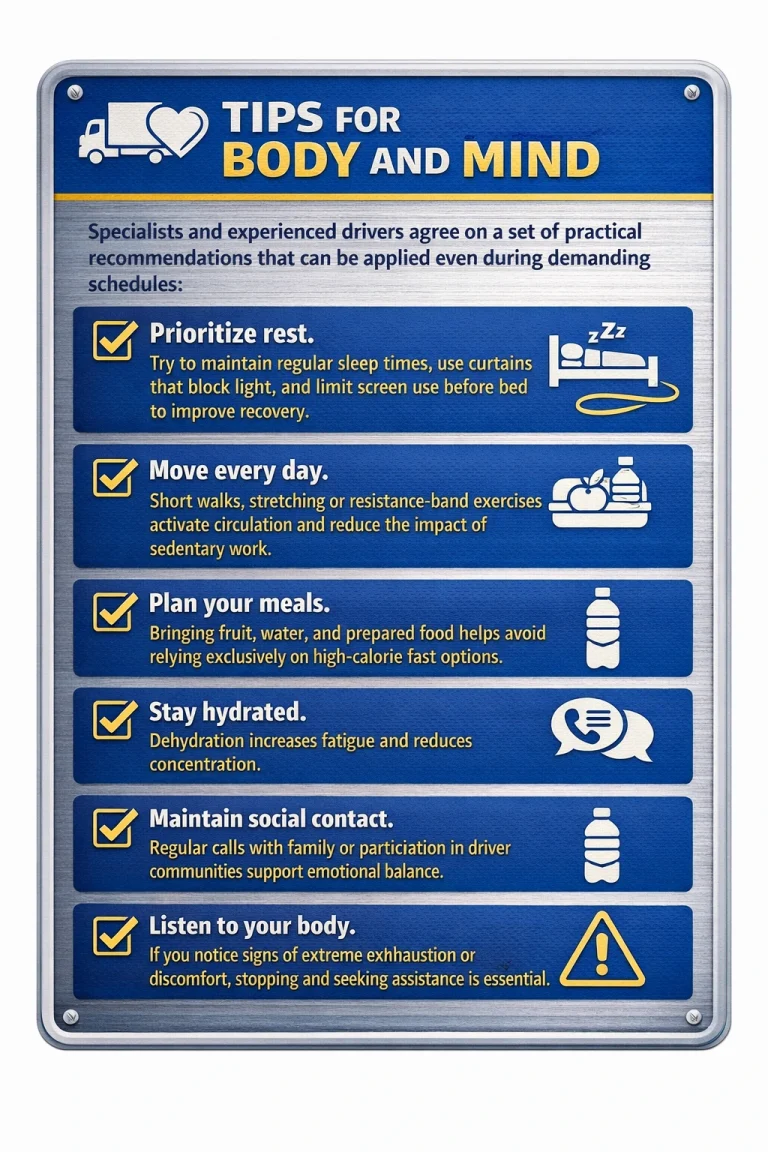
Specialists and experienced drivers agree on a set of practical recommendations that can be applied even during demanding schedules:
Prioritize rest. Try to maintain regular sleep times, use curtains that block light, and limit screen use before bed to improve recovery.
Move every day. Short walks, stretching, or resistance-band exercises activate circulation and reduce the impact of sedentary work.
Plan your meals. Bringing fruit, water, and prepared food helps avoid relying exclusively on high-calorie fast options.
Stay hydrated. Dehydration increases fatigue and reduces concentration.
Maintain social contact. Regular calls with family or participation in driver communities support emotional balance.
Listen to your body. If you notice signs of extreme exhaustion or discomfort, stopping and seeking assistance is essential
The road can be demanding, but the knowledge available today makes it possible to travel it in a healthier way. The change has already begun, and every habit counts.

Love at first truck: trucker’s love stories
To celebrate love, we have gathered truckers’ love stories that show how feelings can cross highways —literally— and remain strong despite obstacles. Love is one

Can love survive the open road? The realities of dating as a trucker
Although one might think that love and trucking don’t always go hand in hand, for many truckers they can be compatible, despite the obstacles. A

The Most Profitable — and Most Dangerous — Routes for Truck Drivers in the United States
The most profitable routes and the most dangerous routes for truck drivers in the United States handle the nation’s highest freight volumes while also exposing drivers to elevated risks, heavy congestion, extreme weather, and constant pressure on delivery schedules.

Taking your love on the road: how to have a romantic road trip for Valentine’s Day
Whether you’re a truck driver looking to combine work and pleasure, or simply hoping to enjoy a new experience with your partner, here’s what you

Final rule on Non-Domiciled CDLs issued by the Department of Transportation
FMCSA concludes a comprehensive review of regulations applicable to Non-Domiciled CDL holders. After several months, the Federal Motor Carrier Safety Administration (FMCSA) has completed its

Truck drivers and brain fatigue: what happens to the mind after 10 hours behind the wheel
Fatigue in truck drivers, long haul mental health risks and the hidden neurological effects of extended attention, microsleeps and altered time perception.