 Hable con un agente al (888) 572-7520
  Enviar mensaje a un agente


The Donald Trump administration has announced a new $3 billion federal investment aimed at repairing and modernizing deteriorating bridges across the United States, a move that could have direct implications for the freight transportation industry, logistics operations and national supply chains.
The announcement was made by U.S. Transportation Secretary Sean P. Duffy, who confirmed that the Federal Highway Administration (FHWA) will open a new round of funding through the Bridge Investment Program (BIP), designed to support bridge repair, rehabilitation and replacement projects involving aging or structurally deficient infrastructure.
According to the U.S. Department of Transportation (DOT), the initiative aims to reduce traffic bottlenecks, accelerate construction timelines and remove bureaucratic obstacles that have delayed major infrastructure projects for years.
“For too long, essential infrastructure has been held hostage by red tape delaying improvements that move traffic,” Duffy said during the announcement. He added that the Trump administration intends to “put the focus back where it belongs: safety, reliability, and getting Americans home to their families.”
The investment comes at a critical time for the U.S. logistics system. Every day, thousands of trucks cross aging bridges that face weight restrictions, lane closures, ongoing inspections or structural concerns. For the trucking industry, each detour or slowdown translates into higher operating costs, additional fuel consumption and delivery delays.
Today, the United States faces one of the largest infrastructure challenges in decades. Data from the American Road & Transportation Builders Association (ARTBA) estimates that more than 220,000 bridges nationwide require significant repair work or full replacement, with tens of thousands classified as structurally deficient.

Critical bridges affecting freight transportation
Among the most concerning structures for the trucking and logistics industries are several major freight corridors used for domestic and international commerce.
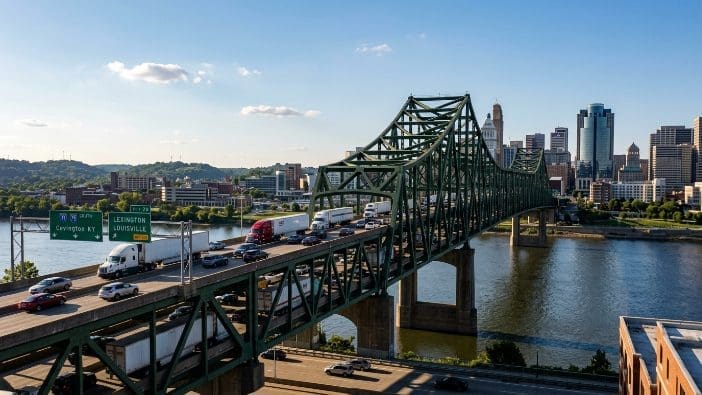
One of the most notable examples is the Brent Spence Bridge, which connects Cincinnati, Ohio, with Kentucky along Interstate 71/75 — one of the country’s most important freight corridors. More than 160,000 vehicles cross the bridge daily, including a massive volume of commercial trucks. The structure was originally designed for far less traffic and has long been considered one of America’s most congested and deteriorated bridges.
Another critical structure is the I-10 Calcasieu River Bridge in Lake Charles, Louisiana. The bridge plays a strategic role for petrochemical transportation and heavy freight linked to the Gulf of America. Its aging design and geometric limitations have generated ongoing safety concerns and traffic delays for years.
The Interstate Bridge connecting Oregon and Washington over the Columbia River also remains under close scrutiny. Thousands of trucks use the crossing daily to connect West Coast ports and Pacific Northwest distribution centers.
In the Northeast, structures such as the George Washington Bridge — a vital gateway for freight entering the New York metropolitan area — continue to experience intense pressure due to traffic volume, maintenance needs and operational restrictions.
In addition, the 2024 collapse of Baltimore’s Francis Scott Key Bridge after being struck by a cargo vessel reignited national concerns over the vulnerability of critical transportation infrastructure tied directly to commerce and supply chains.
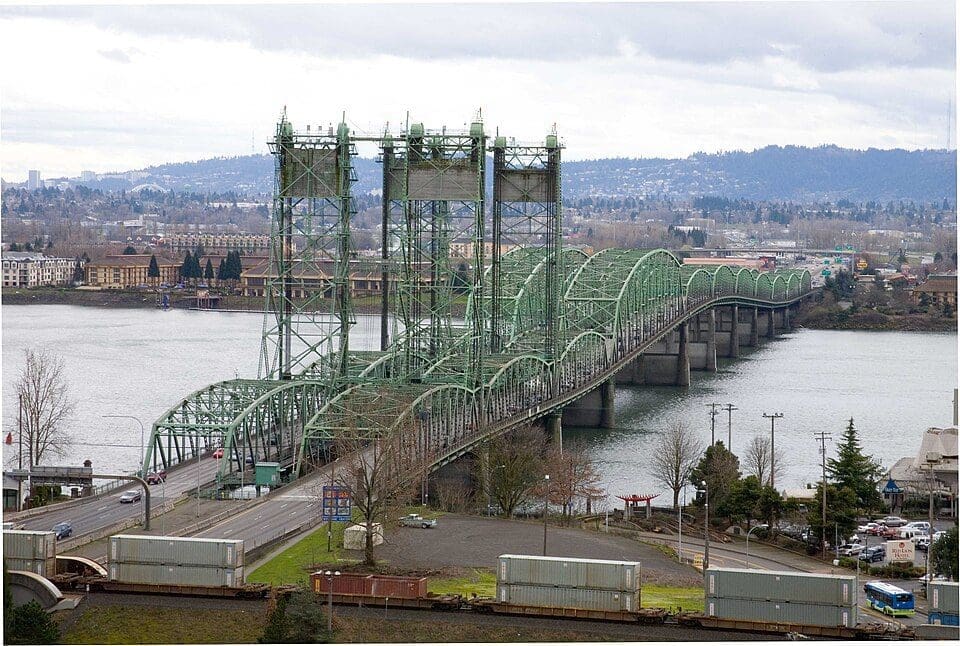
Although several of these projects already had modernization plans under discussion, the new federal funding package could help accelerate engineering studies, approvals and construction timelines.
How deteriorating bridges affect trucking companies
For freight carriers and logistics operators, deteriorating bridges create very real economic consequences.
When bridges impose weight restrictions, trucks are often forced to reroute dozens or even hundreds of miles. That increases transit times, fuel usage, driver hours and vehicle wear and tear.
Temporary repairs can also trigger lane closures and reduced-speed zones that directly impact high-volume freight corridors. Infrastructure studies across the U.S. estimate that congestion tied to aging highways and bridges costs the economy billions of dollars annually in lost productivity.
The situation becomes even more challenging as the trucking industry continues to deal with inflation, elevated operating costs, driver shortages and mounting regulatory pressures.
Bridge deterioration also raises serious safety concerns. Many U.S. bridges were built during the 1950s and 1960s, when truck traffic volumes and freight weights were significantly lower than they are today. Modern logistics networks now depend on heavier trucks, faster delivery schedules and nonstop freight movement driven by e-commerce and national distribution demands.
Faster approvals and fewer bureaucratic barriers
The Department of Transportation stated that the new funding structure will give states and local governments more flexibility to accelerate priority infrastructure projects.
The Bridge Investment Program includes two types of grants:
- Planning grants, focused on feasibility studies, technical analysis and future project development.
- Bridge Project grants, aimed directly at bridge replacement, rehabilitation and preservation projects costing up to $100 million.
Applications for planning grants are due June 15, 2026, while bridge project grant applications must be submitted by June 29, 2026.
Federal officials say the overall goal is to “get back to basics” by prioritizing infrastructure projects that directly improve mobility, safety and economic activity.
A strategic issue for the U.S. economy
Transportation infrastructure has once again become a central issue in the American economic and political debate.
Truck transportation moves nearly 72% of all domestic freight in the United States, and much of that cargo depends on interstate corridors built more than half a century ago.
For the trucking industry, infrastructure modernization is not only a safety issue but also a competitiveness issue. Fewer delays, shorter detours and more reliable freight corridors could help reduce logistics costs and stabilize supply chains for industries ranging from retail and food distribution to manufacturing, energy and e-commerce.
Still, many infrastructure experts warn that $3 billion — while significant — may not be enough to solve decades of accumulated deterioration. Several major bridge replacement projects individually require multi-billion-dollar investments and years of construction.
Even so, the announcement signals that Washington is once again prioritizing critical transportation infrastructure at a time when freight mobility remains one of the central pillars of the American economy.
 Business hours: Monday to Friday from 8:00 AM to 5:00 PM. California time