 Hable con un agente al (888) 572-7520
  Enviar mensaje a un agente

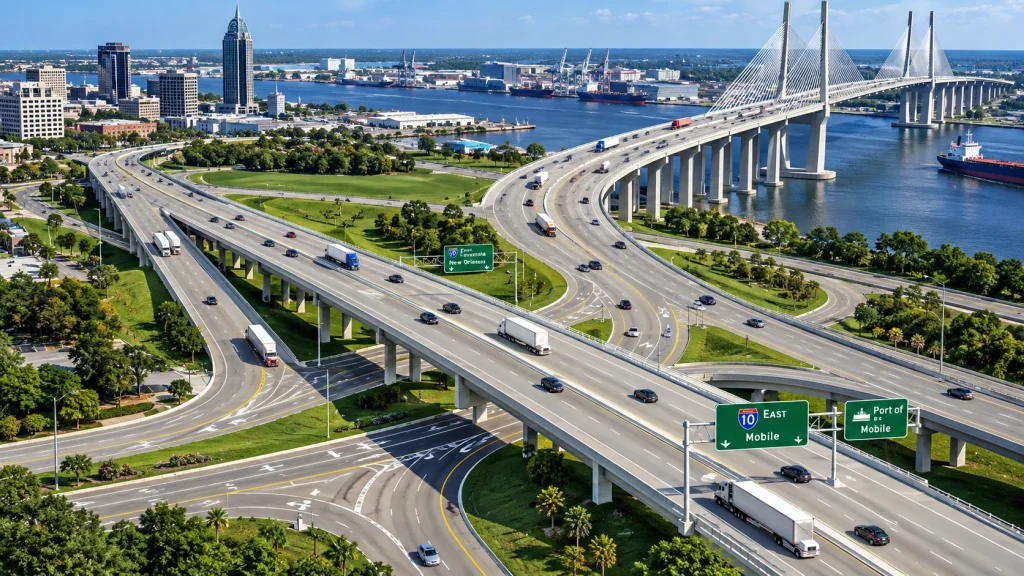

One of the most important highways for moving trucks and freight across the southern United States is set for a major transformation. The U.S. Department of Transportation announced a federal loan of up to $2.52 billion to move forward with the Mobile River Bridge and Bayway Project on I-10 in Alabama, the largest infrastructure project in the state’s history.
For the trucking industry, the location matters. Interstate 10 is one of America’s major transcontinental highways, running across the southern United States from Florida to California and connecting major markets, logistics hubs, ports, and freight corridors across the Sun Belt.
In Mobile, I-10 also crosses a strategically important area for maritime and over-the-road freight along the Gulf Coast. The project is designed to improve the connection between I-10 and the Port of Mobile while addressing a bottleneck that has caused delays for truck drivers and other motorists for decades.
The numbers show the scale of the corridor. U.S. Department of Transportation data indicate that about 10,100 trucks travel through this section each day, or nearly 3.7 million trucks per year. During peak periods, the I-10 Bayway carries more than 78,000 vehicles a day, with traffic projected to exceed 95,000 vehicles daily over the next two decades.
A Major I-10 Bottleneck
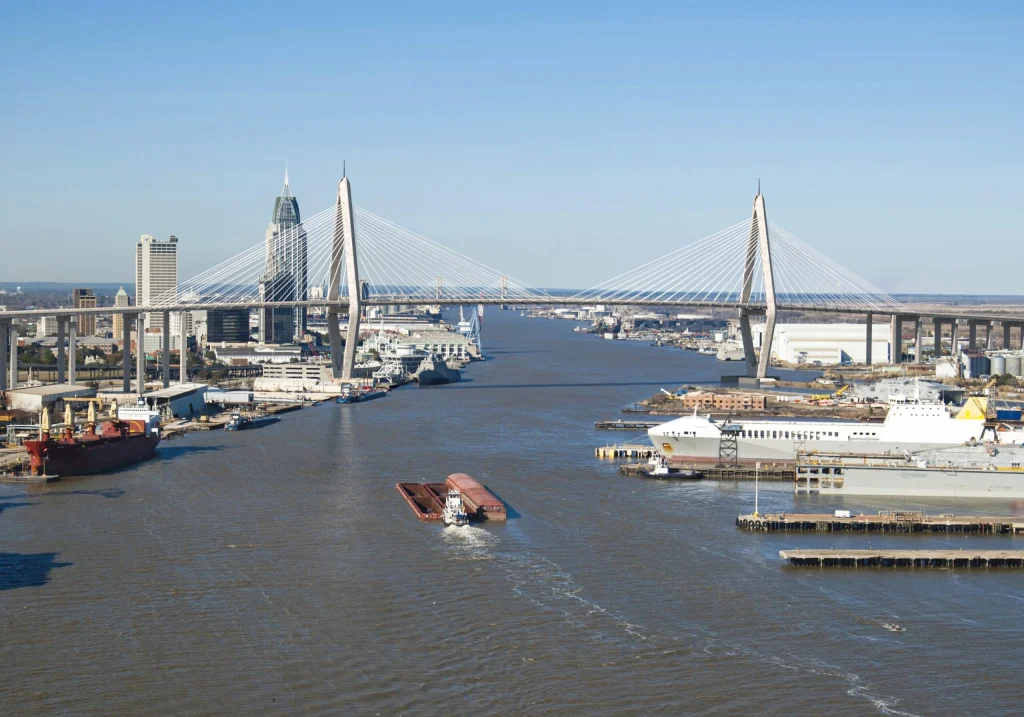
One of the biggest problems is the George Wallace Tunnel, which carries I-10 beneath the Mobile River. The U.S. Department of Transportation identifies the area as Alabama’s primary interstate bottleneck, where passenger and freight traffic have faced severe congestion for decades.
The situation is even more complicated for some truck drivers: trucks carrying hazardous materials are prohibited from using the Wallace Tunnel.
Those trucks currently have to leave I-10 and take alternate routes through Mobile to cross the river. Project environmental studies have estimated that hundreds of hazmat trucks are diverted each day, adding traffic to local roads and disrupting the direct movement of freight along the interstate.
The new infrastructure will provide these trucks with a direct interstate route across the Mobile River, reducing the need for detours through city streets and improving freight continuity along I-10.
A New Six-Lane Bridge
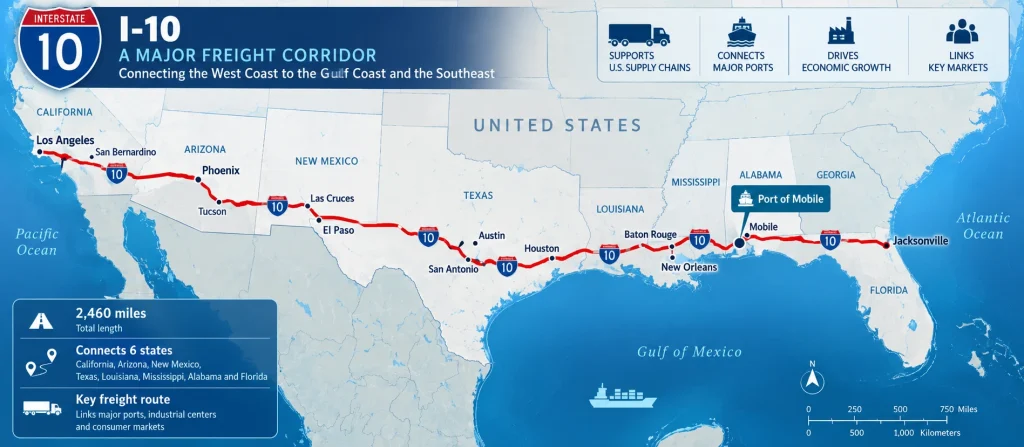
The centerpiece of the project will be a new six-lane cable-stayed bridge over the Mobile River.
The project also includes reconstructing approximately one mile of the existing Bayway and restriping the entire 7.5-mile Bayway from two to three lanes in each direction. Interchanges, intersections, and traffic-flow connections in Mobile and Baldwin counties will also be improved.
According to the U.S. Department of Transportation, the changes could cut travel times by as much as 30 minutes, while increasing I-10 capacity and improving freight access to the Port of Mobile.
For truck drivers running long-haul routes through Alabama, the impact extends well beyond local traffic. I-10 is a national freight artery connecting Florida, Alabama, Mississippi, Louisiana, Texas, New Mexico, Arizona, and California. A bottleneck in Mobile can therefore affect freight moving across a much larger network of southern U.S. markets.
Why the Port of Mobile Matters
The Port of Mobile is another reason the project matters to trucking.
Cargo arriving by sea must move into highway and rail networks to reach regional and national destinations. That makes I-10 an important connection between Gulf Coast maritime freight and inland markets. Project documents identify port cargo, shipbuilding, and other maritime industries as major components of Mobile’s economy.
The new bridge and Bayway system is intended to increase that capacity and make it easier to move freight between the port and the interstate network without the existing Mobile River crossing remaining a critical choke point.
The improvements will also play a role during emergencies. The project is designed to increase hurricane evacuation capacity in Mobile and Baldwin counties, an important consideration for a major interstate running along the Gulf Coast.
$2.52 Billion to Move the Project Forward
The financing announced September 18 consists of a loan of up to $2.52 billion to the Alabama Toll Road, Bridge, and Tunnel Authority through the Transportation Infrastructure Finance and Innovation Act, or TIFIA, program administered by the Build America Bureau.
The Alabama Department of Transportation, or ALDOT, will construct and manage the project. The corridor had previously received an additional $550 million federal grant through the Federal Highway Administration’s Bridge Investment Program.
In July, ALDOT said it expected construction to begin before the end of 2026, subject at the time to final TIFIA financing. The new Mobile River Bridge is expected to open around 2031.
The new bridge will be tolled, although ALDOT has said toll collection will not begin until the bridge opens. Existing alternatives—including the Wallace Tunnel, Bankhead Tunnel, Causeway, and Africatown Bridge—will remain toll-free.
For trucking, the scale is significant: about 10,100 trucks a day, nearly 3.7 million trucks a year, direct access to a major Gulf Coast port, and a long-standing bottleneck on an interstate that crosses the country from coast to coast.
The I-10 expansion in Mobile is designed to give that freight corridor more capacity and improve the movement of freight across the southern United States.
 Business hours: Monday to Friday from 8:00 AM to 5:00 PM. California time