 Hable con un agente al (888) 572-7520
  Enviar mensaje a un agente

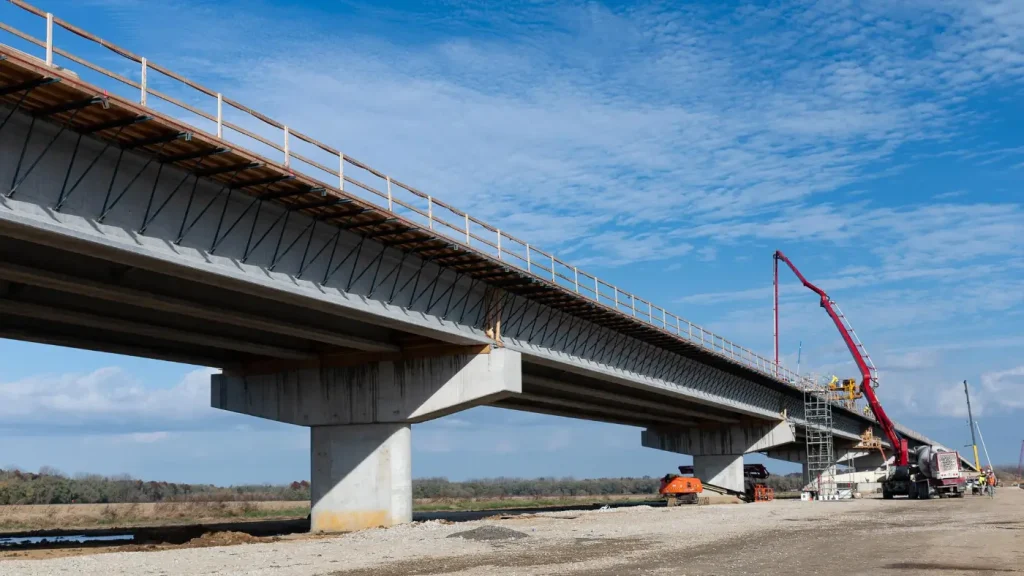

Indiana has completed construction of the I-69 approach in Evansville, a necessary step toward building the new Ohio River bridge that will directly connect Indiana and Kentucky.
The I-69 Ohio River Crossing will add approximately 11.2 miles of interstate infrastructure, including 8.4 miles on a new alignment and another 2.8 miles of U.S. 41 that will be upgraded to interstate standards.

What will change for trucks
This is one of the most important parts of the project for truck drivers and fleets.
U.S. 41 is currently one of the routes used to cross the Ohio River between Evansville and Henderson. Once the new bridge is completed, truck traffic patterns will change.
According to the project’s updated environmental documents, the plan calls for removing the section of U.S. 41 between I-69 in Kentucky and Veterans Memorial Parkway in Indiana from the National Truck Network. That stretch will be redesignated as KY 2341 and IN 141 after the I-69 Ohio River Crossing is completed.
The change will allow restrictions on large semi-trucks and trailers longer than 45 feet that fall under Surface Transportation Assistance Act (STAA) standards from using the existing U.S. 41 bridge. Those trucks will instead be directed to the new I-69 bridge.
For fleets, that means the new I-69 crossing will not simply provide another route across the river. It will become the designated crossing for a significant share of heavy truck traffic between Indiana and Kentucky.
What will happen to U.S. 41?
There are currently two U.S. 41 bridges across the Ohio River. One opened in 1932 and the other in 1965.
The I-69 Ohio River Crossing project calls for keeping one of the U.S. 41 bridges in service, carrying traffic in both directions. Changes affecting large commercial trucks will take effect after the new I-69 crossing is completed, which is currently expected in 2031.
Until then, truck drivers will be able to continue using the existing routes.

The new bridge will be tolled
Trucking companies will also have a new cost to consider: the I-69 bridge will be tolled.
Toll collection will be completely electronic, while the U.S. 41 bridge that remains open will continue to be toll-free. Initial toll rates were approved in March 2026 by the bi-state body responsible for the tolling system and are available in the project’s official documentation.
Rates will depend on the type of vehicle, number of axles and whether the driver uses a prepaid account and transponder.
Initial rates are expected to range from $3.14 for passenger vehicles with a prepaid account and transponder to $18.62 for large vehicles without an account or transponder. Final rates may change by the time the bridge opens.
A new freight connection
The I-69 corridor plays an important role in moving people and freight. The new bridge will close the remaining interstate gap between Indiana and Kentucky and provide a direct interstate crossing over the Ohio River.
For truckers, the biggest changes will arrive when the bridge opens, currently scheduled for 2031. Large trucks subject to the STAA restrictions that can now cross on U.S. 41 will instead use I-69, while fleets will also need to factor the new toll into their operating costs.
Completion of the Section 3 approaches in Evansville means the Indiana side is now prepared for the next phase. The major step ahead is construction of the bridge that will finally connect the two sections of I-69 across the Ohio River.
Once completed, the new crossing will reshape a route used every day by commercial vehicles traveling between Indiana and Kentucky. For fleets operating in the region, trip planning will have to account not only for the rerouting of certain trucks but also for toll costs and new access points to the interstate.
The impact will extend beyond the immediate Evansville-Henderson crossing. The project is designed to eliminate one of the remaining gaps in I-69 and create a continuous interstate connection, improving access for freight moving to other major routes in Indiana and Kentucky.
Those changes are still several years away. The bridge is expected to open in 2031, and U.S. 41 will continue serving its current role until then. But with the Indiana approaches now complete, the project is moving into its defining phase: building the new bridge across the Ohio River.
 Business hours: Monday to Friday from 8:00 AM to 5:00 PM. California time