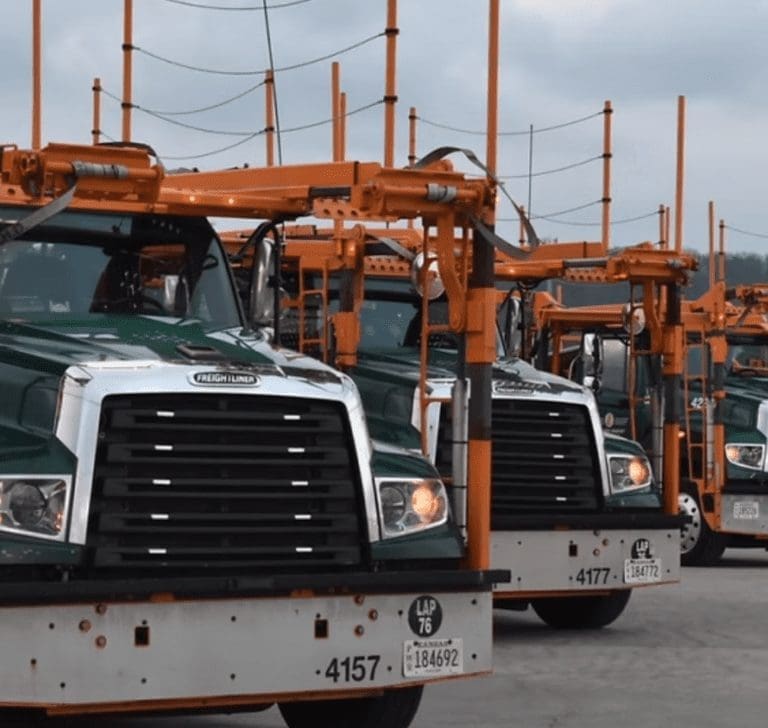
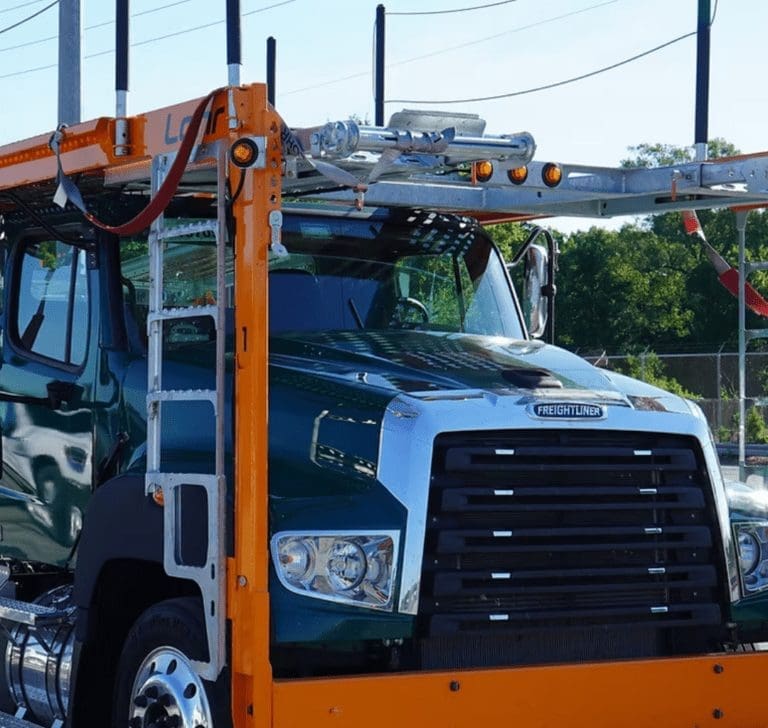
The closure follows the termination of a long commercial relationship with the carrier by Ford Motor Co. and General Motors this year.
Jack Cooper, the giant car transporter, has closed its doors. Harmed by the loss of key clients, the company went through several challenging months leading up to its closure. In just three months, it went from negotiating with General Motors to stabilize its finances to permanently closing after losing two of the largest U.S. car manufacturers.
With nearly 100 years of operation, the company had managed to survive a Chapter 11 process in 2019, but it couldn’t withstand the turmoil of the last few months. Sarah Amico, CEO and main owner of the family business, expressed in an announcement shared on Monday, February 10: “With extraordinary sadness, we write to inform you that after 97 years in business, Jack Cooper will be closing our doors in the near future.”
The closure follows the termination of a long commercial relationship with the carrier by Ford Motor Co. and General Motors this year, as reported on Monday by Jennifer Holdsworth, a spokesperson for Jack Cooper.

The story of Jack Cooper: from beginning to end
Founded in 1928, Jack Cooper became one of the largest private automobile transportation providers and specialized vehicle logistics companies in the U.S. The company started as a transporter of General Motors products from the Leeds assembly plant in Kansas City, Missouri. Later, its success opened doors, enabling the company to establish terminals in the Midwest, the Pacific Northwest, Canada, and Mexico.
The announcement of Jack Cooper’s closure marked the end of a tumultuous period, as the company’s demise began with financial issues. Jack Cooper, owned by the Riggs family and Sarah Amico, discussed a potential capitalization with General Motors (GM), but without GM taking an equity stake. GM demanded that Ford also contribute to strengthening the financial base, but Jack Cooper couldn’t comply due to its contractual agreements with Ford.
When attempts were made for GM to reach out to Ford, the relationship with the latter ended. Although Jack Cooper secured a $200 million investment, GM rejected it due to its veto power in the contract. GM’s concern was ensuring Jack Cooper’s solvency, but the difficulties with Ford and the rejection of private investment impacted that solvency. This process ultimately led to the rupture between the companies, which became the final blow that led to Jack Cooper’s closure.

Goodbyes: 97 years of legacy
The company, which had been transporting vehicles for GM for nearly a century, also maintained a relationship with Ford for several decades. After the failure of the negotiations, the company decided to shut its doors. According to KCTV5 in Kansas City, Missouri, Amico bid farewell to her loyal employees through a letter in which she praised their efforts and loyalty. “We have been proud to hire generations of employees across the country. Each one of you has been a key part of that legacy, and your work is deeply appreciated,” stated Amico.
Jack Cooper had approximately 2,500 employees, of whom around 1,700 were members of the Teamsters. In response to the news, a Teamsters spokesperson shared with KCTV5 that, although the company is liquidating its operations with Ford and GM, “this does not mean that well-paying jobs protected by the Teamsters union are disappearing from the industry.”

Fuel tax cuts gain momentum across U.S. states
In response to recent increases in fuel prices, lawmakers in several states have been working to adopt measures that temporarily suspend fuel taxes.

Maintenance practices commonly overlooked in fleets
These overlooked maintenance tasks can cost a fleet an average of $12,000 to $18,000 per truck annually.

U.S. Economy 2026: Accelerating vs. Stalling Sectors
Technology, renewable energy and domestic tourism drove production during the first quarter of the year. The residential real estate, agriculture and textile sectors lagged behind. What happened to transportation? Special report.

10 Things Truck Drivers Are Not Allowed to Do (And Many Don’t Know It)
Fines up to $16,000, CDL suspension, and accident risk: these are the DOT and FMCSA rules every truck driver must know today.

Do you want to be a truck driver? Here’s what you need to know
Being a truck driver in the United States represents an attractive professional option due to the sustained demand in the logistics industry, but it comes with certain challenges.

$12.5 billion saved by the impact of weigh station bypass technology
The 2026 National Bypass Impact Index reveals significant operational benefits accumulated over nearly three decades.