Lunar New Year 2026 begins on February 17 under the sign of the Fire Horse and is marked by spiritual rituals, family reunions, and large-scale celebrations in both China and the United States, especially in California.

Lunar New Year, often called Chinese New Year or the Spring Festival, is the most important celebration in the traditional Chinese calendar and in many East and Southeast Asian cultures. It follows a lunisolar calendar, which means its date changes each year on the Western calendar, but it always falls between late January and mid-February.
In 2026, Lunar New Year officially begins on Tuesday, February 17, ushering in the Year of the Fire Horse. This zodiac combination appears once every 60 years and is associated with powerful energy, momentum, passion, courage, and transformation. It is widely viewed as a year of bold decisions, fast-moving changes, and fresh beginnings.
However, the celebration is not limited to New Year’s Day itself. The eve of the holiday holds deep symbolic and spiritual importance.
Lunar New Year’s Eve: A Powerful Moment of Transition
Lunar New Year’s Eve in 2026 falls on Monday, February 16. In Chinese tradition, this night is known as Chúxī, which translates to “the night of elimination,” symbolizing the closing of the old year. It is considered a critical moment of energetic and emotional transition.
According to tradition, everything done on this night can influence luck, prosperity, health, and harmony in the coming year. In a year ruled by the Fire Horse — a symbol of intensity, movement, and rapid change — this preparation carries even greater meaning. The eve is seen as a time to let go of emotional burdens, close unfinished chapters, and mentally prepare for a dynamic and transformative year.
Rituals to Welcome the New Year with Positive Energy
One of the most important customs is thoroughly cleaning the home. This goes beyond simple housekeeping — it is a symbolic act meant to sweep away bad energy, lingering problems, and negativity from the previous year. The cleaning must be finished before or on New Year’s Eve, because cleaning on New Year’s Day is believed to “sweep away” the good luck that has just arrived.
Decorations also play a central role. Homes are filled with red lanterns, banners with good wishes, symbols of prosperity, and images of the year’s zodiac animal — in 2026, the Horse. The color red represents protection, joy, vitality, and good fortune, while gold accents are associated with wealth and abundance.
Another meaningful tradition is the giving of red envelopes, known as hongbao. Adults present these envelopes filled with money to children and young people as a symbol of blessings, protection, and good wishes for the year ahead.

Massive Celebrations Across China
In China, Lunar New Year is far more than a family holiday — it is the country’s most important social and cultural event of the year and generates the largest annual human migration on Earth. For weeks, millions of workers and students travel back to their hometowns to reunite with family members. Railways, highways, and airports operate at peak capacity, and the entire nation reorganizes around the holiday period.
The family reunion dinner on New Year’s Eve is considered the most important meal of the year. The dishes served often carry symbolic meanings tied to abundance, prosperity, and family unity.
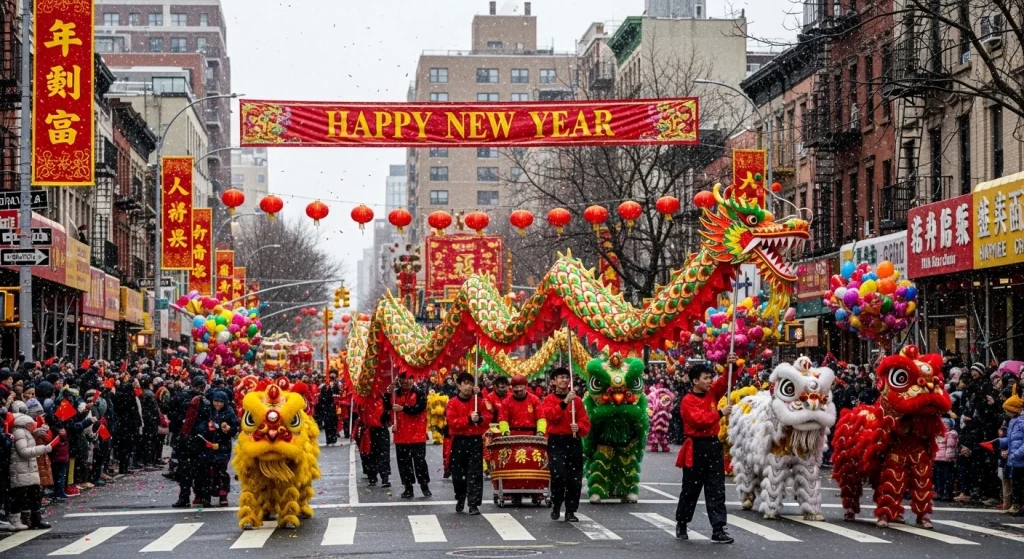
In the days that follow, fireworks and firecrackers are widely used, traditionally meant to scare away evil spirits and attract good fortune. Lion and dragon dances are also central to public celebrations. These colorful performances symbolize strength, protection, and luck.
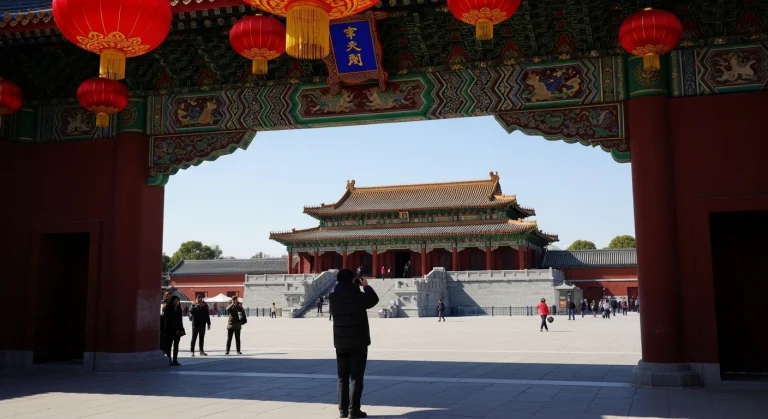
Visiting temples to pray for health and prosperity, as well as honoring ancestors, reinforces the importance of family bonds and cultural continuity. The festive period concludes with the Lantern Festival, when streets and public spaces glow with lantern displays of many shapes and sizes.
How Lunar New Year Is Celebrated in the United States, Especially in California
In the United States, Lunar New Year is celebrated with great enthusiasm in cities with large Asian communities. California is one of the states where the holiday is most visible.
San Francisco hosts one of the largest Lunar New Year celebrations outside Asia. For several weeks, the city holds parades, street fairs, cultural performances, and community events. The main parade draws thousands of spectators and winds through downtown with elaborate floats, traditional dance groups, cultural organizations, and giant dragon figures.
Community street fairs in Chinatown feature traditional food vendors, crafts, music, and dance. Pre–New Year flower markets are another important tradition, where families purchase plants and fruits believed to bring good luck to decorate their homes.
In Los Angeles, celebrations are centered in historic Chinatown neighborhoods and traditional temples, where ceremonies, lion dances, cultural shows, and community gatherings take place. Museums, cultural centers, and public venues also host Lunar New Year programs that promote Asian heritage and intercultural exchange.
Many Asian American families continue to observe traditions at home by decorating in red, preparing special meals, giving red envelopes, and sharing wishes for prosperity in the coming year.
A New Cycle of Renewal
Lunar New Year 2026 is more than just a date on the calendar. It represents a moment of cultural and spiritual renewal that connects millions of people around the world. In China, it mobilizes an entire nation around family and tradition. In the United States — especially in California — it becomes a vibrant multicultural celebration that brings together history, identity, and community under a shared sense of hope, renewal, and fresh energy for the year ahead.

Lunar New Year 2026: Ancient Traditions, Renewed Energy, and Massive Celebrations
Lunar New Year 2026 begins on February 17 under the sign of the Fire Horse and is marked by spiritual rituals, family reunions, and large-scale celebrations in both China and the United States, especially in California.

Freedom 250 Grand Prix: How Logistics and Transportation Will Power the Race in Washington
The first-ever IndyCar street race in Washington, D.C., scheduled for August 21–23, will headline the United States’ 250th anniversary celebrations — and it will trigger a massive transportation, freight, and urban logistics operation behind the scenes.

Groundhog Day: What It Means for Trucking When “Phil Sees His Shadow”
The forecast from America’s most famous groundhog is calling for more winter — and that’s an important signal for the trucking industry and cold-season route planning

Love on the open road: the best dating apps for truckers
If you’re looking for someone to go the long haul with, here are the best dating apps for truck drivers. They say love is everywhere…

The most congested cities in the U.S. and the world in 2025
The annual TomTom Traffic Index produces a ranking of the most congested cities in the world. The annual TomTom Traffic Index presents an analysis of

Steady Growth Signals Strong Momentum in the U.S. Trucking Industry
Trucking growth in the United States is gaining strength in 2026, driven by higher freight demand, expanding logistics activity, and new opportunities for carriers and fleet operators.