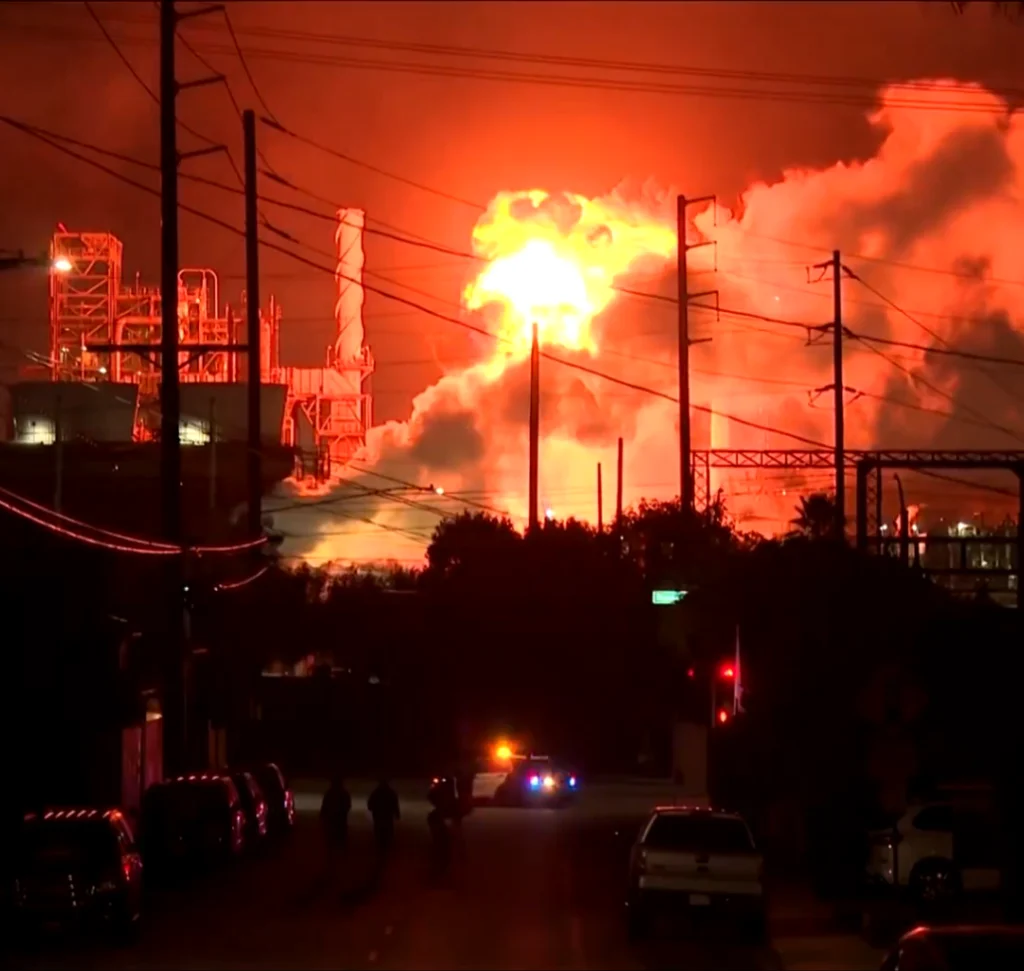
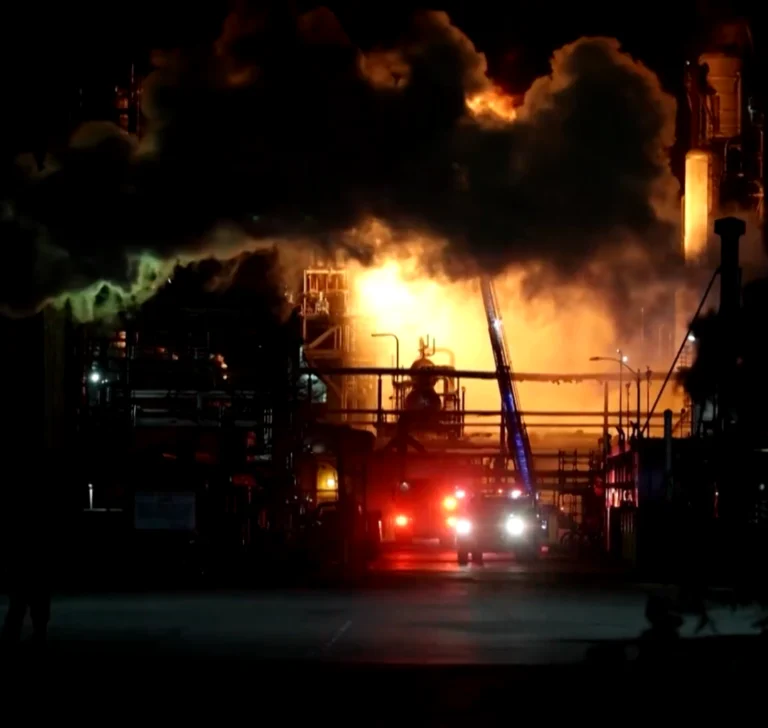
A massive fire broke out at Chevron’s refinery in El Segundo, the largest oil production facility on the West Coast.
On the night of October 2, a massive fire broke out at Chevron’s refinery in El Segundo, the largest oil production facility on the West Coast, located near Los Angeles International Airport (LAX). According to authorities, the fire began in the southeast corner of the refinery, although the exact cause remains unknown.
Firefighters arrived at the scene around 9:30 p.m. in response to a report of an “isolated fire” within the facility. A monitoring system at the refinery indicated that the flames did not spread beyond the facility’s perimeter, according to a Chevron spokesperson quoted by CNN.
The scene quickly transformed, with the sky turning a vivid orange that blanketed much of the surrounding area. Fortunately, no air quality alerts were issued, and the fire was brought under control during the early hours of October 3, according to Los Angeles authorities. However, the fire remains active and nearby roads are still closed, the Los Angeles Fire Department (LAFD) stated. No injuries have been reported.

Community at risk despite contained blaze
Although the immediate threat was contained, El Segundo authorities urged residents in the area to remain indoors if possible. A shelter-in-place order was issued for an area three kilometers southwest of El Segundo, but it was lifted shortly after 1 a.m., according to an emergency notification, around the same time the fire had been brought under control.
Meanwhile, the Pacific Coast Highway was temporarily closed for an 18-kilometer stretch due to the situation. The highway reopened Friday morning, as no further risk was present.
During the blaze, concerns arose that the fire might reach Los Angeles International Airport, as winds were blowing at speeds between 10 and 15 miles per hour, CNN reported. However, by the early morning of October 3, wind speeds had decreased, leaving LAX out of harm’s way.
The office of California Governor Gavin Newsom stated that it is actively monitoring the situation and coordinating with both state and local authorities to ensure the safety of the community surrounding El Segundo.
A massive fire erupted in a jet fuel production unit at Chevron’s El Segundo refinery near Los Angeles, sending flames and smoke into the sky and raising questions over supply in California https://t.co/tqsMtFEhPT pic.twitter.com/DHJo8yoJFa
— Reuters (@Reuters) October 3, 2025
Could the fire affect fuel prices?
Chevron’s El Segundo refinery produces an average of 276,000 barrels of crude oil per day, making it the largest refinery on the West Coast. While it’s still unclear whether operations will be halted for an extended period, California’s fuel market is largely isolated and has limited capacity to source fuel from other regions. This raises the possibility of a fuel shortage.
Californians could end up paying nearly a dollar more per gallon of gasoline due to the large-scale fire, according to The Washington Post. Patrick De Haan, head of petroleum analysis, stated on social media that this incident could turn into a major issue lasting for months or even longer. “This refinery has a capacity of nearly 300,000 barrels per day of crude oil and is the largest on the West Coast. Preliminary estimates suggest that gasoline prices could rise between 35 and 95 cents per gallon across the West Coast,” De Haan noted.
The investigation into the cause of the fire is still underway, and updates may be issued throughout the day. Likewise, total losses had not been reported at the time of this article’s publication.

What Regulations Have Changed for Truck Drivers in the U.S. in 2026?
Learn about the new trucking regulations in the United States for 2026, upcoming FMCSA changes, and how they will affect drivers and trucking companies.

Apocalyptic-Looking Sky in Ontario Goes Viral Amid Wildfires
Wildfires swept across Ontario, Canada and smoke spread as far as the U.S. border.

The Biggest Match of the World Cup Was Played Off the Field
More than 453 metric tons of equipment, around 5,000 trucks and support vehicles, and simultaneous operations across 16 host cities kept the largest FIFA World Cup in history running.

DEF Act: 10 Years of Legal Protection for EPA Diesel Emissions Guidance
The Diesel Engine Flexibility (DEF) Act would protect agricultural and transportation businesses by building on the diesel emissions guidance by the EPA.

License Plate Readers Raise Privacy Concerns for Truck Drivers
Concerns are growing over the impact license plate readers could have on the privacy and security of truck drivers.

IMF Warns: The World Is Approaching an Energy Crisis
The IMF says the global oil market managed to absorb the initial shock of the Middle East conflict, but warns that the strategic reserves and commercial inventories used to prevent a supply crisis have been largely depleted.
All content and original artwork, unless otherwise noted, is protected by copyright. Saint George uses certain images under license from various licensing vendors for this purpose. Any unauthorized commercial reproduction or distribution of copyrighted materials is prohibited.