 Hable con un agente al (888) 572-7520
  Enviar mensaje a un agente



While millions of fans watched Lionel Messi score a historic hat-trick against Algeria in Kansas City, another massive operation was unfolding outside the stadium.
Thousands of supporters arrived by car, bus, and plane from across the United States, Mexico and Canada. Hotels operated near full capacity, fan zones remained crowded throughout the day, and transportation networks handled a surge of visitors.
For several days, Kansas City became an economic hub driven by a single name: Messi.
According to local reports and World Cup organizers, tens of thousands of visitors traveled to the city during the opening week of the tournament. Authorities expanded traffic management, security, and transportation operations to accommodate the influx of fans supporting Argentina.
For many, the reason for the trip was simple: this could be Lionel Messi’s final World Cup.
🏆 #FIFAWorldCup
— 🇦🇷 Selección Argentina ⭐⭐⭐ (@Argentina) June 17, 2026
El dueño del juego 🔟👑🇦🇷 pic.twitter.com/yfdcOZhdiB
The Player Who Changed Soccer in America
Although the United States spent decades investing in soccer’s growth, few athletes have generated the impact Messi has had since joining Inter Miami in 2023.
His arrival transformed the league almost overnight.
Inter Miami matches quickly sold out across the country. Several MLS clubs moved games to larger venues to meet demand. Messi jerseys became some of the best-selling sports merchandise in the United States, while television audiences for soccer reached record levels.
What was once a star followed primarily by Latino communities became a mainstream American sports phenomenon.
Three years later, that popularity has reached its peak during the 2026 FIFA World Cup.
🏆 #FIFAWorldCup
— 🇦🇷 Selección Argentina ⭐⭐⭐ (@Argentina) June 17, 2026
Bajo las luces del mundo, la mística del más grande sigue intacta 💫 pic.twitter.com/jAJs7cVlOH
From Rosario to World Cup History
Messi was born in Rosario, Argentina, on June 24, 1987. At age 13, he moved to Spain to join FC Barcelona’s youth academy, beginning a career that would redefine modern soccer.
Since making his professional debut in 2004, he has accumulated an extraordinary list of achievements: multiple La Liga titles, UEFA Champions League trophies, domestic cups, eight Ballon d’Or awards, a Copa América title, and the 2022 FIFA World Cup.
Yet even after winning virtually everything, Messi continues to add new chapters to his legacy.
On June 16, against Algeria, he scored all three goals in Argentina’s 3-0 victory. The performance marked the first World Cup hat-trick of his career and brought his total World Cup goals to 16, tying German legend Miroslav Klose.
He also became the first player in history to appear in six FIFA World Cups.
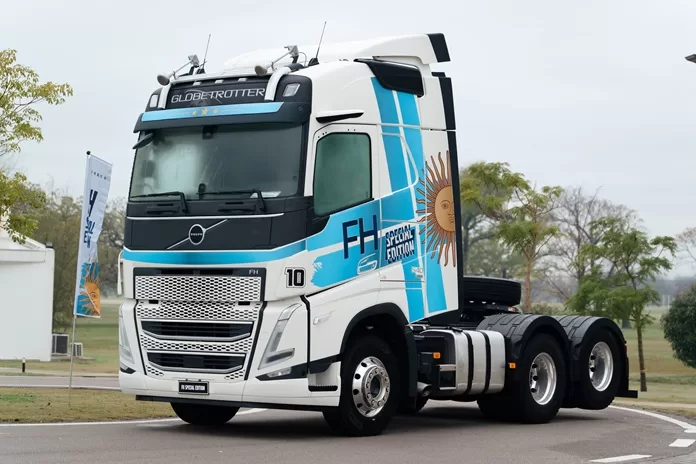
The Messi phenomenon has become so powerful that even Volvo Trucks Argentina recently launched a special limited-edition FH truck inspired by the Argentine star.
The “Last Chance” Driving Demand
Much of the travel surrounding Argentina’s matches can be explained by one idea: many fans believe this may be Messi’s final World Cup appearance.
That perception is fueling road trips, hotel bookings, and ticket purchases across tournament host cities.
In Kansas City, numerous supporters reported traveling hundreds or even thousands of miles simply to attend the match against Algeria. Similar scenes unfolded at airports, train stations, and fan zones as families seized what may be their last opportunity to watch Messi compete on the sport’s biggest stage.
Following his hat-trick, demand for Argentina’s upcoming matches increased even further, particularly for games scheduled in Texas.
Argentina’s Next Stops
Argentina will continue its World Cup campaign in Group J with two crucial matches.
The next game will take place on June 22 against Austria at AT&T Stadium in Arlington, part of the Dallas-Fort Worth metropolitan area.
Argentina will then face Jordan on June 27.
Both matches will be played in one of the most important logistics regions in the United States.
Dallas-Fort Worth serves as a major distribution hub and is connected by some of North America’s busiest freight corridors, including Interstates I-20, I-30, and I-35, linking Texas to the Midwest, East Coast, and southern states.
What Messi Means for Logistics
For truck drivers, fleet owners, and logistics operators, the Messi effect creates real operational challenges.
Major sporting events increase traffic congestion, extend travel times, and place additional pressure on hotels, restaurants, and distribution networks.
But the impact goes much deeper.
Every World Cup match requires continuous deliveries of food, beverages, merchandise, broadcast equipment, security systems, promotional materials, and operational supplies for stadiums and fan zones.
Behind a crowd of more than 70,000 spectators stands a supply chain involving trucks, warehouses, distribution centers, logistics providers, and thousands of workers.
The sale of jerseys, flags, souvenirs, and official merchandise generates additional freight movements to retail stores, temporary vendors, and event facilities throughout host cities.
More Than Soccer
When Messi scored his third goal against Algeria, Kansas City erupted in celebration.
Yet the true scale of the phenomenon can be measured far beyond the stadium.
It can be seen in packed hotels, crowded highways, busy airports, and the vast logistics network required to support one of the world’s largest sporting events.
As he approaches his 39th birthday, Lionel Messi continues breaking records on the field. But perhaps his most remarkable achievement is something else entirely: the ability to move entire cities, energize supply chains, and generate economic activity far beyond the 90 minutes of a soccer match.
And while millions of fans follow his goals, thousands of truck drivers and logistics professionals continue moving the World Cup across America’s highways.
📊 MESSI’S IMPACT ON LOGISTICS & TRANSPORTATION
| Category | Impact |
|---|---|
| 🚚 Freight Movement | Increased deliveries of food, beverages, merchandise, and event supplies |
| 🏟 Stadium Operations | Thousands of tons of equipment, security systems, and broadcast infrastructure transported |
| 🏨 Hotels & Hospitality | Near-capacity occupancy drives higher demand for daily supply deliveries |
| 🛣 Road Traffic | Increased congestion around host cities, airports, and major highways |
| ✈️ Travel Demand | Fans traveling from across the U.S., Canada, Mexico, and Latin America |
| 👕 Merchandise Sales | Higher freight volumes for jerseys, flags, and official World Cup products |
| 📦 Distribution Centers | Additional inventory and last-mile deliveries to retailers and fan zones |
| 💰 Economic Activity | Millions of dollars generated through tourism, transportation, and logistics services |
 Business hours: Monday to Friday from 8:00 AM to 5:00 PM. California time