Llame al (888) 572-7520 para hablar con un agente

While winter conditions are hazardous across the country, some states experience significantly higher accident rates during this season.

A study by Samsara, a safety and risk company for commercial drivers, evaluated the increase in traffic accidents during winter caused by extreme weather conditions and reduced visibility, demonstrating how dangerous roads can be during this season. According to the Federal Motor Carrier Safety Administration (FMCSA), winter weather conditions contribute to nearly 20% of all weather-related crashes nationwide.

In accidents involving large trucks, about 70% of fatalities and approximately 72% of injuries are occupants of other civilian vehicles, according to Samsara data.

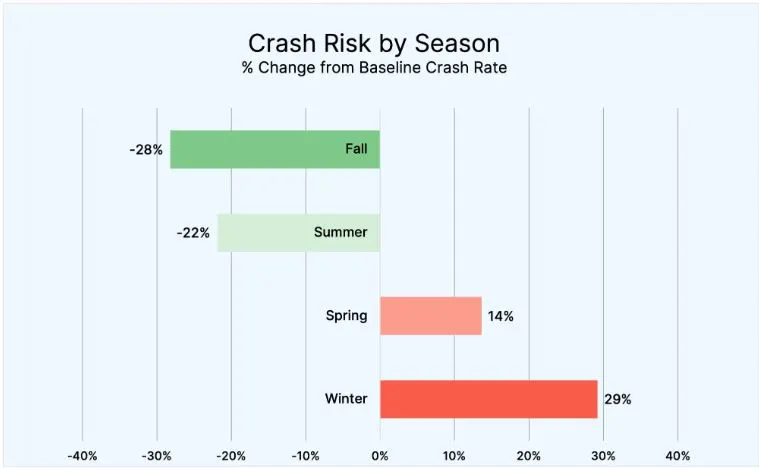
Although truck drivers log fewer miles in winter than in spring, there are about 7% more accidents per million miles driven during the winter months. In addition, the risk of accidents in winter is higher during peak hours, when congestion, changes in pavement temperature, and the transition from daylight to darkness combine to reduce drivers’ reaction time.

As a result, winter becomes the most dangerous season for driving.

The most dangerous states in the U.S. during winter weather
Image: Samsara, America’s most dangerous winter roads, via samsara.com

The most dangerous states during winter

While winter conditions are hazardous across the country, some states experience significantly higher accident rates during this season. According to the Samsara study, from fall to winter, accident rates increased by 168% in North Dakota, 65% in Mississippi, and 50% in Kentucky, with notable spikes also observed in Minnesota, Michigan, and Iowa. These states share a common pattern: rural or high-speed interstate highways combined with early freezes and variable pavement conditions, creating sudden exposure changes for commercial drivers.

According to data shared by Samsara, these are the most dangerous states in the United States during the winter season:

  1. North Dakota: +168% (Rural freight corridors, extreme cold, limited lighting)
  2. Mississippi: +65% (Freeze–thaw precipitation, rural roads with low traction)
  3. Kentucky: +50% (Appalachian terrain, black ice on secondary highways)
  4. Minnesota: +44% (Long winter season, early-morning commuter exposure)
  5. North Carolina: +41% (Mixed precipitation, western mountains versus coastal rain)
  6. Michigan: +38% (Snowbelt exposure, multi-vehicle chain-reaction crashes)
  7. Iowa: +37% (Agricultural transport, icy crosswinds on open plains)
  8. West Virginia: +35% (Narrow rural roads, rapid elevation changes)
  9. Nevada: +35% (Nighttime black ice formation on desert highways)
  10. Alaska: +29% (Extreme cold, limited daylight hours, low total mileage)
 
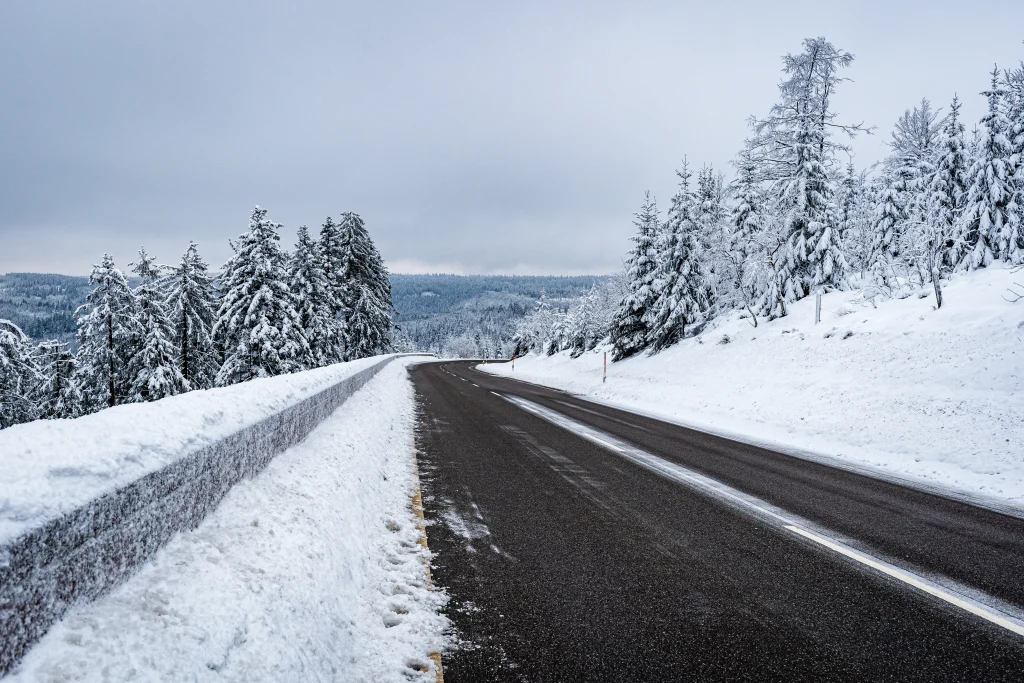
Los estados más peligroso en EE.UU. durante el clima de invierno
Image: Wirestock, via freepik.com

Road risk patterns show strong geographic contrasts, explains Samsara. Some northern states and rural areas record accident rates two to three times higher than the national average, despite having relatively few total crashes. Densely populated states (such as Texas and California) account for the highest number of accidents in absolute terms, while states with lower mileage but higher risk (such as North Dakota or Minnesota) stand out for accidents per mile traveled.

At a regional level, the Upper Midwest (North Dakota, Minnesota, Iowa, and Michigan) shows the largest increases due to snow, ice, and long-haul traffic. In the Appalachians and the South (Kentucky and Mississippi), freeze–thaw cycles and limited road salting infrastructure play a major role. Western and mountainous states (Nevada and Colorado) are affected by nighttime black ice and high-altitude corridors. The Northeast (New York and Massachusetts) experiences smaller but consistent winter increases, offset by effective snow removal and driver familiarity with winter conditions.

To stay safe during this season, it is important to remain alert to changing weather conditions and road closures. For your safety and that of other drivers, drive calmly and continuously assess road conditions. Learn more about how to stay safe while driving in winter here.

Facebook
Twitter
LinkedIn
WhatsApp
Pollution

Air Quality Alert in California Impacts Transportation

An air quality alert has been issued as high levels of fine particle pollution (PM2.5) trigger health warnings across several parts of California. The situation is affecting visibility, driver health, and logistics operations, forcing transportation professionals to take extra precautions on highways and in urban corridors

Read More »

Leave a Reply

Your email address will not be published. Required fields are marked *

Business hours: Monday to Friday from 8:00 AM to 5:00 PM. California time
Leave your number and a member of our company will contact you
Horario de atención: Lunes a viernes de 8.00 AM a 5.00 PM. Hora california

Deje su número y un miembro de nuestra empresa se pondrá en contacto con usted

Privacy summary

This website uses cookies so that we can offer you the best possible user experience. Cookie information is stored in your browser and performs functions such as recognizing you when you return to our website or helping our team understand which sections of the website you find most interesting and useful.

More information about the privacy policy: Privacy Policy

More information about the terms of use: Terms of use 

More information about the disclaimer: Disclaimer 

More information on acceptable use policies: Acceptable Use Policies