 Hable con un agente al (888) 572-7520
  Enviar mensaje a un agente

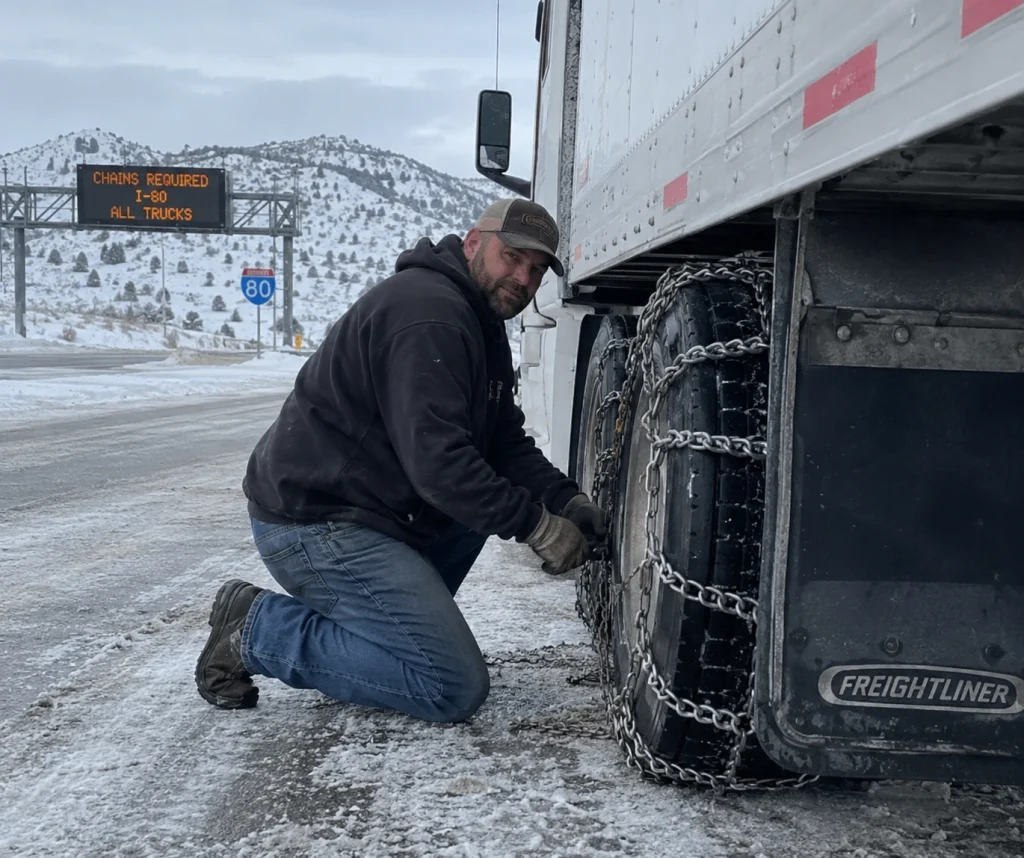

For truck drivers who regularly cross Nevada, this will not be a winter to hit the road without checking the forecast first. The NOAA Climate Prediction Center confirmed on September 10 that El Niño continues to strengthen, with more than a 90% chance of reaching very strong intensity during fall and winter 2026-2027.
There is even a 75% chance that, during the October-December period, El Niño could reach levels exceeding those recorded in previous events since 1950, according to NOAA. That does not mean anyone can predict today exactly how much snow will fall on a particular Nevada highway. NOAA itself cautions that a strong El Niño increases the likelihood of certain weather impacts but does not guarantee they will occur in any specific location.
For the trucking industry, however, the approaching winter puts renewed attention on one particularly sensitive freight corridor: Interstate 80 between Reno, the California state line and the Sierra Nevada.
I-80: Conditions Can Change in Hours
I-80 is one of the major east-west freight routes in the United States, connecting Nevada with California and, through Donner Pass, with West Coast markets and ports. During winter storms, conditions can change rapidly as trucks approach Reno and continue toward the state line.
The Nevada Department of Transportation (NDOT) warns that winter roads across the state can bring snow, black ice, reduced visibility and avalanche-prone areas. NDOT recommends checking road conditions before beginning a trip and always complying with any traction controls in effect.
For a truck driver, that can mean much more than simply slowing down. A chain control, crash or traffic shutdown near the California-Nevada border can create long delays and completely disrupt a delivery schedule.
Parking can also become a problem very quickly. NDOT planning documents have long recognized that winter restrictions on I-80 can cause trucks to back up on the Nevada side when traffic into California is stopped, putting additional pressure on available truck parking between Reno, Sparks, Fernley and the state line.
Trucks Over 10,000 Pounds: Know Nevada’s Chain Rules
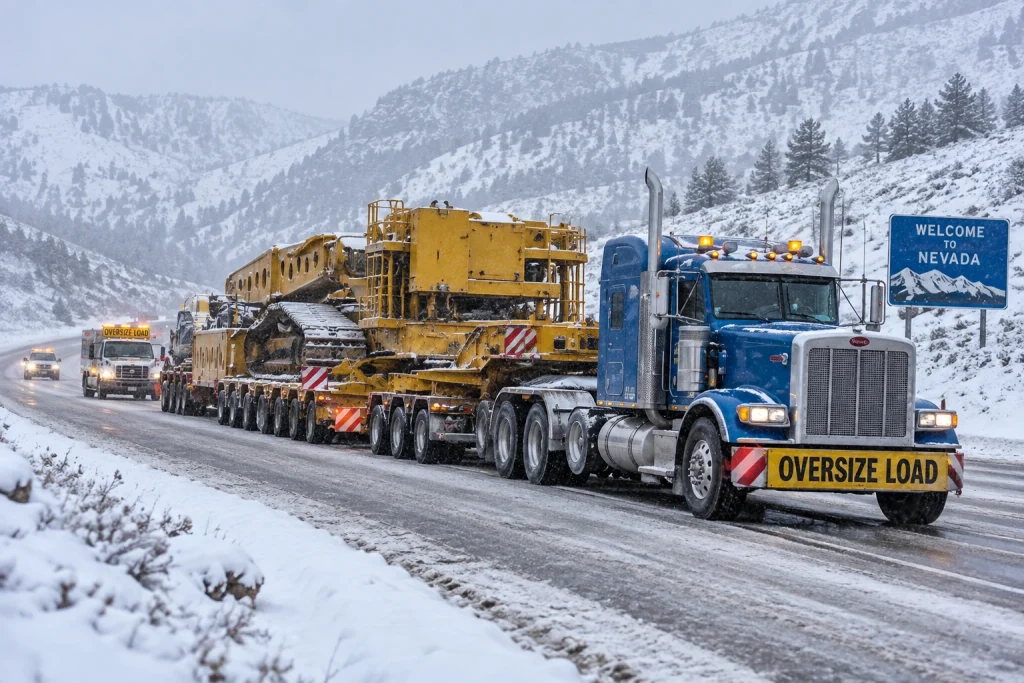
One important difference for drivers arriving from other states is that Nevada has its own chain requirements and does not use exactly the same R-1, R-2 and R-3 system as California.
Under NDOT’s official traction and chain requirements, when “Chains or Snow Tires Required” conditions are in effect, vehicles weighing more than 10,000 pounds GVW must use chains on the drive wheels and the braking wheels of the trailer.
Nevada can also impose a “Chains Required, Except For” condition, requiring chains on vehicles except for 4WD vehicles equipped with four M-S tires. Unlike California, Nevada does not use a category called “Chains Mandatory,” or R-3.
That distinction is particularly important for operators crossing the state line: the rules can change when moving from Nevada into California, even though the driver remains on the same I-80 corridor.
Before approaching the Sierra, simply carrying chains is not enough. Drivers should know how to install them properly, inspect them before the trip and verify which level of traction control is in effect on both sides of the border.
Nevada’s Other Major Winter Threat: High Winds
Snow is not the only winter hazard for trucks in Nevada.
The I-580/US-395 corridor between Reno and Carson City, particularly through Washoe Valley, is known for strong winds. NDOT maintains specific warning systems in the area because of the danger powerful gusts can pose to semi-trucks, trailers and other high-profile vehicles.
Authorities can issue warnings, impose restrictions or even close roads when conditions become dangerous. NDOT warns that high-profile vehicles are especially vulnerable because strong gusts can push them sideways or cause them to overturn.
For an empty tractor-trailer or a truck carrying a light load, the danger can be even greater. If authorities restrict high-profile vehicles, trying to save a few minutes before a closure can turn into an expensive and dangerous decision.
Oversize Loads Require Extra Planning
Carriers moving oversize or overweight loads have another factor to consider.
NDOT requires Over Dimensional Vehicle (ODV) permits to follow the authorized route and comply with applicable weight, dimension and roadway restrictions. The agency also maintains specific restricted-route lists and spring thaw/frost restrictions.
Carriers operating under special permits should therefore check the specific conditions and restrictions attached to their permit before departure rather than assuming that authorization allows travel regardless of road conditions.
Make NVroads Part of Your Pre-Trip
This winter, checking the general weather forecast will not be enough.
NDOT recommends using NVroads or the 511 service for current highway conditions. Drivers can check incidents, restrictions and changing road conditions before entering the most difficult stretches of their route.
For drivers operating on tight schedules, building extra time into the trip is also important. A storm over the Sierra can create problems far beyond the area where snow is actually falling: truck backups, full parking areas, hours of service consumed while waiting and deliveries that are suddenly no longer on time.
Winter 2026-2027 cannot yet be predicted storm by storm. What is already clear is that El Niño is present and strengthening, and NOAA considers it highly likely to reach exceptional intensity over the coming months.
For truck drivers operating in Nevada, especially along I-80, I-580 and US-395, preparation starts before the first major snowfall: chains in good condition, enough fuel, extra time in the schedule, an alternate plan and NVroads checked before putting the truck in gear.
At Saint George Insurance Brokerage, we know that behind every mile is an operation that needs to keep moving even when the weather makes the road more difficult. Preparing before a storm can help protect the driver, the truck, the cargo and the business.
 Business hours: Monday to Friday from 8:00 AM to 5:00 PM. California time