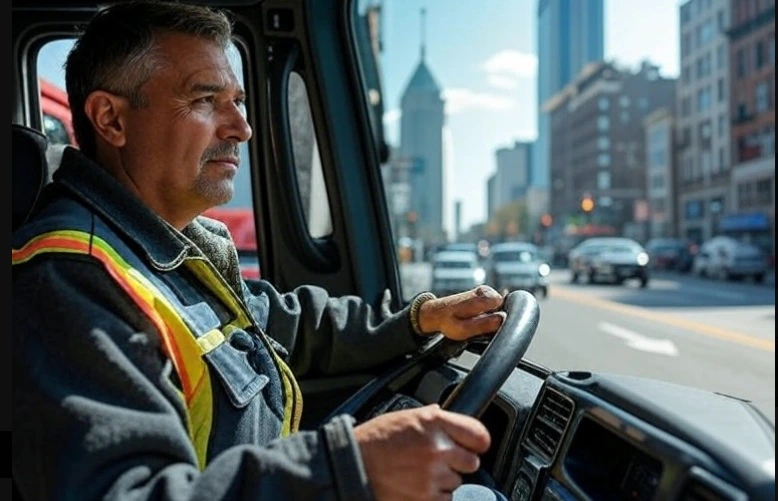
Recent studies from the United States, India, and other countries point to an alarming diagnosis—truck drivers are increasingly exposed to noise levels that exceed safe thresholds, causing irreversible damage to their hearing.
As road safety campaigns multiply, few are addressing a nearly invisible threat affecting thousands of drivers worldwide: progressive hearing loss. Recent studies from the United States, India, and other countries point to an alarming diagnosis—truck drivers are increasingly exposed to noise levels that exceed safe thresholds, causing irreversible damage to their hearing.

A Slow but Steady Decline
According to a report from the U.S. Federal Motor Carrier Safety Administration (FMCSA), over 26% of heavy truck drivers in the U.S. already show signs of hearing loss—a rate higher than that of other industrial sectors. Most of these cases are linked to prolonged exposure to truck engine noise, road-tire friction, and wind entering through open windows.
The problem worsens over time. Noise-induced hearing loss doesn’t happen overnight—it’s a cumulative form of damage that can go unnoticed for years until it begins to interfere with basic tasks like hearing an alarm, detecting emergency sirens, or simply communicating over the radio.
A study by the University of Chennai in India revealed that over 70% of the truckers analyzed showed moderate to severe hearing loss in at least one ear. In North America, some cases show asymmetric hearing loss—worse in the ear most exposed to traffic or wind, especially when driving for hours with the window open.

What Causes It?
Common factors contributing to hearing damage among truck drivers include:
Prolonged exposure to engine and road noise (above 85 dB).
Poor acoustic insulation in older or poorly sealed cabs.
Chronic use of air horns and air brakes.
Long work shifts without adequate hearing recovery breaks.
Driving with windows open for extended periods, which amplifies wind noise on one side.
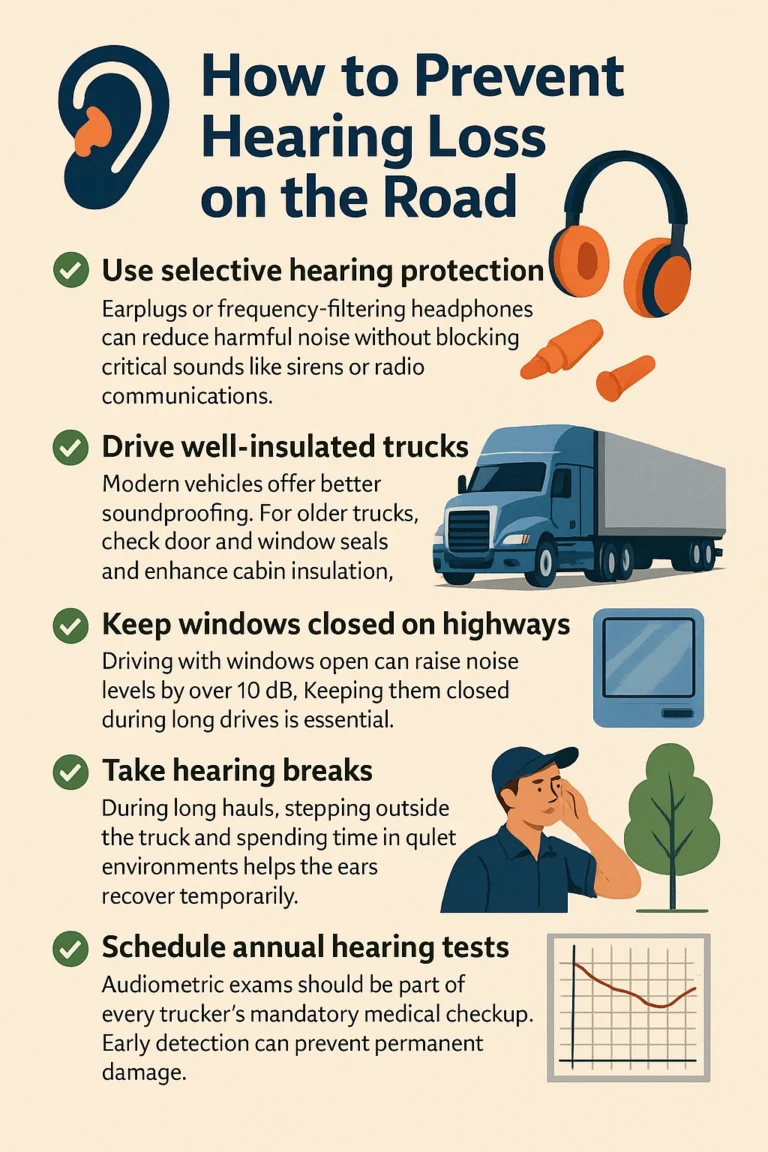
How to Prevent Hearing Loss on the Road
Occupational health experts and audiologists recommend several strategies to protect truckers’ hearing:
✅ 1. Use selective hearing protection
Earplugs or frequency-filtering headphones can reduce harmful noise without blocking critical sounds like sirens or radio communications.
✅ 2. Drive well-insulated trucks
Modern vehicles offer better soundproofing. For older trucks, check door and window seals and enhance cabin insulation.
✅ 3. Keep windows closed on highways
Driving with windows open can raise noise levels by over 10 dB. Keeping them closed during long drives is essential.
✅ 4. Take hearing breaks
During long hauls, stepping outside the truck and spending time in quiet environments helps the ears recover temporarily.
✅ 5. Schedule annual hearing tests
Audiometric exams should be part of every trucker’s mandatory medical checkup. Early detection can prevent permanent damage.
A Wake-Up Call for the Industry
Despite technological progress in the transport sector, hearing protection remains an unresolved issue in logistics. Incorporating hearing health policies in fleets, providing protective equipment, and educating drivers can make a significant difference. As silent as it may be, hearing loss deserves a louder conversation.

Trucker Fashion: A Revolution Born on the Road That Still Sets the Trend
Trucker fashion remains relevant due to its authenticity, its seamless integration into streetwear, and its reinterpretation by luxury brands, consolidating itself as a revolution born on the road that evolved from a work uniform into a global cultural symbol

North Dakota among states regaining non-domiciled CDL authority
North Dakota will reissue approximately 150 of the 526 CDLs and CLPs for non-resident drivers that were active during the FMCSA audit.

The Growing Threat of Chameleon Fleets
A CBS ‘60 Minutes’ investigation exposes the rise of ‘Chameleon Fleets’ in the U.S. trucking industry.

US transportation begins to show signs of recovery
With tonnage at record levels and rates on the rise, carriers are leading the expansion of the logistics market. If the forecasts hold true, years of uncertainty could be over.

Trump Administration Restarts California Pipeline to Lower Gasoline Prices
Under Trump, the restart of the Santa Ynez Pipeline aims to boost local crude supply and impact gasoline prices amid persistently high energy costs in California.

Lawmakers push to raise minimum truck insurance compensation to $5 million
The “Fair Compensation for Truck Crash Victims Act” seeks to increase insurance requirements for interstate motor carriers.