 Hable con un agente al (888) 572-7520
 Enviar mensaje a un agente


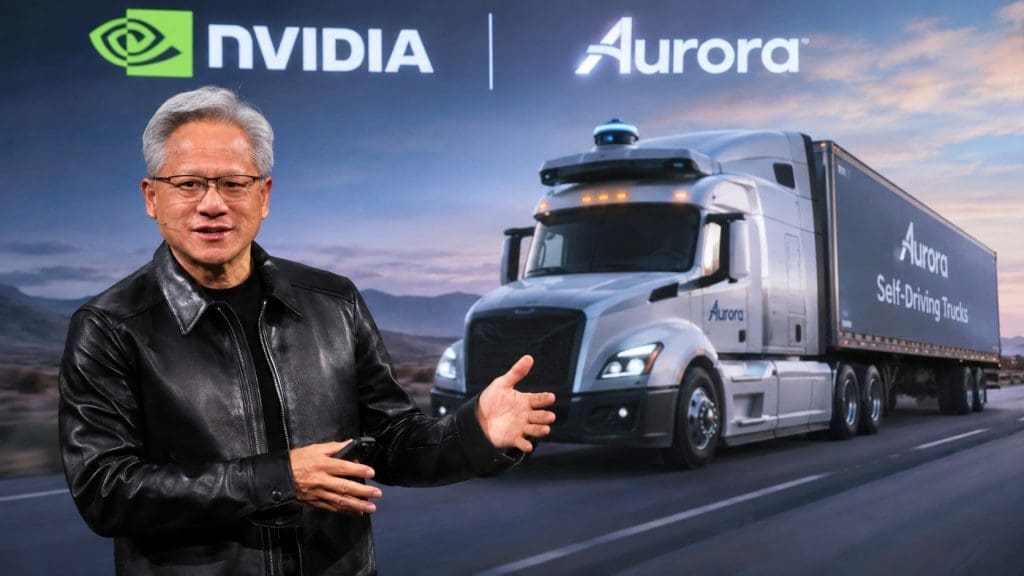

Jensen Huang’s resignation as Nvidia’s president, CEO, and board member sent shockwaves through the technology industry. The executive who transformed a graphics chip manufacturer into one of the driving forces behind artificial intelligence stepped down effective immediately following revelations about extramarital relationships and allegations that one of the women involved had possible connections to Chinese intelligence operations.
The crisis could have implications far beyond Silicon Valley. Nvidia is a major technology provider for autonomous vehicles, advanced driver-assistance systems, AI-powered logistics, and data centers that process information supporting millions of commercial operations.
Nvidia Chief Financial Officer Colette Kress has taken over as interim CEO while the board searches for a permanent successor. Huang, who co-founded Nvidia in 1993, leaves behind questions about the future of a technology strategy involving truck manufacturers, logistics operators, and autonomous driving developers.
From a Personal Scandal to an Espionage Investigation
The controversy intensified following reports of Huang’s extramarital relationship with Alice Huang, a businesswoman associated with Megaspeed, a company with commercial ties to Nvidia.
According to media investigations, U.S. authorities suspect the businesswoman may have been involved in intelligence activities connected to China and operations involving access to semiconductors subject to export restrictions.
These allegations do not establish that espionage occurred or that Jensen Huang participated in any illegal activity.
The case took on political significance because Nvidia occupies a strategic position in the technological competition between Washington and Beijing. In recent years, Huang advocated maintaining commercial relationships with China even as the U.S. government tightened restrictions on exports of advanced chips.
The situation reportedly escalated with additional revelations involving Kimberly Powell, a Nvidia executive serving as vice president of its healthcare division.
The series of disclosures raised questions about corporate leadership, governance, and potential security risks surrounding the company’s top executive.
Why Nvidia’s Leadership Crisis Matters to Trucking
Although Nvidia is best known for its artificial intelligence processors, its technology plays an increasingly important role in the automotive and heavy-duty trucking industries.
Through its NVIDIA DRIVE platform, the company develops processing, simulation, and AI technologies that enable vehicles to interpret their surroundings, detect obstacles, analyze camera and sensor data, and make driving decisions.
These capabilities are essential for developing autonomous trucks capable of operating along long-haul freight corridors, within logistics facilities, and across distribution networks.
The technology processes enormous volumes of information in real time, allowing automated vehicles to recognize surrounding traffic, detect lane changes, anticipate maneuvers, and respond to unexpected road conditions.
Huang’s departure does not mean these developments will stop. However, it introduces uncertainty about investment priorities, commercial strategies, and the future direction of technology partnerships established under his leadership.
For an industry that must plan fleet investments and recover equipment costs over many years, the stability of technology suppliers is an important consideration.
Aurora, Continental, and the Future of Driverless Trucks
One of the clearest examples of Nvidia’s involvement in heavy-duty transportation is its strategic partnership with Aurora and Continental.
In January 2025, the three companies announced an agreement to develop and manufacture autonomous driving systems for commercial trucks at scale.
The project integrates NVIDIA DRIVE Thor processors and the DriveOS operating system into Aurora Driver, a Level 4 autonomous driving technology designed to operate without human intervention under defined conditions.
Continental plans to advance industrial production of the system in 2027, supporting its integration into commercial trucks.
The partnership could help reduce operating costs, improve truck utilization, and expand the possibilities for autonomous long-haul freight transportation.
It also illustrates how heavily truck manufacturers and autonomous technology developers depend on specialized artificial intelligence suppliers.
Changes in Nvidia’s corporate priorities could potentially affect development schedules, future component availability, or investment decisions. However, there is currently no confirmed information indicating that Huang’s departure has altered these agreements.
Potential Consequences for Supply Chains and Logistics
The leadership crisis also introduces uncertainty into an industry critical to the U.S. economy: semiconductor production and distribution.
Nvidia chips power data centers, artificial intelligence platforms, industrial systems, and automation technologies.
Their production depends on an international network of suppliers, assembly facilities, distribution centers, and logistics operations connecting multiple continents.
Trade tensions between the United States and China add another layer of complexity.
Existing U.S. restrictions on advanced semiconductor exports already affect numerous technology companies. Any future changes to those policies could influence commercial destinations, warehousing requirements, and international freight flows.
For trucking companies, these developments could eventually mean changes in distribution routes, freight volumes, and security requirements for transporting high-value electronic components.
The actual impact will depend on corporate and regulatory decisions in the months ahead.
Cybersecurity Becomes Another Challenge for Smart Trucks
Artificial intelligence is also creating new questions about the security of connected commercial vehicles.
Modern trucks incorporate sensors, GPS systems, telematics devices, cameras, and communication platforms that allow operators to monitor vehicle performance and fleet activity in real time.
As these technologies become increasingly integrated with automated driving systems, protecting software and communications between trucks and control centers becomes more important.
Nvidia develops autonomous vehicle safety and validation technologies through its Hyperion platform and NVIDIA Halos, which includes cybersecurity components.
For trucking companies, these advances require closer attention to emerging operational risks, including software failures, connectivity disruptions, cyber vulnerabilities, and potential malfunctions in automated systems.
SG Insurance has previously examined how cyberattacks threaten U.S. supply chains and logistics operations, an issue becoming increasingly relevant as transportation grows more connected.
Nvidia’s leadership crisis is not itself a cybersecurity incident. However, it highlights the transportation industry’s growing dependence on sophisticated technology providers.
What Does This Mean for Trucking Companies and Commercial Insurance?
Huang’s departure also raises broader questions about how risks associated with automated commercial vehicles will evolve.
Artificial intelligence can improve accident prevention through systems designed to detect obstacles, monitor road conditions, and assist with driving maneuvers.
At the same time, these technologies introduce new challenges when determining liability following an accident.
In conventional trucking, investigations generally focus on driver behavior, vehicle maintenance, road conditions, and cargo characteristics.
With highly automated vehicles, additional factors may include software performance, sensor reliability, communication systems, and technological components supplied by third parties.
The continuity of autonomous vehicle development programs is also important for transportation companies considering investments in driverless operations.
Jensen Huang’s departure does not stop the autonomous trucking revolution, but it leaves a major question unanswered: who will lead one of the companies providing the technology needed to make it possible?
As Nvidia enters an unexpected leadership transition, the U.S. trucking industry continues moving toward greater automation. For logistics operators, the priority remains balancing innovation, operational safety, and financial protection.
In this changing environment, effective risk management and commercial insurance coverage tailored to each trucking company’s needs will remain essential as the transportation industry evolves.
 Business hours: Monday to Friday from 8:00 AM to 5:00 PM. California time