The Owner-Operator Independent Drivers Association expressed its support for the U.S. Department of Transportation's plan to eliminate costly and excessive regulations.
The Owner-Operator Independent Drivers Association (OOIDA) expressed its support for the U.S. Department of Transportation’s (DOT) plan to eliminate costly and excessive regulations. In April, the DOT launched a deregulation process by inviting the public to suggest which regulations could be modified without compromising safety. The initiative received nearly 900 comments, many of them from truckers.
OOIDA took this opportunity to submit a total of 17 pages of recommendations, in which it criticized the current regulatory approach as burdensome and harmful to small carriers. According to LandLine, four key issues are highlighted in OOIDA’s document: speed limiters, hours of service, language requirements, and broker transparency.

OOIDA: key reforms to enhance the trucking industry
Speed Limiters
Although the speed limiter mandate has not yet reached the regulation stage, OOIDA has strong opinions on the matter. Speed limiter proposals were introduced in 2016 and again in 2022. While no specific speed cap has been finalized, some safety groups have suggested limiting heavy trucks to 60 mph. However, truckers warn that this would create dangerous speed differentials on the highways.
In response, OOIDA argues that speed limiters reduce a driver’s ability to control the truck effectively, particularly in hazardous situations. The association also contends that these devices increase driver stress and fatigue by forcing them to work longer hours to meet schedules under current service rules. Furthermore, OOIDA emphasizes that speed limits should continue to be set and enforced by individual states, as allowed under legislation since 1995. Therefore, OOIDA recommends that the DOT formally withdraw the proposed regulation.

Hours of Service
In 2020, an OOIDA petition led the FMCSA to modify the hours of service (HOS) regulations. However, the association still believes the current rules are too rigid, overly complex, and fail to consider individual drivers’ needs.
OOIDA proposes solutions to improve driver rest quality and alertness. One suggestion is to allow truckers to pause their work clocks and use more flexible sleeper berth splits. This would offer drivers greater adaptability to match driving and rest periods with real-world conditions, ultimately enhancing road safety.

English Proficiency
OOIDA stated that the Department of Transportation should focus more on regulations that have a direct impact on safety and ensure they are properly enforced. The association welcomed President Donald Trump’s decision to strengthen enforcement regarding the lack of English proficiency as a criterion for placing drivers out of service.
OOIDA supported this measure, calling it a positive step toward restoring common-sense safety standards. The organization also urged the DOT to collect more data on non-domiciled Commercial Driver’s License (CDL) holders operating in the country, aiming to ensure fair and safe conditions for all stakeholders in the industry.

Broker Transparency
In 2020, OOIDA asked the FMCSA to enforce and strengthen broker transparency regulations. While the previous administration initiated the regulatory process, OOIDA now urges the Trump administration to complete the proposal. The FMCSA received about 6,900 comments on the rule, which would mandate brokers to provide transaction records to carriers and deliver electronic copies within 48 hours of a request. According to OOIDA, proper enforcement of this rule would promote a more ethical, fair, and efficient brokerage market.

The best roadside attractions for truckers in the U.S.
America’s highways hide unique places that break up the routine, don’t hesitate to check out these roadside attractions along the way. The road is much

The trucker style: comfort, function, and identity
Truckers’ style is much more than workwear; it’s an identity. These are the most commonly worn garments among truckers. Truckers’ style is much more than
Chaos on Highway 61: Viral Wrong-Way Truck Video Reignites the CDL Debate
An 80-ton tractor-trailer traveling miles in the wrong direction on Missouri’s Highway 61 has reignited a nationwide debate over Commercial Driver’s License (CDL) standards, training

How technology affects driver retention
Friend or foe? 52% of drivers say technology directly influences their decision to stay with or leave a fleet. Fleet telematics company Platform Science published

Dalilah Law seeks to remove non-english speaking commercial drivers
President Donald Trump proposed the “Dalilah Law,” an initiative aimed at prohibiting undocumented immigrants from obtaining commercial driver’s licenses. On February 24, President Donald Trump
FORMULA 1 and the AI That Could Transform Transportation in the U.S.
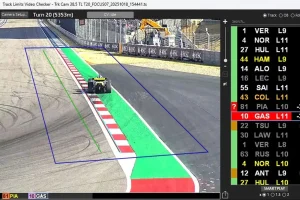
The artificial intelligence system that Formula 1 implemented to monitor every car on every turn is opening the door to new applications in trucking, logistics,