 Hable con un agente al (888) 572-7520
  Enviar mensaje a un agente



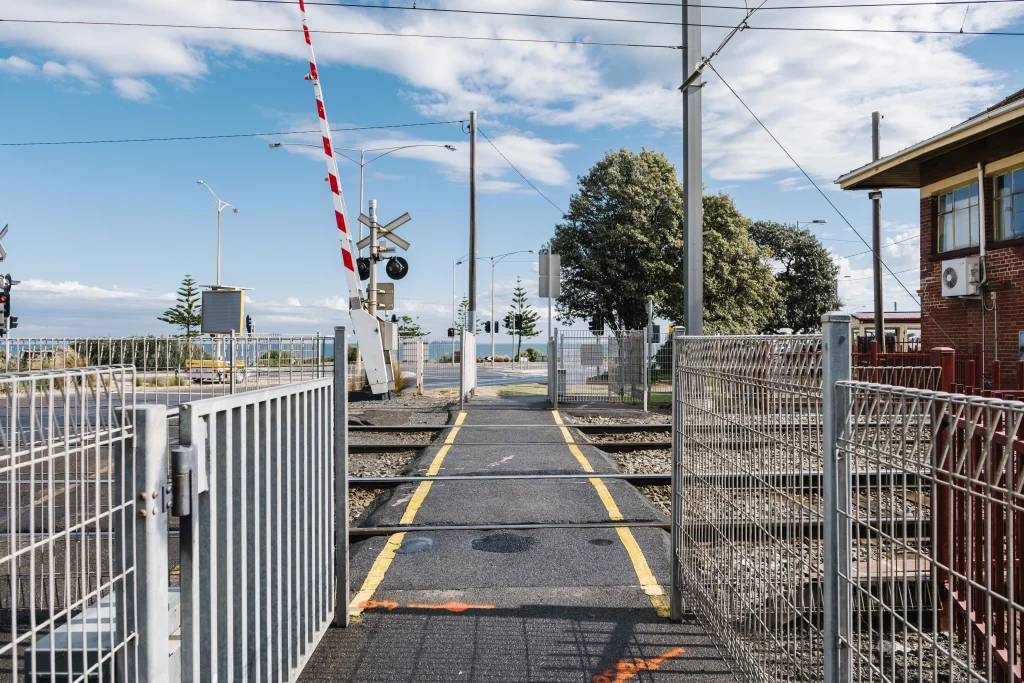
DOT seeks to eliminate rail crossings that endanger users
The Department of Transportation plans to invest more than $1 billion to improve safety at rail crossings across the United States. With this investment, the criteria for the rail crossing safety and grade crossing elimination grant program would be adjusted.
The goal is to prioritize safety, improve access to emergency services, and enhance the mobility of people and goods, according to a U.S. Department of Transportation press release.
Funds will be allocated to projects that:
- Build overpasses or underpasses to prevent cars and trains from intersecting
- Improve safety technology at crossings
- Relocate tracks to close at-grade crossings
- Educate the public on how to safely cross railroad tracks
Applications for eligible projects must be submitted to USDOT by June 8.
California opens the door to autonomous trucks with new rules
The state of California has approved a regulatory update that, for the first time, allows testing and operation of heavy autonomous trucks on public roads. The measure removes previous restrictions for vehicles over 10,001 pounds and establishes a phased permit system for deployment.
Under the update, companies must begin with testing that includes a safety driver, then progress to driverless operations, and ultimately apply for commercial authorization. They must log at least 500,000 miles in heavy vehicles (and 50,000 in light vehicles), and submit detailed reports on safety, software, and operations.
The regulation requires these vehicles to comply with all state and federal rules, including stops at weigh stations. It also introduces oversight mechanisms, such as violation notifications from authorities and increased transparency requirements regarding data on failures, sudden braking, or collisions.
On the safety front, emergency powers are expanded: local authorities may establish restricted zones through geofencing, requiring vehicles to exit them within a maximum of two minutes. It also requires companies to ensure direct communication with emergency services and response times of under 30 seconds.
Some of these provisions have already taken effect, while others will be implemented gradually over the coming months.

Pennsylvania pushes stricter laws for truck drivers and CDL licenses
Pennsylvania lawmakers are advancing a series of bills aimed at strengthening road safety, focusing on English proficiency and stricter penalties for drivers and companies that violate regulations.
One of the main proposals (SB1295) would require that all tests to obtain a commercial driver’s license (CDL), both written and practical, be conducted exclusively in English. Currently, only the practical tests are administered in that language. The measure seeks to ensure that drivers can read signs and follow road instructions, aligning with federal standards that have not been strictly enforced for years.
The initiative also follows warnings from the federal government about the potential loss of up to $75 million in funding if the state does not correct issues in issuing licenses to non-resident drivers.
Another bill (SB1296) increases penalties for serious violations, including one-year suspensions for first offenses and lifetime disqualification for repeat offenders. Companies and contractors that employ unqualified drivers could also face fines of up to $3,000.
Meanwhile, bill SB1294 aims to eliminate so-called “CDL license mills.” The proposal would allow the Department of Education to shut down these programs and increase fines from $2,500 to $25,000, while still preserving operators’ right to a hearing.
These measures are part of a nationwide trend, with other states adopting similar rules following the reinstatement of federal penalties. The bills continue to move through the state Senate.
 Business hours: Monday to Friday from 8:00 AM to 5:00 PM. California time