 Hable con un agente al (888) 572-7520
  Enviar mensaje a un agente

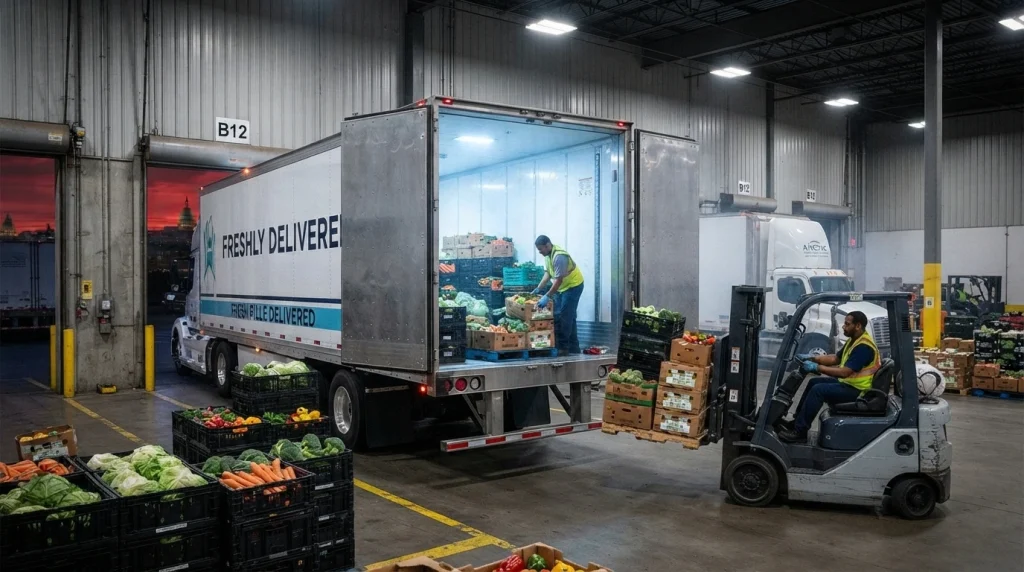

Fall harvest season is reshaping the reefer market across the northern United States. As produce volumes increase in Washington, Idaho and the Midwest, more fruit and vegetables need refrigerated transportation to distribution centers nationwide.
That seasonal surge is tightening truck availability and supporting higher spot rates in several major freight markets.
According to DAT Freight & Analytics, the national reefer spot rate averaged $2.71 per mile excluding fuel for the week ending September 11. While slightly lower than the previous week, it remained 35% above the same period in 2025 and 26.6% above the nine-year seasonal average.
Reefer rates top $3 per mile in the Midwest
Regional markets show just how significant the shift has become. For the week ending September 11, Great Lakes reefer rates averaged $3.32 per mile, followed by the Upper Midwest at $3.27, Ohio River at $3.26 and Lower Midwest at $3.22.
The Pacific Northwest — a critical market during harvest season in Washington, Oregon and Idaho — averaged $2.78 per mile, up 2.1% in one week. The previous week, rates there had jumped 5.8%, the largest weekly increase among major regions tracked by DAT.
The timing matches peak agricultural activity across the North. Washington is moving into its busy tree-fruit season, while Idaho, Washington and Oregon are shipping large volumes of potatoes, onions and other produce.
The USDA Agricultural Marketing Service tracks these movements through its agricultural transportation reports, while the USDA’s National Truck Rate Report provides weekly spot-market rates for full truckload shipments of fruits and vegetables.
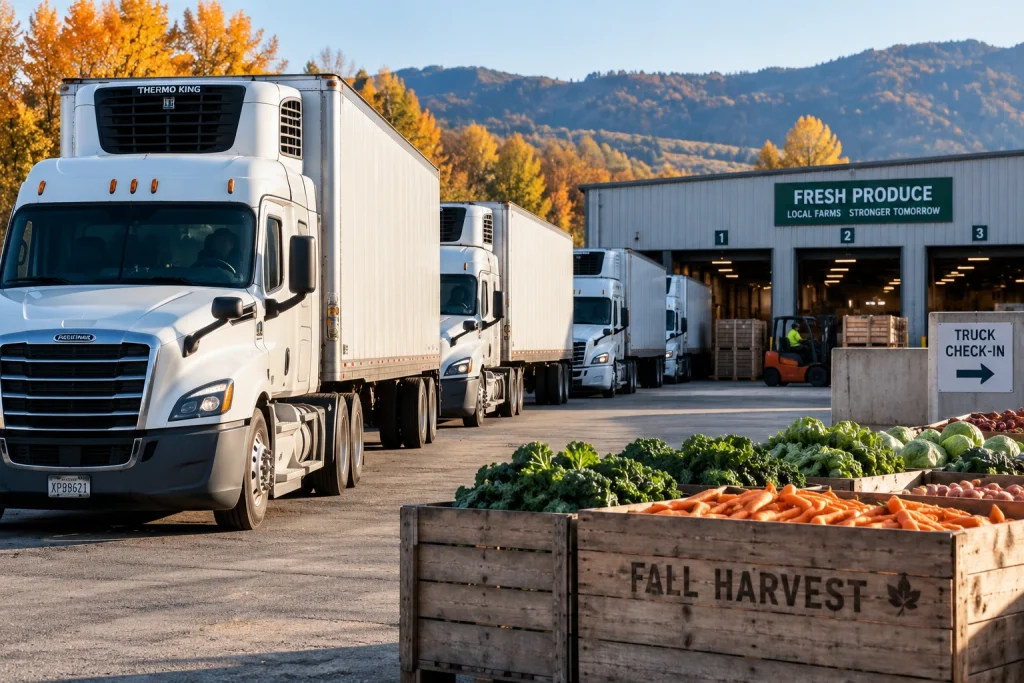
Washington becomes a reefer hot spot
One of September’s busiest reefer markets is developing around Yakima, Washington, where the tree-fruit harvest is driving demand for refrigerated trucks.
DAT reported in early September that outbound fruit loads from Yakima were producing some of the strongest rates of the agricultural season.
National capacity data also favored carriers: truck posts increased 5.3% week over week but remained 18.7% below last year, while load posts were 70.8% higher than in 2025.
For owner-operators and small fleets, tighter capacity can create opportunities. But a strong outbound rate does not automatically mean a profitable trip.
Deadhead miles, detention time and the availability of a good backhaul can quickly change the math. A $3-plus rate loses some of its appeal if a driver has to travel hundreds of empty miles to reach the pickup or take a weak return load.
Diesel changes the equation
Fuel is another major factor this fall.
According to the U.S. Energy Information Administration, the national average price for on-highway diesel reached $6.285 per gallon for the week of September 14, up from $5.967 the previous week.
The Midwest averaged $6.250 per gallon, while the West Coast excluding California — particularly relevant for Washington and Oregon operations — reached $6.566.
That makes the headline rate per mile only part of the picture. Drivers also need to calculate fuel, deadhead, detention, maintenance, reefer fuel and the return trip before deciding whether a load makes financial sense.
DAT’s rates cited above are linehaul rates and exclude fuel and fuel surcharges, so they should not be treated as all-in rates.
Reefer demand shifts north for fall
Refrigerated freight follows the harvest calendar.
California, Texas, Florida and the Southeast dominate reefer activity during different parts of the year. By September, however, more of that activity shifts toward Washington, the Pacific Northwest, Great Lakes and Upper Midwest.
The latest numbers reflect that seasonal transition.
DAT reported an average national reefer spot rate of $2.61 per mile excluding fuel in August. September has since brought renewed strength to several agricultural markets as harvest volumes increase.
For drivers considering repositioning, the best-paying outbound load is only one piece of the decision. Diesel prices, deadhead miles, loading and unloading times, backhaul rates and weather conditions all affect the final profit.
Fall also brings another challenge to northern routes: changing weather. Early freezes, heavy rain and eventually snow can affect transit times across Washington, Idaho, Minnesota, Wisconsin and other northern states.
For temperature-sensitive freight, delays can mean missed appointments, higher operating costs and additional pressure on the reefer unit.
Drivers should also keep current Hours of Service and safety requirements from the Federal Motor Carrier Safety Administration (FMCSA) in mind when planning harvest-season runs.
For owner-operators, this fall’s reefer market offers higher rates in several northern freight lanes — but also significantly higher operating costs. The opportunity comes down to what remains after fuel, deadhead, detention and the trip home.
At Saint George Insurance Brokerage, we help trucking businesses protect their operations with commercial insurance solutions built for carriers working across the United States.
 Business hours: Monday to Friday from 8:00 AM to 5:00 PM. California time