Road safety during Halloween is a priority for professional drivers in the United States, especially with increased pedestrian activity, evening events, and changing weather conditions. This article outlines the risks and best practices for driving safely during this holiday period.
Road safety during Halloween takes on a heightened importance for the many professional drivers who keep the country moving. While most Halloween celebrations unfold in neighborhoods, community centers, and schools, drivers continue working—often covering long distances, entering residential zones, or passing through areas where pedestrian activity is higher and visibility is reduced. For these reasons, it becomes necessary to reinforce preventive measures and adjust driving habits to the seasonal patterns that emerge around October 31.
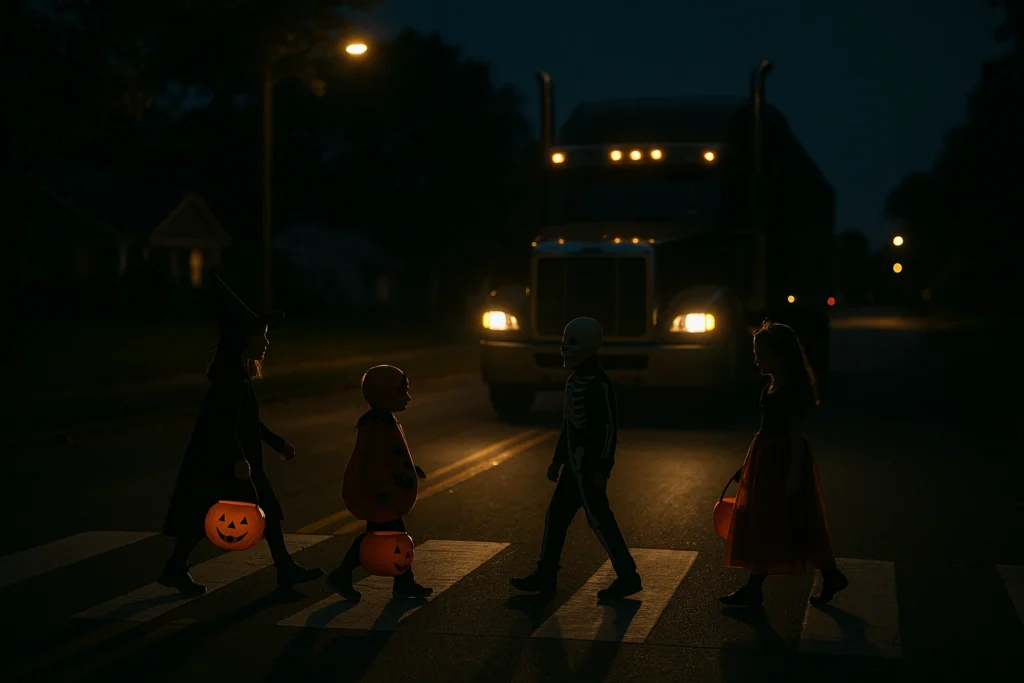
Halloween introduces several risk factors that combine in ways that challenge even the most experienced drivers. There is more nighttime travel, more small children outdoors, costumes in dark colors that make pedestrians harder to spot, and an increase in parties and social gatherings, where some drivers may get behind the wheel after consuming alcohol. Additionally, late October weather in many states brings rain, fog, and the first signs of frost—conditions that require longer stopping distances and slower maneuvering. For a commercial vehicle, every one of these variables can significantly increase the risk of an incident if not carefully managed.
More Pedestrians, Less Visibility: A Changed Road Environment
On Halloween, it is common to see children, teenagers, and entire families walking in neighborhoods at dusk or after dark. Many costumes lack reflective elements, meaning even a person only a few yards ahead might not be visible until headlights catch them. Streets may also have temporary gatherings, trunk-or-treat events, or community block parties that bring cars to sudden stops or narrow traffic lanes.
Key recommendations include:
Reduce speed in residential areas, even below posted limits.
Use high beams on open roads when appropriate and safe for other drivers.
Increase following distance to allow for unexpected stops.
Avoid sudden lane changes or turning maneuvers.
Check all lights—headlights, taillights, turn signals, brake lights—before beginning your route.
These precautions can make a critical difference when driving through areas with unpredictable pedestrian movement.

Alcohol and Celebrations: Risk Often Comes from Others
Data from multiple transportation and road safety agencies shows a measurable increase in collisions involving impaired drivers on the nights of October 30 and 31, as well as the early morning hours of November 1. While professional drivers typically follow strict safety standards, the behavior of surrounding drivers is less predictable.
To reduce risk:
Be prepared for sudden or irregular maneuvers by smaller vehicles.
Avoid passing other cars in areas with limited lighting or visibility.
If you notice a driver swerving, slowing unpredictably, or drifting between lanes, decrease your speed and increase your distance—do not attempt to pass.
Pay extra attention near bars, event venues, parking lots, and highway on-ramps.
Recognizing erratic behavior early is a key defensive driving strategy.
Route Planning, Rest, and Weather Awareness
As Halloween arrives, many regions begin to experience seasonal weather changes. Fog, drizzle, falling temperatures, and high winds can all make driving more challenging.
Useful practices include:
Check weather forecasts and road condition reports before traveling through mountain regions or northern states.
Adjust your schedule to avoid heavy trick-or-treating hours in suburban zones.
Take short breaks to reduce visual and mental fatigue.
Ensure cargo is properly secured, especially when humidity or wind may affect stability.
Preventing fatigue is as critical as preventing mechanical issues.
More than a Recommendation: A Professional Responsibility
Professional drivers play a vital role in keeping the United States functioning. They transport groceries, medicine, fuel, manufacturing materials, and everyday essentials that millions of people rely on. Maintaining road safety during Halloween is not only about protecting oneself—it is about protecting the communities that are celebrating.
Halloween is a moment of joy, creativity, and family tradition. For drivers, the best way to support that celebration is by navigating with awareness, patience, and steadiness—every mile, every turn, every delivery.
Truck driver: stop choosing the worst route

North Dakota among states regaining non-domiciled CDL authority
North Dakota will reissue approximately 150 of the 526 CDLs and CLPs for non-resident drivers that were active during the FMCSA audit.

The Growing Threat of Chameleon Fleets
A CBS ‘60 Minutes’ investigation exposes the rise of ‘Chameleon Fleets’ in the U.S. trucking industry.

US transportation begins to show signs of recovery
With tonnage at record levels and rates on the rise, carriers are leading the expansion of the logistics market. If the forecasts hold true, years of uncertainty could be over.

Trump Administration Restarts California Pipeline to Lower Gasoline Prices
Under Trump, the restart of the Santa Ynez Pipeline aims to boost local crude supply and impact gasoline prices amid persistently high energy costs in California.

Lawmakers push to raise minimum truck insurance compensation to $5 million
The “Fair Compensation for Truck Crash Victims Act” seeks to increase insurance requirements for interstate motor carriers.

The Invisible Ecosystem Behind Autonomous Trucks
While everyone focuses on driverless trucks, the real business lies in the infrastructure that makes them possible. That’s where smart money is flowing.