 Llame al (888) 572-7520 para hablar con un agente
 Enviar mensaje a un agente
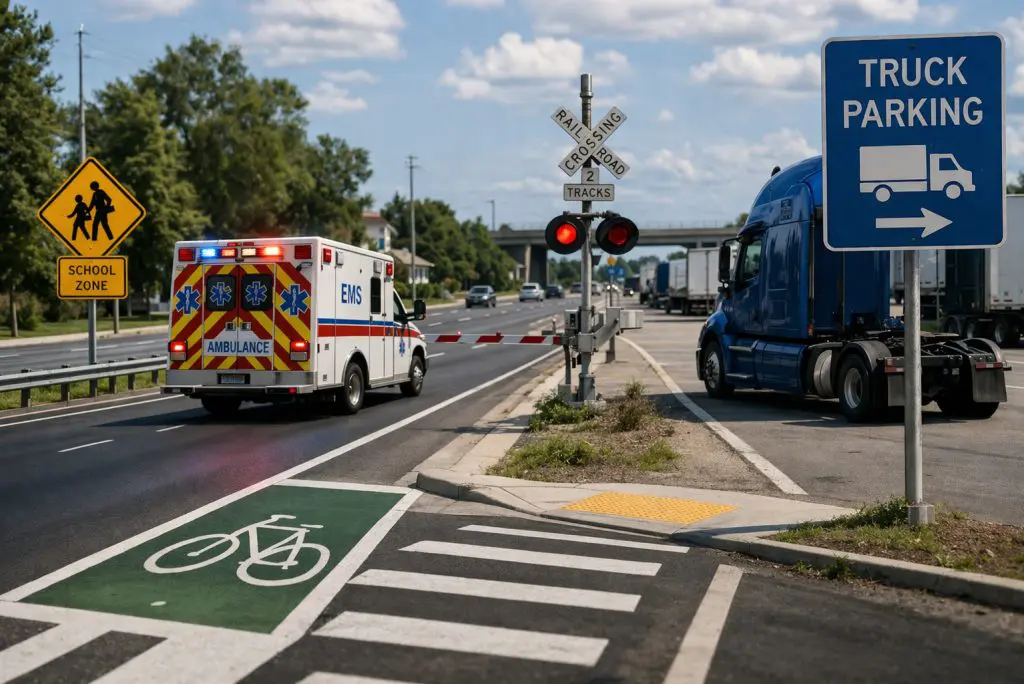

The U.S. Department of Transportation has announced nearly $1 billion in new funding to strengthen road safety nationwide, placing renewed focus on one of the country’s most persistent challenges: high crash rates, congestion, and structural gaps in transportation infrastructure.
The initiative, known as the Safe Streets and Roads for All (SS4A) program, goes beyond traditional infrastructure spending. It represents a broader strategy aimed at reducing fatalities and serious injuries while modernizing systems that directly impact the daily operations of the logistics industry—especially truck drivers.
A structural problem that demands long-term investment
For years, the United States has faced a contradiction: it operates one of the largest and most complex road networks in the world, yet continues to report troubling levels of roadway fatalities.
Several factors have contributed to this trend, including the rapid expansion of e-commerce, increased freight traffic, and infrastructure that has not fully adapted to evolving transportation demands.
Against this backdrop, Transportation Secretary Sean P. Duffy’s announcement signals a multi-layered approach. The plan is not limited to physical upgrades—it also emphasizes planning, technology integration, and coordination across federal, state, and local levels.
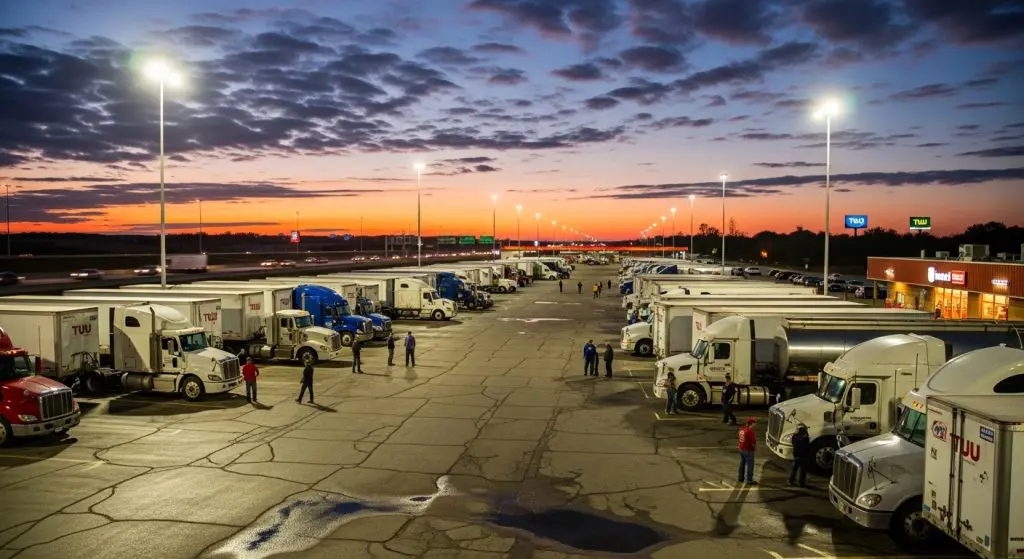
Truck parking expansion: a long-standing industry issue
One of the most significant elements for the trucking industry is the expansion of truck parking capacity. The shortage of safe and available parking across the U.S. has been a long-standing issue with direct safety implications.
When drivers are unable to find designated parking, they often resort to stopping on highway shoulders, ramps, or other unsafe locations—raising the risk of accidents.
This shortage also complicates compliance with Hours of Service (HOS) regulations, increasing operational stress and exposing carriers to potential penalties.
By prioritizing truck parking within a federal safety program, policymakers are acknowledging that this is not just an operational inconvenience—it is a systemic safety concern.
Emergency response: every minute matters
Another key pillar of the program is improving emergency response times. In serious roadway incidents, minutes can mean the difference between life and death, particularly in rural corridors or low-density regions.
The investment will support enhanced connectivity, upgraded response systems, and stronger coordination among emergency services.
For freight operations, faster incident response also translates into reduced downtime, fewer prolonged road closures, and improved network reliability.
Rail crossings and high-risk intersections
The modernization of rail crossings is another critical component of the plan. These intersections—where freight trains and heavy trucks converge—have historically been high-risk zones.
Upgrades such as advanced signaling, automated barriers, and real-time alert systems are expected to reduce collisions, particularly in key logistics corridors with high freight volumes.
Safer urban infrastructure and community-focused design
While highways and freight corridors are central to the initiative, the program also targets urban environments. Investments will support safer street designs, protected school zones, and infrastructure that prioritizes pedestrians and cyclists.
This reflects a broader policy shift aligned with the Vision Zero framework, which holds that no traffic fatality is acceptable and that road systems should be designed to minimize human error.
How the funding works
The SS4A program offers two primary types of grants:
- Planning and Demonstration Grants, which help local governments develop comprehensive road safety strategies
- Implementation Grants, which fund projects aligned with existing safety action plans
This structure is designed to move beyond fragmented investments and encourage long-term, data-driven solutions.
Project selection will involve collaboration among key federal agencies, including the Federal Highway Administration (FHWA), the National Highway Traffic Safety Administration (NHTSA), and the Federal Transit Administration (FTA).
Direct impact on logistics and trucking
For the logistics sector, the implications are substantial. Safer and more efficient infrastructure reduces costs associated with accidents, delays, and operational disruptions.
It also improves delivery predictability—an increasingly critical factor in supply chains driven by tight timelines and customer expectations.
In this context, road safety is no longer just a public policy concern; it is a core economic variable that directly affects competitiveness.
A clear policy signal
Beyond the funding itself, the initiative sends a strong signal: road safety is once again a federal priority.
The application window for funding will remain open until May 26, 2026, and the next phase will depend on how effectively states and local governments translate these resources into tangible improvements.
For truck drivers, carriers, and logistics stakeholders, the message is clear: meaningful changes are on the horizon—changes that could reshape how America’s roads operate in the years ahead.
 Business hours: Monday to Friday from 8:00 AM to 5:00 PM. California time