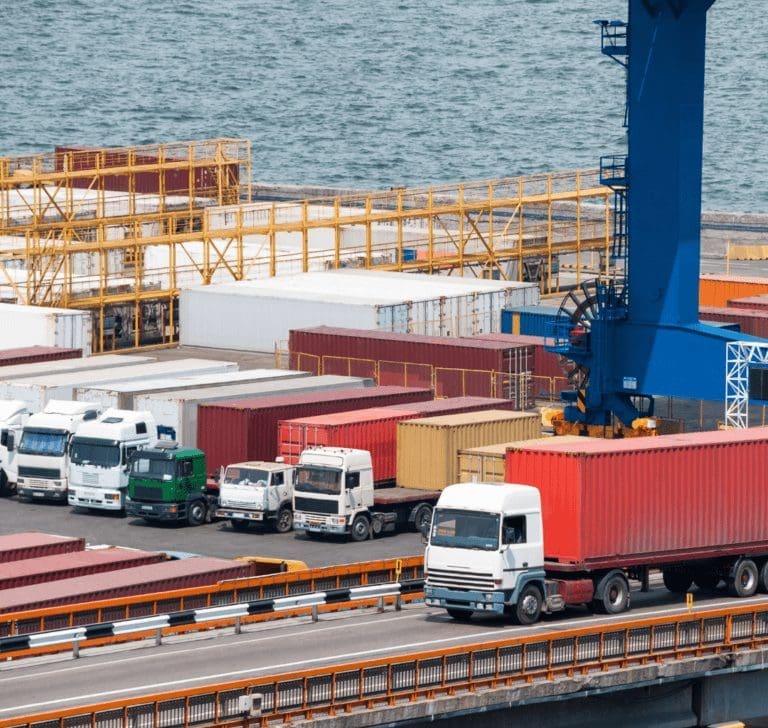
The balance between supply and demand has been negatively affected due to the implementation of tariffs.
The latest ACT For-Hire Trucking Index report for April has indicated an improvement in the balance between supply and demand. While freight volumes showed weakness, they remained stable compared to the previous month, whereas transportation capacity experienced a decline.
Carter Vieth, a research analyst at ACT Research, commented on the impact of tariffs, mentioning that although there has been some degree of pre-tariff maritime shipping, the adverse effects of the tariffs are beginning to show. Vieth noted that the decline in container ship traffic suggests that weak volume will continue in the short term, but the 90-day tariff reduction between the U.S. and China could stimulate significant activity in the third quarter of the year, according to The Trucker.

Prices, volume, and capacity
The Price Index experienced a 12.1-point drop in April, falling from 51.5 in March to 39.4 (SA), a level not seen since August 2023. This drop is attributed to a softening in demand following a surge in pre-tariff imports, which disrupted the modest upward momentum in freight rates.
Vieth highlighted that the 12.1-point decrease is the third largest drop recorded in the 15-year history of the survey, adding that due to uncertainty surrounding pricing and changes in trade policy, supply is likely to contract as private fleets halt their expansion and tariffs drive up equipment costs.
The Volume Index showed weakness for the second consecutive month, registering 43.4 points in April, slightly below the 43.6 points recorded in March. Meanwhile, the Capacity Index fell 4.0 points month-over-month, dropping from 51.1 in March to 47.1 in April. Vieth explained that the weakness in rental profits, rising uncertainty, and equipment costs are leading fleets to delay or even cancel new equipment purchases for 2025. This could result in a further reduction in capacity, which, according to the analyst, is a necessary component for the for-hire trucking cycle to begin a recovery.

The impact of tariffs on freight transportation
The balance between supply and demand has been negatively affected by the recent drop in demand due to the implementation of tariffs. According to Vieth, weak economic activity and declining imports are expected to continue impacting freight volumes through May and June. In this context, private fleets ending their expansion and for-hire carriers under pressure will continue to gradually reduce market capacity.
Tim Denoyer, Vice President of ACT Research, warned that rising tariffs could further deepen the freight recession. Given that between 20% and 25% of surface transportation in the U.S. depends on international trade, Denoyer pointed out that tariffs will prolong the recession in the for-hire freight market. While the reduction in capacity due to rising equipment costs could eventually drive up freight rates, this won’t happen immediately.
Meanwhile, small businesses are feeling the effects of current economic conditions. According to the Small Business Optimism Index, which fell below its 50-year average in April, 34% of small businesses report job openings, and only 18% plan to increase capital spending, reflecting a drop in business confidence.
Despite these challenges, there is some relief for the trucking industry with the decrease in diesel prices. According to the U.S. Energy Information Administration, the national average diesel price in April was $3.51 per gallon, representing a savings of about 50 cents compared to the previous year. However, fuel surcharges would also decrease, potentially offsetting some of the savings.

Future outlook
The Federal Reserve is set to meet again on June 11, though a reduction in interest rates is not expected. Meanwhile, tariffs will remain a central issue in economic forecasts. Uncertainty persists about how tariffs and fluctuations in the freight market will impact the trucking sector.
In this environment, the carriers that manage to weather these challenges will be those that implement effective cost-control strategies and optimize their route planning to capitalize on the best available rates.

Teton Pass bridge will be closed to traffic for 10 days
Teton Pass is one of the most heavily traveled routes for truck drivers in Wyoming, serving as a vital corridor for the trucking industry. The

Terrifying Experiences of Truck Drivers Sleeping on the Road at Night

Cargo theft numbers drop for the third quarter of 2025
The cargo theft tracking company Verisk CargoNet released its report for the third quarter of 2025. The cargo theft tracking company Verisk CargoNet released its

40 major U.S. airports to see flight reductions due to government shutdown
40 U.S. airports, including those in New York, Los Angeles, and Chicago, will see flight reductions starting November 7 due to the government shutdown. 40

DOT Medical Card: Keeping Medical Certification Up to Date
Keeping your DOT Medical Card current is essential for both drivers and fleet operations.
Brake Safety Week 2025 results: almost 85% of commercial vehicles had no violations
Results of Brake Safety Week, organized jointly by the Commercial Vehicle Safety Alliance (CVSA) and the Department of Transportation, have been published. Results of Brake